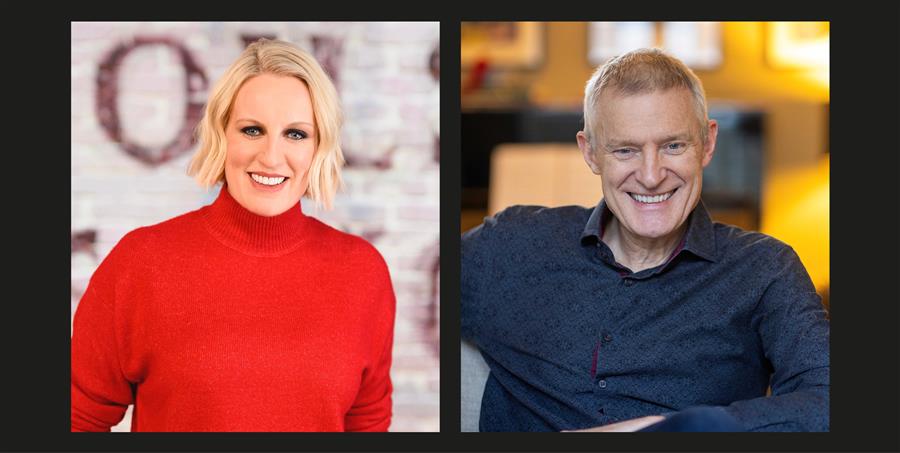
#Interview By Lou with the Tony Award Winning Actor, Laura Benanti on new show Nobody Cares @laurabenanti #NobodyCares #comedy in #Soho #London at #Underbelly on 2nd Sept #Theatre

Interview with Laura Benanti
on Nobody Cares

Interview by Louise Cannon
Welcome, Laura Benanti, to Bookmarks and Stages and thank you for the opportunity to interview you.
I am absolutely delighted to interview Laura Benanti about her new show, Nobody Cares, which had a hugely successful run at the Edinburgh Fringe Festival. It has now directly transferred to:
 Underbelly Boulevard Soho, London on 2 September for two performances only.
See after the interview for ticket details.
 
Laura is best known for her show-stealing performance as Louise in Gypsy alongside Patti LuPone on Broadway. For this role, Laura won a prestigious Tony Award.
She is also known for her recurring role impersonating Melania Trump on The Late Show with Stephen Colbert, alongside other major Broadway such as Eliza Doolittle in my Fair Lady and more. She has also appeared in tv shows, such as Nashville, Gossip Girl, The Gilded Age and more…
 
Here’s a little about Nobody Cares before we talk about it interview, finding humour in being a former people pleaser and in the perimenopause, Melania Trump and why she impersonates her, connecting with audiences and more…  The answers are fascinating and insightful.
 
Nobody Cares, is a hilarious, heartfelt, and sometimes brutally honest autobiographical hit charting Benanti’s journey from an 18-year-old ingenue to a recovering people pleaser with all of the missteps and marriages (three!) along the way. Her comedic take on everything from motherhood to perimenopause is yet another star turn.
 
Your show, Nobody Cares had a successful run at the Edinburgh Fringe Festival, you’ve stepped onto the glitzy stages of Broadway, huge tv series and won a Tony. What inspired you to choose the Edinburgh Fringe Festival to showcase Nobody Cares and what did you like most about your time there?
 
I’ve always wanted to perform at the Fringe! Being at a festival full of theatre nerds was a dream come true!
 
2.You bring Nobody Cares to intimate stages, what do you enjoy most about this and are there any challenges, compared to big Broadway stages?
 
I enjoy connecting with the audience in a completely different way. I can communicate with them. It’s a much more relaxed vibe. 
 
3. You bring comedy, ranging from parenthood to perimenopause, they can be inherently funny subjects, but what do you feel is important that we find the humour, even in the most challenging of times of being a women?
 
I endeavor to see the world through the lense of a sense of humor. For me, it’s the only way through. Humor eradicates shame.  
 
4. You tackle being a former “people pleaser”, how did you overcome people pleasing?
 
I’m still working on it! I actively work on it during the show! There are definitely people who come to the show thinking I’m going to sing Broadway music and instead I deliver original comedy and songs that has very adult themes and language. I find myself wanting to apologize to them for that, or wondering what they’re thinking. I have to tell myself to let it go and be present. 
 
5. What’s one of the funniest moments of the peri-menopause? Frankly, I ask as I am one of those women hurtling ever closer to that age and stage of life.
 
I think embracing that you will, at some point, look for your phone and it will be in your hand. Brain fog is real!
 
6. After London, what’s next for you in your illustrious career?

The day after I land I film a few days on a very sweet movie called “the Ditch” and then we take our show to Berkeley, California. 
 
7. On a side note, us in the UK often have an eye on US politics. You’re known for impersonating Melania Trump on the Late Show with Stephen Colbert, which is incredibly funny, even from a single pose. What inspires you to do impersonations and kick ass out of politicians? We also have many comedians doing this, it’s often clever.
 
First of all, I want to apologize on behalf of America that some of us voted for our current POTUS (pervert of the United States. Doing this impression is an act of rebellion and a way to keep people laughing during what is a very serious time. 
 
You can catch Laura Benanti in Nobody Cares by finding out more details and booking here: https://underbellyboulevard.com/tickets/laura-benanti-nobody-cares/


#Interview By Lou with author Laura McHale Holland about Shinbone Lane ‪@lauramchh.bsky.social‬ #books #ShinboneLane @HenryRoiPr

Interview with Laura McHale Holland
On Shinbone Lane

Conducted by Louise Cannon

Laura McHale, welcome to Bookmarks and Stages. Thank you for allowing me to interview you about your fascinating book, Shinbone Lane. Thanks to Henry Roi PR for the opportunity and putting us in touch to do this author interview.
What Laura has to say, is truly interesting and she even imparts a poem as part of one of her answers. We talk about inspiration, world building, secrets, healing, including her own healing space, transformation of lives, the 1970’s,  her characters, one of whom is a dancer and one whom is Maddy who both have quite a story to tell and more…

Laura McHale Holland is an independent author whose works of fiction and non-fiction have been recognized by the Next Generation Indie, Readers Favorite, INDIES and Indie Excellence book awards. She lives north of San Francisco and enjoys her grandchildren, film noir and a strong pot of black tea.

Firstly, here is a little about the book, before the interview…

For reasons they can’t quite explain, the lost always find themselves on Shinbone Lane…

San Francisco, 1974. Sixteen-year-old runaway Maddy is escaping the blame for a crime she didn’t commit. Miles from home, she is taken under the wing of the elderly Clara and her neighbor Ted, and soon finds a place among the kaleidoscope of personalities on the oddly named Shinbone Lane.

Ted’s three-story Italianate Victorian house overflows with travelers, free spirits, and artists. His backyard is a haven for all who are willing to see its magic. But burdened dancer Eloise Watkins condemns the transient “riffraff” in her neighborhood. Their frivolity flies in the face of her grief over friendship lost and a daughter who’s missing. And nobody — nobody— understands.

But like all who tread on it, Shinbone Lane has secrets of its own. And like all secrets, they lie uneasily in the dark, until the truth emerges to lay the past to rest.

  1. Who or what inspired you to write?

When I was seventeen and in my last year of high school, one of my uncles rescued me from a chaotic home situation and sent me to a Catholic girls’ boarding school in a tiny country town. It was 99 miles from an abusive stepparent and far from my wild friends in the Chicago area. The environment at school was controlled but also very loving. I didn’t know how unsafe I’d felt until I was cared for by a team of nuns who had dedicated their lives to helping teenage girls at risk. It was a respite. I had quiet time. A bombardment of conflicting thoughts and feelings inside of me eased, and I had the urge to express myself. I wrote poems that I sent in letters to friends back home. I knew five or six chords on the guitar and wrote a few songs, too.

I remember one of the poems I wrote at boarding school. I was thinking about my father, who had passed away when I was eleven, and a boyfriend who’d recently left the country to follow a guru around the world:

to ponder again

what’s been

what was now

not knowing how

or even why

love’s vital beating

ever fleeting

left to stay

left me this way

to ponder again

what’s been

After graduation, I didn’t keep writing. I was enrolled in college but didn’t show up, afraid I’d make a mess of it. I went through a dark period, which I began to come out of in my early twenties. At that point, with conflicting thoughts and emotions wreaking havoc within, I began keeping a journal, thinking it might help me sort out what I really thought about things. Then I attended Columbia College, a creative arts school in Chicago. Every student was required to take writing workshops, and I was bitten by the writing bug, particularly by a workshop led the novelist Larry Heinemann, who said, “Laura, you are a writer. All you have to do is do it.” It sounds so easy, doesn’t it? Ha!

2. Shinbone Lane is an intriguing name. How did you come up with this street name?

I’d begun brainstorming about a name for the lane, but wasn’t happy with any ideas I’d had. I happened to tell my husband, Jim, I was trying to come up with a name, and he threw out, as more of a joke than a serious proposal, Shinbone Lane. The idea jolted me. It seemed more suited for a Western genre story. But as I thought about it, I realized it offered possibilities for creating a story about the name within the larger story of the novel. The story I wove into the novel was inspired by folklore, and this meshed with my love of magical realism, where a story is rooted in the everyday world, but inexplicable, extraordinary things happen as a matter of course.

  1. What’s your process when world building a lane that really comes to life with many personalities and a bit of magic?

Memory played a big part in this, because the fictional lane is located just up San Francisco’s 29th Street hill from where Jim and I raised our family. So when I envision the environment, I picture it very much as it was in real life. The lane itself has more of a golden glow about it, and things happen there that don’t ordinarily happen. It’s the world slightly tilted, but it’s still our world. It doesn’t involve people casting spells and using magic potions. It’s not epic fantasy where you create entirely imagined worlds. It’s more like forces are at work in the natural world that we don’t fully understand. As for the people, they aren’t based on specific individuals I knew, but they were inspired by the many people who passed through my life in the 1970s. The characters came to me and took shape as I was writing. I didn’t think them up ahead of time.

  1. What attracted you to the fully loaded themes of secrets, healing, transforming lives?

The themes stem from my life experiences but they have universal resonance. Who doesn’t have a secret or two? Who hasn’t been harmed or hurt in life? Who hasn’t wished for healing at some point? And as for transformation, we are all transformed as we move through life. Sometimes it’s dramatic, and we notice. Sometimes it’s a gradual transformation that sneaks up on us. Sometimes we seek transformation and get what we want; sometimes we seek transformation and get something else entirely. Sometimes we don’t want transformation, but we get it anyway. In writing fiction, I love for characters to be grappling with big things, some things that others don’t know about and wouldn’t guess, some that are obvious, some things that can never be healed, and others that can. And I love to create communities where, as in real life, terrible things can happen, but where an underlying love helps everyone pull through, maybe different than they were but ready for a new day.

  1. What’s your healing place or space and why?

My healing place has always been the outdoors, walking in particular—from the Midwest prairies to the crowded streets of Chicago’s north side, to San Francisco’s magnificent hills and valleys, to Sonoma County’s many trails and byways. Walking has always calmed me while at the same time woken me up, and made my troubles seem a little bit lighter, at least for a time. It’s odd, but I didn’t realize until answering this question how important walking has been for me. I walk our dog every morning, but I’ve been so pressed for time in recent years that I walk for only about half an hour. I’m going to have to work in some longer walks regularly, walks without my dog, too, who’s a little on the goofy side and easily spooked, so he’s not a relaxing companion.

  1. There’s a bit of magic on Shinbone Lane and reasons why, at least consciously, the characters don’t all quite know why they are there. How do you believe that magic in the real world plays out for people and how did you go about weaving it into your book?

Some characters have lived on the lane their whole lives; others are newcomers. They’re all there because they want to be, because life on the lane appeals to them. They’d have difficulty explaining why, which is not all that unusual. I’ve never given much thought to why I wear certain clothes, for example, or why I’m drawn to some foods and not others. And like the folks who populate Shinbone Lane, I can’t easily explain some of my choices; they happen so quickly on a gut level.

Similarly, weaving magic into the real world as I write is an intuitive process. Some of the magic expresses a longing I have for the real world to have more magic manifest in our days, for things not to always follow the natural laws we’ve come to understand, for inexplicable things to be more common and not relegated to streaming TV series. Also, there is a lot about the universe that we don’t know. I keep that in mind when writing fiction, and it helps me push boundaries between the real and the imagined.

  1. One of your characters is 16 year old, Maddy, who is escaping the blame for a crime she didn’t commit. She gets taken in by Clara, a significantly older woman and her neighbour, Ted. What significance do they play in her life and how important do you think it is that young and old come together in society?

Clara and Ted are hugely important to Maddy. They have given her a foundation of love she never had. They are like many people in the world who are rock solid good, through and through, and are unsung. It wouldn’t occur to them to look for recognition for doing the right thing. Their goodness helps to attract magic, though they don’t do anything consciously to bring it about. And a world without elders would be bleak indeed, especially for children, who would never know people who have lived through times that for younger generations are known only through books and documentaries. Plus, those of us who were lucky enough to have at least one loving grandparent know the love they give is profound and unique.

  1. Travelers, free spirits and artists feature in Shinbone Lane, who are willing to see the magic. How did you find writing about such, practically bohemian characters in-contrast to the grittiness of Mattie escaping a crime?

Despite her unfortunate home, where the crime occurred due to a family member’s mental illness, Maddy is very much a part of her generation, which is breaking free of rigid cultural norms and expectations. Also, in the 1970s, large numbers of young people were on the move, largely because it was before real estate prices soared to heights almost beyond comprehension. It was easy for someone to take off with a little bit of money in their pocket and travel, sometimes staying on the move, sometimes settling down in a new place, where people could explore and maybe bring out different sides of themselves. Having lived through that time, it was a natural process for me to write about it.

  1. There’s Eloise who is a burdened dancer who wants rid of anyone who she feels is “riff-raff”, has lost her daughter and has decided there’s much no one understands. Did you feel the powerful emotions of your character here and how did you convey them onto the page and out to the audience so they can also experience her life?

People on the lane thought they knew Eloise. She’d lived there all her life, after all. But it turns out they barely knew her at all. Writing her was a lot of fun, as well as surprising. I didn’t know when I first envisioned her what turns her life would take, and I had compassion for her in the end. I felt what I imagined she was going through, as well as other characters’ reactions to her actions. When writing fiction, you have to put yourself through an emotional wringer at certain points in the narrative. If you don’t do that, readers are unlikely to be moved by the stories you tell. I’ve found that as long as I show up emotionally while writing, I don’t need to worry about conveying emotions on the page. The emotions flow with the words.

  1. Shinbone Lane is set in 70’s San Francisco, a bit like the time when you went for a visit and stayed. What compelled you to stay, how did it influence your writing and what changes have you seen in the city?

Initially I stayed in San Francisco because I had the feeling after a few weeks that I wanted more, that I hadn’t experienced what I wanted to experience in the city. I decided to remain for a few months. I bought a Fast Pass for $11, which was good for a month. With that I could take a bus, streetcar, or cable car anywhere and ride as far and as long as I wanted within the city.  And the rides, even just to run errands or visit a friend across town, were extraordinary with incredible vistas, largely because of the hills, the ocean on one side and the bay on the other. Even some of the backyards you’d pass on the J-Church were stunning, and riding the 10-Monterey bus was breathtaking.

I quickly found temporary office work in San Francisco and a room in a Victorian flat with two amicable roommates for only $79 per month. I enjoyed exploring the city’s distinct neighborhoods and microclimates, all the artist collectives, dance and theater troupes, cultural organizations, street fairs, free events in Golden Gate Park, and so many people my age who were trying new things. I decided I wanted to take piano lessons. To do that, I needed a piano, so I bought an old Kohler upright on time, $17 per month for three years, and said, well, I guess I’m staying for three years. I wound up staying for almost thirty years, and now live only an hour away.

San Francisco influences my writing the same way any place I’ve come to know well and love does. The streets, the parks, the restaurants, the main events of the time are part of me. The experiences I had, the highs and lows, are wedded to where they took place. A huge difference in the city between the 1970s and now is that it is so much more expensive to live there. There are bound to be exceptions to this, but generally, artists and people not earning Silicon Valley type incomes can’t afford to live there anymore unless their homes have been in the family a long time. People of limited means have to leave. And that changes the culture of a place.

  1. What do you hope readers get from your book?

Knowing a place where they’d like to linger for a while. Characters they’d like to meet in real life. A story written in a way that delights and absorbs them. A sense that tough things can happen, but the support you need is usually nearby, and healing can and does happen. And a reminder that what we present to each other day to day is only a part of what we are. It’s not like we’re purposely hiding things from others or from ourselves, but many things are hidden. In the end there’s a longing to give and receive love, even in the worst of us, and that is powerful.

  1. How did you celebrate publication day?

I didn’t do much on publication day itself, other than watch for reviews from people who’d read advance copies. That was pretty exciting, especially since my daughter had helped find early readers, and we were phoning and texting each other as reviews appeared. The following weekend I participated in a joint book launch party with members of Redwood Writers, the Sonoma County branch of the California Writers Club. The writing itself is a solitary activity, and it’s great fun to share milestones with other writers. The sense of camaraderie is uplifting.

  1. How can people follow you and your work?

Thank you, Louise, for asking me such thought-provoking questions and spotlighting Shinbone Lane. Here’s my Linktree listing with links to my website, Facebook, Instagram, Substack and Bluesky pages: https://linktr.ee/lauramchh

#ThingsToDo on Sat 18th Oct in Half-Term Holidays – Catch – Brings Joyful Juggling and Play to the Stage #Catch #Juggling #Stage #WeekendVibes #Holidays #Halfterm @ARedinburgh

Catch!
Brings Joyful Juggling and Play to the Stage


Date: Saturday 18 October, 3:30pm 

Venue: Assembly Roxy, Edinburgh


Tickets & Info: https://assemblyroxy.com/whats-on/283-catch

A playful juggling show about connection, contrast – and catching things.

Widely recognised circus company ThrowPoi brings their brand new show Catch! to the stage this October. Known for their internationally-acclaimed partner juggling, and innovative use of Poi props, ThrowPoi invites audiences into a joyful and visually captivating world of games, rhythm, and connection. Blending technical skill with theatrical flair, Catch! is a non-verbal celebration of difference, friendship and play, that’s suitable for all ages.

Catch! is a mesmerising and joyful show that leaves audiences of all ages delighted and surprised.

Originally created in 2022 through a Dance Base residency, Catch! was first presented as a work-in-progress at the British Juggling Convention 2024.


Tickets & Info: https://assemblyroxy.com/whats-on/283-catch

#Review by Lou of The Forest Hideaway by Sharon Gosling #BlogTour @BookMinxSJV #Sharon Gosling #TheForestHideAway #TeamBATC

The Forest Hideaway
By Sharon Gosling

Rating: 4.5 out of 5.

Review by Louise Cannon – Bookmarks and Stages

Summer is nearly over. There’s already a bit of a nip in the air as the hot temperatures of summer cool down. It’s a perfect time to plan autumnal reads. The Forest Hideaway is a beautiful book for the season.

Discover the blurb and what I truly thought in my review below.

Thanks to Simon and Schuster, Books And The City for providing the book. All opinions are my own.


Blurb

Saskia is building a home for herself out of the ruins of an old castle. Surrounded by forest, hidden away from everyone and everything, the place is special – it’s the only connection she has left to her father and it’s a hard-won chance to escape from her difficult past and create a new future. She’s spent her whole life trying to find a way to make this project work and finding someone to help her realise her dream has been almost impossible.
 
When local builder Owen finally signs up to manage the construction, things get off to a very bad start. But forced to find a way to work together, both realise that first impressions aren’t always the right ones, and when Owen discovers the forest is hiding a secret that could bring work to a halt, he realises he’s much more invested in the project – and Saskia – than he thought . . .

Review

The Forest Hideaway is perfect, to not only escape into, but to provide hope and inspiration. Saskia’s had a challenging life and who doesn’t want to escape sometimes? She has a dream and a direction in creating a new life for herself that you can’t help but cheer her on.

The intertwining and connective meanings of architect in this book is fascinating. She is both the architect of creating her own future and of restoring a very old castle, where an oak tree resides when she first sees it. She needs help.

Owen is a builder, desperately needing a project and the pair aren’t exactly enamoured with each other, but things do improve. There are big emotions at play in this castle. You’ll have to read the book to discover more about those.

The beauty in the book ultimately lies within the nature and the castle, where there’s myth, legend and lots of history, and a plucky person who cares enough to take on the challenge of preservation.

For an autumnal read with an intertwining of relationships between people and between people, historical places and the natural world, this is one I recommend.

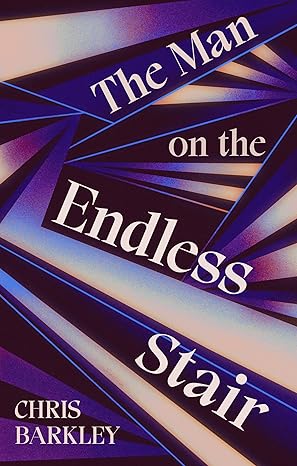
#Review by Lou of The Man on The Endless Stair #NewBook @BloodyScotland @LoveBooksTours #Thriller #TheManOnTheEndlessStair

The Man On The Endless Stair
By Chris Barkley

Rating: 5 out of 5.

The Man On The Endless Stair is featuring on the Bloody Scotland book tour, organised by Love Books Tours. This crime festival runs in the historical small city of Stirling from Friday 12th Sept to and including, Sunday 14th Sept. Bloody Scotland Crime Book Festival and the new book, The Man On The Endless Stair are where the literary world meets murder, in different ways…
I highly recommend this for something quite original for this genre. Check out my review and then the blurb below…


Review

Eerie and in some ways, quite cinematic in what you, as the reader can see through your mind’s eye from the rich descriptions in scenery to the characterisations. What unfolds. deeply immerses you into the book.

Malcolm Furnival is an intriguing character. He’s gone to one of the secluded islands that make up the Hebrides in Scotland and becomes quite deliberately, isolated it seems and he senses something bad will happen to him… He’s also in some ways been not quiet himself either, but what transpires is something quite shocking…

In part, the book makes some deep, philosophical points about the human condition and the nature of time, which is quite cerebral, in a good way. This isn’t to be mistaken that this is a heavy going book, it really isn’t, it does however, make some intelligently thought through points that are thought-provoking.  These link beautifully into the lighter, imaginative parts of the story that create this very compelling story of crime and the mysterious workings of time itself.

For a debut novel, it’s complexity in thought and concept seems rather accomplished in this debut novel. It’s one to look out for.

Blurb

When troubled but talented young author Euan meets decorated novelist Malcolm Furnivall, he feels his luck has finally changed. Malcolm takes Euan as a protégé, vouching for him in the rarefied literary scene in the 1950s. But lately, Malcolm has not been himself. Consumed by his work, he cuts an increasingly isolated figure and has become convinced that something terrible will befall him. He summons his loved ones to his secluded island in the Hebrides and – to everyone’s surprise – entrusts Euan with the task of completing his masterpiece.

Malcolm’s suspicions soon prove well-founded; he is discovered brutally murdered in his study, and his invaluable unfinished novel has vanished. Cut off from the mainland, with the killer on the loose and the island’s inhabitants circling, Euan feels both his mentor’s legacy and his only chance at greatness slipping away. He must venture deep into Malcolm’s labyrinthine mansion to find the manuscript before it falls into the wrong hands.

But what he doesn’t yet know is that the closer he comes to solving the mystery, the tighter he will bind himself to a fate sealed in time . . .

#Interview with Michael Hughes about his play, The Last Bantam @TheLastBantam @GreensideVenue #EdFringe #Theatre #Play #TheLastBantam

The Last Bantam
Q&A with Michael Hughes

Conducted by Bookmarks and Stages – Louise Cannon

Do you know what a Bantam of the First World War is? Whether you do or not, Michael Hughes, writer and actor of The Last Bantam has a lot of fascinating information about them and what it is like to act this play out. He also has interesting things to say about audiences and what he wishes to do with the play after the Edinburgh Fringe Festival.

I, recently had the privilege of interviewing Michael Hughes about his play, The Last Bantem. March downwards on the page to find out the fascinatingly detailed answers to my short, but loaded questions.

The play is on at The Green Venues, George Street, Edinburgh 12:45pm – 13:45pm up to and including Saturday 23rd August. Find the link after the interview for further details…

1 – What drew you to write a play about the First World War Bantams?

Good question! This is where I’d love to be able to say, ‘Well Louise, my grandfather was a bantam’. Sadly, I’d be lying to you if I said that (it would make a great story though!).
I was watching a video on YouTube of a former US special forces soldier interviewing another former special forces soldier. Both men were massively built. Huge shoulders, big arms, no necks. Very big men.

Now, my grandfather, uncle and two cousins served in the military and none o them looked like these guys. It got me thinking: ‘What’s the best size for a soldier?’

I did a little online research and found myself in a forum discussing this very thing. The initial consensus was ‘bigger is better’. Bigger men are stronger, they can carry more kit and they’re more intimidating to the enemy.
Then someone asked, ‘What about the Japanese?’. Someone else asked, ‘What about the Gurkhas?’ And another asked, ‘What about the Bantams?’

Everyone did a double-take at this point, including me. ‘Bantams? What are they?’ That’s when my journey began. I did some more research and discovered that Britain recruited thousands of men between 5′-5’3” during the Great War, those men were called ‘bantams’and there were books written about them!

I promptly hovered up everything I could find on the bantams, beginning with Sidney Allinson’s 1985 book, ‘The Bantams’

I was fascinated to learn about these men and, being a short man myself, inspired by their courage and tenacity in the face of not just physical danger, but also discrimination and prejudice on account of their height.
Regarded as ‘degenerate’ by some because of their short stature, they signed up in their tens of thousands to serve their country.

2 – The Last Bantam is based on real events. What emotions did you feel when creating and acting out the play?

I prefer to say, ‘inspired by real events’ rather than ‘based on’ actually. While there is documentary evidence for a great deal of what happens in my play, there’s a dollop of my imagination in there too!

Researching The Last Bantam, I felt indignation at the way these short men were treated and pride at their achievements.

Acting out the play, I feel a range of emotions, not always associated with the play itself. For example, the other day I felt simultaneously sorry for and irritated by someone who’s position in the room meant they couldn’t easily see my performance. They picked a seat at the end of a row and someone sat down directly in front of them. They could not see me without craning round the person in front. It was the fault of the poor seating layout, but it bothered me that someone who’d invested time and money to see my show could barely see it. I found myself thinking ‘Why don’t you move?!!!’ I even contemplated stopping the show to find great person a better seat, would you believe that? I didn’t of course, but if any of your readers find themselves in a poor seating position, they have my permission to move to a better one. Yes, your movement will be noticed and it will annoy me a little, but knowing you can’t see the show you paid for because of someone in front of you bothers me more.

Move!

There are other feelings I experience though which are entirely play-related. I try as much as I can, not to ‘act’ my character but to ‘be’ my character. When he’s irritated, I’m irritated, when he’s sad, or angry or scared, I’m sad or angry or scared. I summon and use my own feelings when I’m Patrick Michael Wolfe. It’s quite a rollercoaster!

3 – How did you research The Last Bantam?

I read everything I could, and there’s more out there than you might think. In addition to Sydney Allinson’s, ‘The Bantams’, there’s also books focussing on the Manchester bantams as well and the Cheshire Bantams and at least two books on the Battle of Bourlon Wood. I also drew heavily from Maurice Bacon’s, ‘The Blast of War’, a history of the 15th Bantam Battalion, Notts & Derby Regiment. My character, Patrick Michael Wolfe, is based in this battalion and it was hugely useful to know where precisely they were at various points in the war.

The Blast of War is written by Maurice Bacon. His father and grandfather both served in the same bantam battalion and meeting him last year to discuss his book was very special to me.

Interestingly, during the last couple of years there’s been a number of videos on YouTube about the bantams. There’s a very good one by a Youtuber called The History Guy and another called The History Chap. All these videos seem to have emerged over the last couple of years, much as my play has done. Could there be something in the air I wonder!

4 – You’ve taken great care in the detail of the uniform, right down to accessories, such as the watch. How did you source this and was it in easy or challenging process?

I decided right from the start that I wanted to look the part as much as possible. I’m no historian or costume commissar, but whether it’s a play, a tv series or a film, a poor costume undermines everything! If someone doesn’t look like the person they’re pretending to be, if they don’t meet our visual expectations, we find it harder to join them in the world they’re trying to create.

I originally tried sourcing actual British uniforms from the Great War and realised that not only could I not afford to do that, but a 100+ years old garment probably wouldn’t survive too many Edinburgh Fringes!

Instead I purchased reproduction uniform and kit, taking note of advice from re-reactors as to who provides the best quality. Quality was paramount. I wanted a costume I could use in the long term, not something that would fall apart after a few shows. A costume that didn’t just look right, but felt right too. You’d be surprised how many people want to physically touch the fabric of my costume. They want to feel the weight and the roughness of it.

I sourced most of my costume from Soldier of Fortune, an online militaria costume provider. Having purchased my costume I then had to distress it.

My character is meant to have spent to years fighting in France. His uniform should reflect that and it does. It’s dirty and stained and ripped and torn, with many amateurish in-the-field repairs. Holes are patched over and rips crudely stitched back together, as was done in action.

In some respects, the uniform is a metaphor for the man. It’s dirty, worn and damaged, but it’s still functional. It’s still in the fight. One look at the uniform and the audience knows, ‘This man’s been through it’.

Audiences are hugely impressed by my costume. They really appreciate the effort I’ve made to look as authentic as possible. The public appreciates it too and it’s a huge help when I’m flyering, promoting my show. It cuts through the noise of Edinburgh and it makes me smile to know that feature in hundreds of holiday photographs!

5 – The Last Bantam is a one man play, what does it feel like to be
carrying the whole play in your own and asking the audience to imagine
the scene, since there is no scenery?

Carrying the play in my own doesn’t bother me at all. It’s rather liberating actually. I determine the rhythm and pace of it and I don’t have to worry about fellow actors missing their cues, forgetting their lines or falling out with each other. I was in a comedy show once in which my two fellow cast members had a spectacular falling-out and it almost scuppered the show!

Being a self-employed healthcare trainer has also prepared me to be a solo performer. The roles aren’t that different. I arrive at a place, get changed, engage with a group of strangers and leave. And I’ve been doing that 25 years!

6 – You were a copywriter many years ago, what or who inspired you to change career and take to the stage?

I’m actually very, very new to acting. After a career in advertising I became a nurse and have been a freelance healthcare trainer for over 25 years. I remain both a nurse and a trainer but I got into stand up comedy in 2015 doing the open mic circuit as a character comic. When I wrote the first draft of Bantam in 2023 I assumed I’d be performing it myself.

I’m retrospect, my assumption that it would be me might seem a little presumptuous, maybe even arrogant. After all, I had no acting training and had never done anything like this before in my life. But I’d spent 8 years doing character comedy and over 20 years addressing groups of strangers as a trainer. I knew I could learn my lines and deliver them.

Whether I could deliver them well…well that was for the audience to decide!

7 – What’s next for you and your play?

I need to focus on my day job! I’m a freelance teacher in care homes and my first priority when the Fringe is over is to drum up some training business!I

With regards to The Last Bantam,I’d love to tour it. There’s lots of small theatres in London I could take it to, and many farther afield too. It’s all a matter of logistics and economics. I can accept a loss doing the Edinburgh Fringe, but future shows will need to cover their costs.

I also plan on publishing The Last Bantam and would absolutely love to have the story made into other a tv series or a movie. I might get Danny DeVito in board! I wish I was doing this ten years ago. Back then the BBC produced several films and documentaries to commemorate the Great War.
It would have been the perfect time for the bantams!

8 – Where can people follow you On social media?

The Last Bantam can be found on Facebook, Twitter and Instagram.

You can find more details on the Ed Fringe site here: https://www.edfringe.com/tickets/whats-on/the-last-bantam