

Interview with Kyle Lucey
Conducted By Louise Cannon
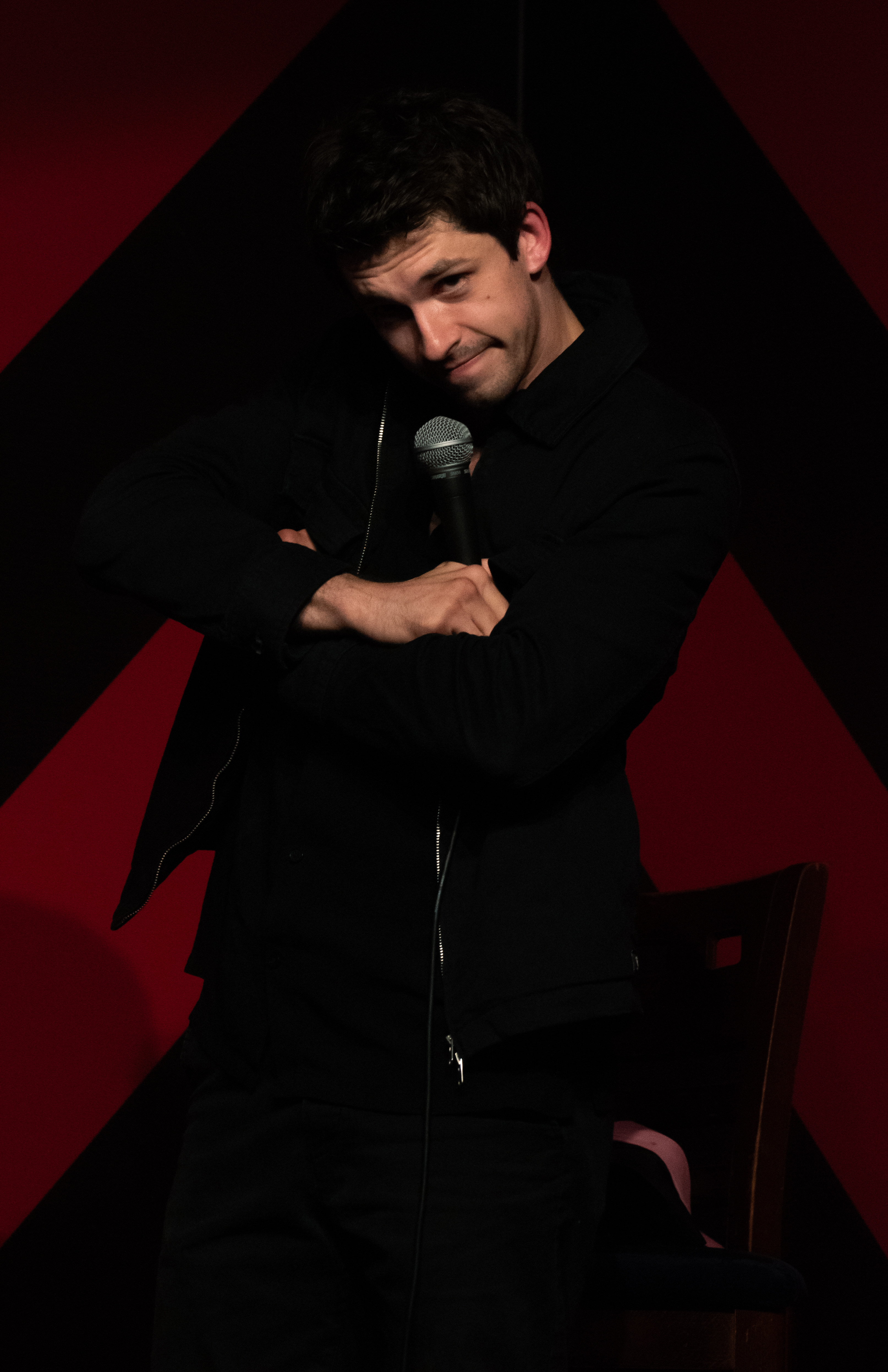
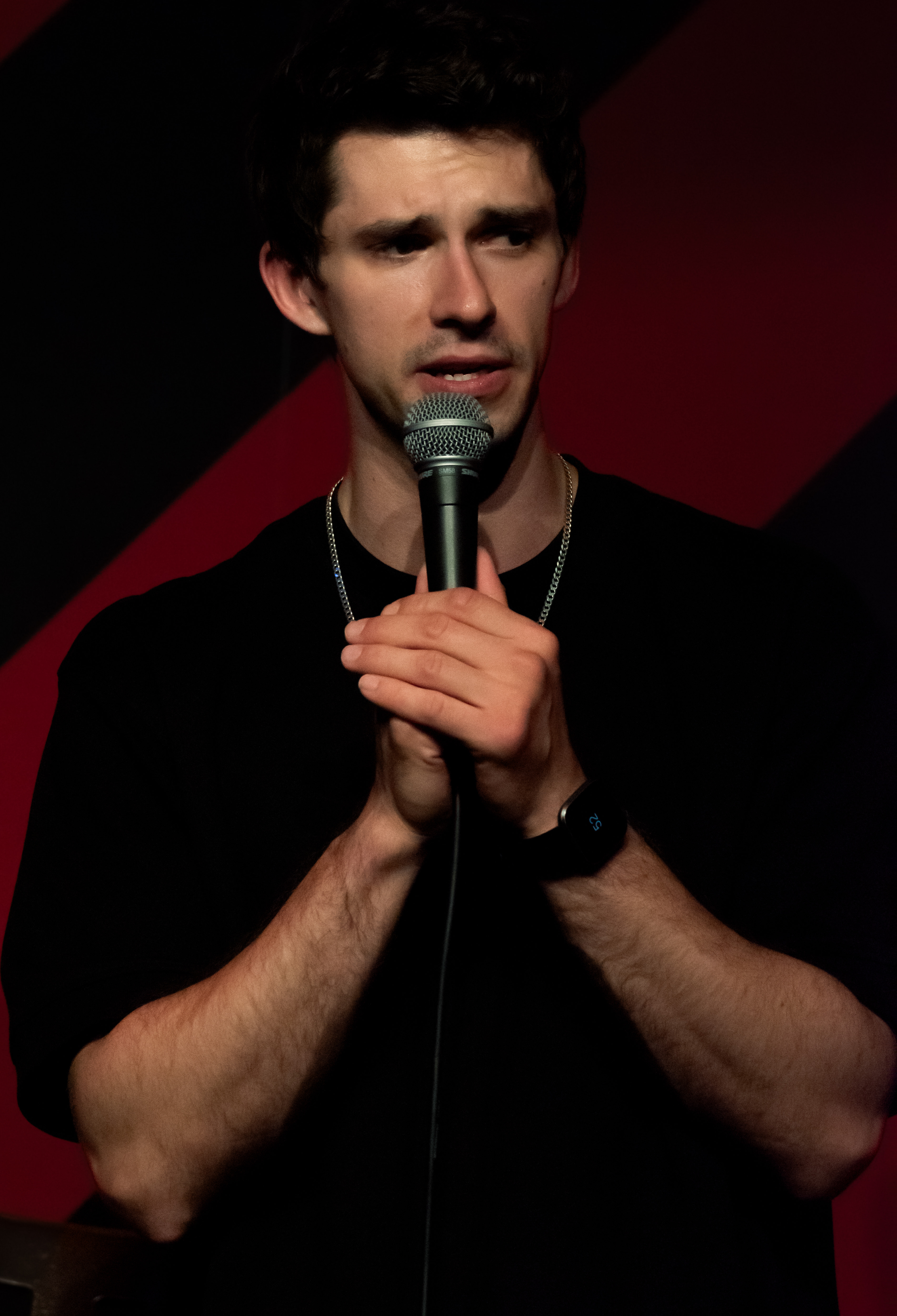 Kyle Lucey is a successful comedian, who has been making his name over the past decade or so. He has performed to thousands of people at world famous venues, such as Massey Hall. Originally from Canada, he settled in Scotland and this year (2024), played a successful show – Dirty After Dark at the Edinburgh Fringe Festival this year.
I have had the pleasure of interviewing him recently to delve into the man behind the success as we delve deep into his new show and successes and what happened to him in his childhood/formative years with the deep trauma he endured, in a sensitive way. What was returned via email was brave, sincere, candid and hopeful on many levels. There’s even a touch of humour added.
He had a successful show at the Edinburgh Fringe 2024 and is now embarking on big tour, more about that after the interview.
Please join me in welcoming Kyle Lucey to my blog – Bookmarks and Stages.
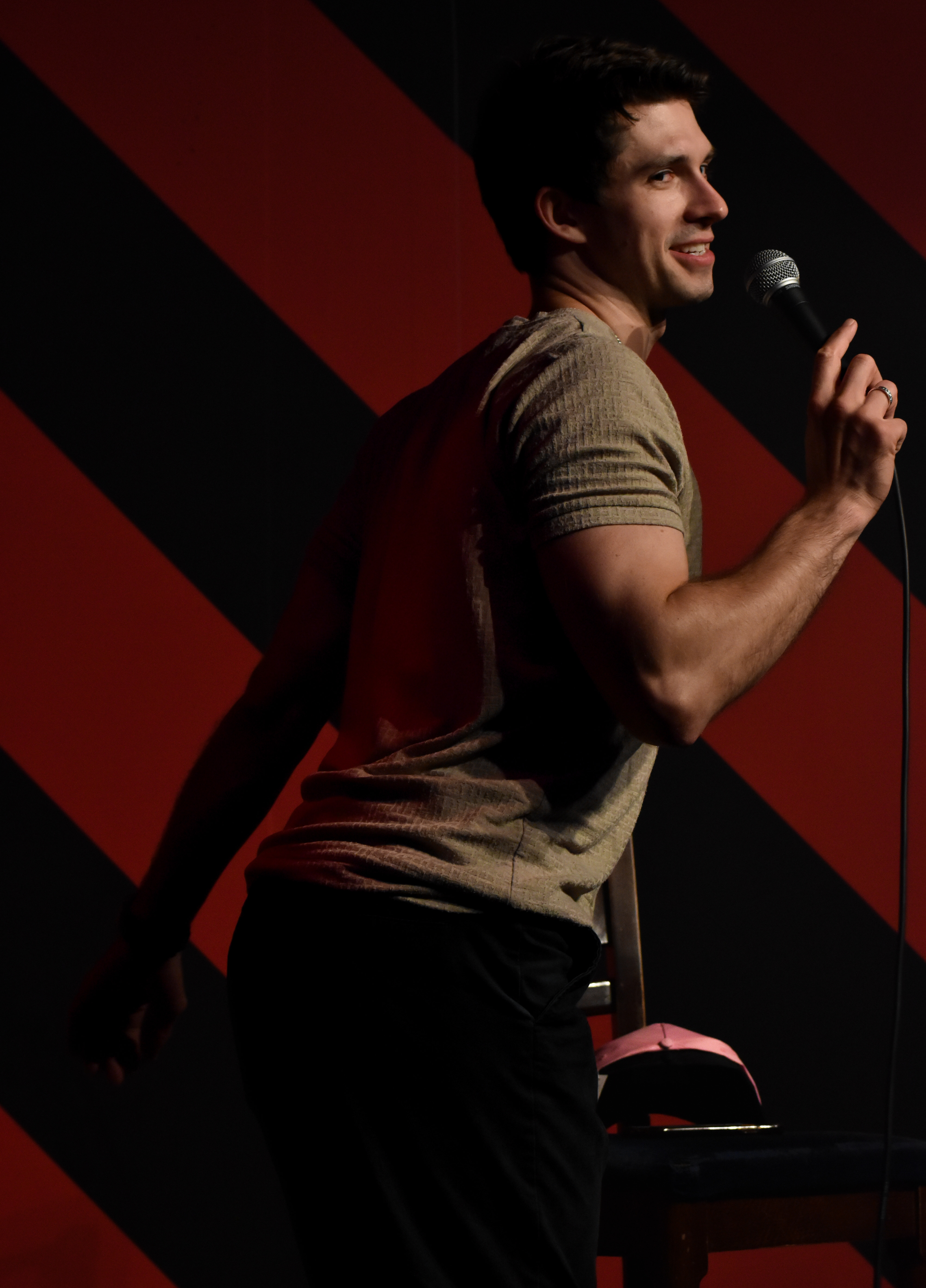
*Photos credited to Alison Gilmour
- What or who inspired you to be a comedian and what was your route
into this field of the arts?
My earliest inspiration was Jim Carrey. When I was 5 years old, I used to keep a diary called “My life as the young Jim Carrey” this was sort of my first joke book. I would write out funny scenarios to myself and make myself laugh. I had no idea that decades later it would be an actual career for me.
- You’ve played at world famous theatres such as Massey Hall and won
The I Heart Jokes Award twice, how did that come about and feel?
 Massey Hall was a big one. 3000 people on New Years Eve. This show is one of the highest honours in Canada. First you need to be signed to the biggest agency in the country, Yuk Yuks. From there you need to be one of Yuk Yuk’s top comedians to be selected for Massey Hall.
The Weeknd, Neil Young, Justin Bieber, Rush, Gordon Lightfoot they all played Massey Hall. And now me, some who grew up in a trailer park! Being considered cream of the crop out of the cream of the crop in my 20’s was so incredibly validating.
It’s such a different thing to perform for that many people since I am more used to playing comedy clubs. The adrenaline I felt that night I literally could not fall asleep and stayed up for two days. I was so honoured to be hand picked by Mark Breslin, the founder of Yuk Yuks. He took me aside one day and told me that I am on the shortlist. My jaw dropped. One of the most exciting moments of my career to date.
- What can audiences expect about your show – Dirty After Dark?
My show is a stand-up show. It is funny and punchline heavy. It’s important that both myself and the audience are having fun or else I should take comedian out of my bio. The way I see it, the jokes in a comedians set are like breadcrumbs. You can take the audience anywhere as long as you properly lead them to that destination joke by joke. Each laugh I get from the audience is a step in the direction I want to take them. My subject matter might be heavy but my 13 years and over 10,000 shows of experience allow me to expertly take them to scary places in a way that is cartoonishly fun. “I can’t believe I laughed at that” is something I hear quite often.
- Dirty after Dark feels personal to you, so how do you deal with talking
about the traumatic times and adding humour to them?
My therapist taught me the metaphor of a lotus flower several years ago. He would tell me, “Lotus flowers grow in mud”. Lotuses are beautiful flowers that grow in dirty swamps. He said that I am both flower and mud and that is what makes me beautiful. As someone who holds unbearable shame from childhood trauma, the lotus flower analogy made me feel less dirty. I became obsessed with taking the mud in my life and adding flowers to it.
My show is funny. It has to be. The subject matter is heavy. I have been abused in everyway one could possibly imagine by the very people who were supposed to love and care for me. This is my mud. To make the mud any less dirty would make the flower that less beautiful. The dirtier the mud, the more beautiful the flower. Horrible subject matter needs only a funnier joke.
- You say comedy is a tool for healing, in what way does comedy and laughter help people who have experienced trauma and how can people discover this in a safe, effective way?
My therapist tells me that when children are abused by a parent, they internalize the abuse. It’s easier for a child to understand, “I’m bad” or “I’m in trouble” than to admit, “the person responsible for my well being wants to hurt me”. People live their whole lives thinking they are bad people because they have internalized a traumatic experience. Parents are our first love objects so we need to stay connected to them as they are our life line as children. They are our shelter, our food, our survival. So, we misguide our anger. Your father abused you – you start to hate all men. Your mother abused you – you start to hate all women. I too had so much misguided anger until I spent 10 years in therapy and unpacked who my anger actually belonged to. By moving the internalized anger from inward to outward, we start the important process of metabolizing this natural human feeling. By talking about it on a regular basis we are effectively wringing out every drop of built-up emotion we have been suppressing thus starting our journey into eventual healing.
Making comedy out of my trauma is incredibly therapeutic. It reclaims my power in situations where I was once powerless. I have a joke about being sexually abused but every time I tell it I feel stronger afterwards because I am no longer keeping my abuser’s secret. In fact, I get to stand strong and point out that what they did was wrong. The laughter I get from the audience also tells me that they are in agreement that what happened was wrong – undoing years of gaslighting. I can’t describe how much this heals me because to this day my abuser tells me they were too drunk to remember what happened.
I have seen other comedians and audience members who have watched my show start opening up about their own childhood trauma, thus reducing the stigma around something that many people keep private for years.
- One of the aims of your show is to help with the feeling of being alone and break stigma surrounding being abused, specifically in childhood, how is your show projecting this to audiences and do you see it making a difference to people?
When people who have suffered early childhood trauma watch my show, they come up to me and say, “My mom did that to me too”, “My dad also hit me”, “My parents were also drunks”. What started out as me venting about my own trauma suddenly turned into others seeing me as a safe space to come forward about their own pain. I stay behind after shows and talk to people in the audience. Often times I refer them to “The Centre” which is an affordable service in Toronto that assigns people with a therapist right for them. 10 years ago, I walked into The Centre after contemplating suicide. I thought I was fundamentally evil after years of internalizing the abuse I received from my parents. My therapist heard my story and told me that I was “a good person”. Nobody every called me that before. I broke down and cried right there and have been seeing him every week for a decade. I want nothing more than to give the same healing to anybody I meet who has similarly suffered. We are alive only once. Horrible things happen to good people every second of every day. We have to make the best of things or live the rest of our existence with a lesser quality of life. Just because evil gets imprinted on good people does not mean they have to live their life with such a branding. If pain is an ocean, therapy on a consistent basis is like draining a little bit of water out at a time. Eventually people drowning in pain find themselves at shore. I am proud to get that conversation started through my comedy.
- You took your show to the Edinburgh Fringe Festival, the biggest of its kind in the world, what were the challenges and the positives and how does this now help you to move forwards to your tour around Europe?
 I sold everything in my apartment in Toronto, Canada and bought a one-way ticket to Scotland. I am a dual-citizen with Ireland so my Irish passport allows me to work in every country in Europe. This was my first Edinburgh Fringe Festival and I was blown away by the experience. I was regularly performing 7 shows a day which is unheard of in Canada. Since it’s an international festival it was so cool meeting comedians from all over the world and seeing how funny people are from different countries. I met so many people who ended up employing me at clubs throughout Europe in the months to come. At first there were some challenges. People in the UK have different words for certain things and all my local Canadian references went right out the window. It took me a few days to adjust, but once I did, I was able to communicate my funny to a different culture. I feel like I grew not just as a comedian but as a person after doing the Edinburgh Fringe which I will always be grateful for.
- Where can people catch your show?
I have tour dates at comedy clubs all over England, Sweden, Demark, The Netherlands, Ireland and many more cities and countries to come. If anybody wants to follow me on my journey, they can catch my live dates on my
website kylelucey.com or my Instagram @kyleluceycomedy.


 Artificial Intelligence Improvisation and A.L.Ex and the ImpRobots! are two interactive live experiences featuring professional actors, cute real robots (an
  Kory and I actually brought Artificial intelligence Improvisation to Edinburgh in 2017. Kory (at the time studying for a PhD in robotics at the University of Alberta) and I were doing a duet with a twelve-inch robot and performed for a week at Surgeons’ Hall. The show was very experimental and very rough around the edges, but our friend Colin Mochrie (from Whose Line Is It Anyway?) came to see our show and had some good words about us.
 I see AI primarily as a tool for search and discovery. We have seen inspiring examples of AI tools that can make predictions about the structure of proteins, predictions which can then be verified experimentally by chemists and biologists. I have worked on using AI for making weather predictions, helping expert meteorologists refine weather forecasts, with weather agencies now evaluating how AI can help predict the trajectory of hurricanes. We know artists who have been experimenting with AI tools and exploring the glitch aesthetic of their input to integrate this strange instrument in their process and create unique art.
 Titi Lee has appeared on popular TV shows including HBO’s Curb Your Enthusiasm and the latest season of Netflix’s Girls5Eva. They play Belle in the feature film The Civil Dead, a Slamdance darling from fellow comedians Whitmer Thomas and Clay Tatum. They/them now have a show at the Edinburgh Fringe called Good Girl Gone Baddie. In this insightful interview you’ll find out more about that title, growing up in Silicon Valley with the tech giants we now know so well, having a film selected for a film festival and more…


 Bookmarks and Stages by Lou