The Last Bantam
Q&A with Michael Hughes
Conducted by Bookmarks and Stages – Louise Cannon
Do you know what a Bantam of the First World War is? Whether you do or not, Michael Hughes, writer and actor of The Last Bantam has a lot of fascinating information about them and what it is like to act this play out. He also has interesting things to say about audiences and what he wishes to do with the play after the Edinburgh Fringe Festival.
I, recently had the privilege of interviewing Michael Hughes about his play, The Last Bantem. March downwards on the page to find out the fascinatingly detailed answers to my short, but loaded questions.
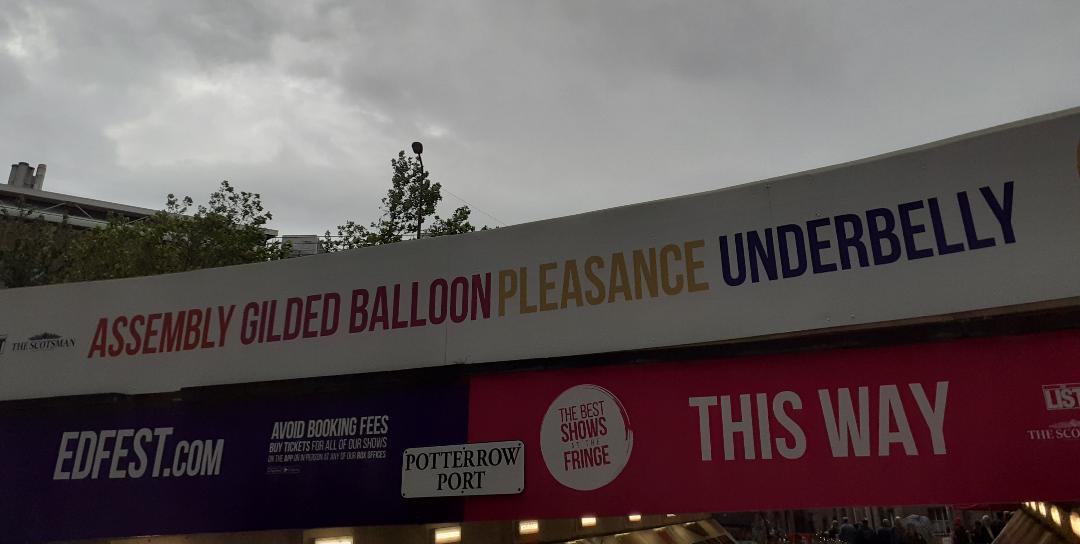
The play is on at The Green Venues, George Street, Edinburgh 12:45pm – 13:45pm up to and including Saturday 23rd August. Find the link after the interview for further details…
1 – What drew you to write a play about the First World War Bantams?
Good question! This is where I’d love to be able to say, ‘Well Louise, my grandfather was a bantam’. Sadly, I’d be lying to you if I said that (it would make a great story though!).
I was watching a video on YouTube of a former US special forces soldier interviewing another former special forces soldier. Both men were massively built. Huge shoulders, big arms, no necks. Very big men.
Now, my grandfather, uncle and two cousins served in the military and none o them looked like these guys. It got me thinking: ‘What’s the best size for a soldier?’
I did a little online research and found myself in a forum discussing this very thing. The initial consensus was ‘bigger is better’. Bigger men are stronger, they can carry more kit and they’re more intimidating to the enemy.
Then someone asked, ‘What about the Japanese?’. Someone else asked, ‘What about the Gurkhas?’ And another asked, ‘What about the Bantams?’
Everyone did a double-take at this point, including me. ‘Bantams? What are they?’ That’s when my journey began. I did some more research and discovered that Britain recruited thousands of men between 5′-5’3” during the Great War, those men were called ‘bantams’and there were books written about them!
I promptly hovered up everything I could find on the bantams, beginning with Sidney Allinson’s 1985 book, ‘The Bantams’
I was fascinated to learn about these men and, being a short man myself, inspired by their courage and tenacity in the face of not just physical danger, but also discrimination and prejudice on account of their height.
Regarded as ‘degenerate’ by some because of their short stature, they signed up in their tens of thousands to serve their country.
2 – The Last Bantam is based on real events. What emotions did you feel when creating and acting out the play?
I prefer to say, ‘inspired by real events’ rather than ‘based on’ actually. While there is documentary evidence for a great deal of what happens in my play, there’s a dollop of my imagination in there too!
Researching The Last Bantam, I felt indignation at the way these short men were treated and pride at their achievements.
Acting out the play, I feel a range of emotions, not always associated with the play itself. For example, the other day I felt simultaneously sorry for and irritated by someone who’s position in the room meant they couldn’t easily see my performance. They picked a seat at the end of a row and someone sat down directly in front of them. They could not see me without craning round the person in front. It was the fault of the poor seating layout, but it bothered me that someone who’d invested time and money to see my show could barely see it. I found myself thinking ‘Why don’t you move?!!!’ I even contemplated stopping the show to find great person a better seat, would you believe that? I didn’t of course, but if any of your readers find themselves in a poor seating position, they have my permission to move to a better one. Yes, your movement will be noticed and it will annoy me a little, but knowing you can’t see the show you paid for because of someone in front of you bothers me more.
Move!
There are other feelings I experience though which are entirely play-related. I try as much as I can, not to ‘act’ my character but to ‘be’ my character. When he’s irritated, I’m irritated, when he’s sad, or angry or scared, I’m sad or angry or scared. I summon and use my own feelings when I’m Patrick Michael Wolfe. It’s quite a rollercoaster!
3 – How did you research The Last Bantam?
I read everything I could, and there’s more out there than you might think. In addition to Sydney Allinson’s, ‘The Bantams’, there’s also books focussing on the Manchester bantams as well and the Cheshire Bantams and at least two books on the Battle of Bourlon Wood. I also drew heavily from Maurice Bacon’s, ‘The Blast of War’, a history of the 15th Bantam Battalion, Notts & Derby Regiment. My character, Patrick Michael Wolfe, is based in this battalion and it was hugely useful to know where precisely they were at various points in the war.
The Blast of War is written by Maurice Bacon. His father and grandfather both served in the same bantam battalion and meeting him last year to discuss his book was very special to me.
Interestingly, during the last couple of years there’s been a number of videos on YouTube about the bantams. There’s a very good one by a Youtuber called The History Guy and another called The History Chap. All these videos seem to have emerged over the last couple of years, much as my play has done. Could there be something in the air I wonder!
4 – You’ve taken great care in the detail of the uniform, right down to accessories, such as the watch. How did you source this and was it in easy or challenging process?
I decided right from the start that I wanted to look the part as much as possible. I’m no historian or costume commissar, but whether it’s a play, a tv series or a film, a poor costume undermines everything! If someone doesn’t look like the person they’re pretending to be, if they don’t meet our visual expectations, we find it harder to join them in the world they’re trying to create.
I originally tried sourcing actual British uniforms from the Great War and realised that not only could I not afford to do that, but a 100+ years old garment probably wouldn’t survive too many Edinburgh Fringes!
Instead I purchased reproduction uniform and kit, taking note of advice from re-reactors as to who provides the best quality. Quality was paramount. I wanted a costume I could use in the long term, not something that would fall apart after a few shows. A costume that didn’t just look right, but felt right too. You’d be surprised how many people want to physically touch the fabric of my costume. They want to feel the weight and the roughness of it.
I sourced most of my costume from Soldier of Fortune, an online militaria costume provider. Having purchased my costume I then had to distress it.
My character is meant to have spent to years fighting in France. His uniform should reflect that and it does. It’s dirty and stained and ripped and torn, with many amateurish in-the-field repairs. Holes are patched over and rips crudely stitched back together, as was done in action.
In some respects, the uniform is a metaphor for the man. It’s dirty, worn and damaged, but it’s still functional. It’s still in the fight. One look at the uniform and the audience knows, ‘This man’s been through it’.
Audiences are hugely impressed by my costume. They really appreciate the effort I’ve made to look as authentic as possible. The public appreciates it too and it’s a huge help when I’m flyering, promoting my show. It cuts through the noise of Edinburgh and it makes me smile to know that feature in hundreds of holiday photographs!
5 – The Last Bantam is a one man play, what does it feel like to be
carrying the whole play in your own and asking the audience to imagine the scene, since there is no scenery?
Carrying the play in my own doesn’t bother me at all. It’s rather liberating actually. I determine the rhythm and pace of it and I don’t have to worry about fellow actors missing their cues, forgetting their lines or falling out with each other. I was in a comedy show once in which my two fellow cast members had a spectacular falling-out and it almost scuppered the show!
Being a self-employed healthcare trainer has also prepared me to be a solo performer. The roles aren’t that different. I arrive at a place, get changed, engage with a group of strangers and leave. And I’ve been doing that 25 years!
6 – You were a copywriter many years ago, what or who inspired you to change career and take to the stage?
I’m actually very, very new to acting. After a career in advertising I became a nurse and have been a freelance healthcare trainer for over 25 years. I remain both a nurse and a trainer but I got into stand up comedy in 2015 doing the open mic circuit as a character comic. When I wrote the first draft of Bantam in 2023 I assumed I’d be performing it myself.
I’m retrospect, my assumption that it would be me might seem a little presumptuous, maybe even arrogant. After all, I had no acting training and had never done anything like this before in my life. But I’d spent 8 years doing character comedy and over 20 years addressing groups of strangers as a trainer. I knew I could learn my lines and deliver them.
Whether I could deliver them well…well that was for the audience to decide!
7 – What’s next for you and your play?
I need to focus on my day job! I’m a freelance teacher in care homes and my first priority when the Fringe is over is to drum up some training business!I
With regards to The Last Bantam,I’d love to tour it. There’s lots of small theatres in London I could take it to, and many farther afield too. It’s all a matter of logistics and economics. I can accept a loss doing the Edinburgh Fringe, but future shows will need to cover their costs.
I also plan on publishing The Last Bantam and would absolutely love to have the story made into other a tv series or a movie. I might get Danny DeVito in board! I wish I was doing this ten years ago. Back then the BBC produced several films and documentaries to commemorate the Great War.
It would have been the perfect time for the bantams!
8 – Where can people follow you On social media?
The Last Bantam can be found on Facebook, Twitter and Instagram.
You can find more details on the Ed Fringe site here: https://www.edfringe.com/tickets/whats-on/the-last-bantam







 Bookmarks and Stages by Lou