An Imposter In Shetland
By Marsali Taylor
Today I am on the Reading Between the Lines blog tour with a little extract, given by the author/publisher’s permission about the new crime fiction book by Edinburgh writer, Marsali Taylor, An Imposter In Shetland. Check out the blurb, the extract and a couple of questions posed to the author below…
Ann Cleeves says “This series is a must read for anyone who loves the sea, or islands or joyous intricate storylines”.
Blurb
When an internet lifestyle influencer arrives on Shetland to document her ‘perfect’ holiday, the locals are somewhat sceptical.
Joining a boat trip to the remote islands of St Kilda with sailing sleuth Cass Lynch and her partner DI Gavin Macrae, the young woman seems more concerned with her phone than the scenery.
But when it’s time to leave, there’s no sign of her. Despite mounting a desperate search, she’s seemingly vanished without trace – from a small island in the middle of the sea.
As a puzzling investigation gathers pace, there are more questions than answers – and uncovering the truth will reveal dark and long-hidden secrets…
Extract – The investigation begins:
‘Cass Lynch, the mate,’ Gavin said. ‘Cass, DS Macdonald, from Lochmaddy.’ He smiled and added, ‘Cass is my partner, so we can speak in front of her, to save her cross-questioning me later.’
He motioned DS Macdonald to the table, and I passed round tea and biscuits, then finished stirring my mince and went on to potato peeling, listening hard.
‘Well,’ DS Macdonald said. She had the same soft accent as Gavin. ‘I talked to the warden on Hirta, and there’s still no sign of your missing passenger. The helicopter found nothing, you found nothing.’
Gavin nodded.
‘So the most likely scenario is that she went too close to the cliff, overbalanced and fell.’ She looked up at Gavin. ‘She’d have gone under in seconds, particularly if she had a heavy backpack.’
Magnie shook his head. ‘She had a backpack, fairly bulky, but there was no weight in it. I handed it down to her in the dinghy. At a guess, her jumper and her jacket, maybe, and her phone and, what do they call those things, selfie stick? Something like that. I couldn’t see inside o’ it, but the top of a stick was poking up into the corner.’
‘You didn’t find it?’
Magnie shook his head. ‘It must have gone with her.’ He frowned. ‘More likely to act as a float for the body, but I suppose it’d have had time to fill with water.’
‘Besides,’ Gavin said, ‘we’re pretty certain she didn’t climb the hill. She was seen on the shore at half past one, and walking along towards the headland, Ruival, not long after two. Nobody saw her after that. Those bare hills, you’d have seen her moving on them.’
‘I went about half-way up the hill,’ Magnie said, ‘That would have been a bit after two. I met Sophie coming down, on the road, and went on up past her, and sat for a bit, looking around. There was no sign of Tiede on the beach then, and I’m fairly sure I’d have seen her on the hill, if she’d climbed it.’
‘Also,’ Gavin said, ‘I went along the headland myself. Ruival. It was soft turf all along the far side, and there were no scrape marks in it, as if she had felt herself going and had struggled for a grip. If she went over there, she went straight over from the edge. Perhaps she fell giddy of a sudden, or lost her balance.’
She’d been unexpectedly sure-footed on the Ullapool pier but accidents happened,
‘You’ve not mentioned suicide as a possibility,’ DS Macdonald said. We all three shook our heads together.
‘You can never tell, of course,’ Gavin said, ‘but there were no signs of that.’
‘No,’ Magnie agreed. ‘But she spent the first o’ the morning wi’ the London couple. You could ask them.’
DS Macdonald nodded, and made a note of it. We were silent for a moment.
‘I phoned Lerwick from the Warden’s house,’ Gavin said, ‘and got an update once we got a signal. The secretary, Elise, lives at home with her parents. Shona, that’s one of my officers, went round to call but she wasn’t there. They have a caravan, and she’s taken it off for the weekend – her mother wasn’t sure where, and her phone went straight to voicemail. The mother didn’t think she knew much about Tiede, “or nothing that she’s telt us,” and she didn’t know where Tiedecame from, or what her real name was, if it wasn’t TiedeBarton.’
What made you initially decide to write the first Shetland Sailing Mystery, Death on a Shetland Longship, and did you see it becoming a series?
I’d always expected it to be a series, with Cass and Gavin’s relationship slowly growing. I’m not sure I expected so many books! – Imposter is number 13. Write about what you know is the usual advice, and the older I get, the more sure I am that it’s true. I’m not from Shetland, I grew up near Edinburgh, but I came here as a very new, very green teacher in 1981, and I’ve lived here ever since. I’m not sure I know anywhere else well enough to write about it … as for sailing, well, I grew up with boats, as our childhood summers were spent in the remote West Highlands, in a cottage you could only get to by boat. I discovered sailing in my teens. There were no crewing positions for a girl, so I used my gap-year earnings to buy a sailing dinghy and learned to sail by capsizing all round the Forth. When I came to Shetland, I kept sailing my beloved Lady Blue for several years, then moved up to a small keelboat: the original of Cass’s Khalida. I’ve done all of Cass’s sailing journeys except the epic trip down to Gavin’s loch in Death of a Shetland Sailor. She’s young, fit and very experienced … but I researched it as thoroughly as if I was going to sail it, and when I did that same passage on the tall ship Sørlandet (described in Death in Shetland Waters) I felt like I’d already been there.
What has been your favourite book so far to write in the series and why?
I enjoy writing every book, because each has different challenges, like dovetailing the investigation and the 1981 diary in Death at a Shetland Festival, or working out the Hnafatafl moves that structure Death on a Shetland Isle, but I think my very favourite is A Shetland Winter Mystery, which I was writing during Covid. We had a particularly snowy winter, so I had fun describing how gorgeous Shetland is when the hills are all white, and it’s set around the old Norse Christmas, so I could talk about the old customs at Yule. Those include the trows, Shetland’s little people, who are let loose to create mischief during the darkest days. I was missing my grandchildren, who live south, so I let the teenagers take over the book with their trowie antics… until the fun turns serious when one of them goes missing, leaving only a trail of footprints which end in the middle of a snow-covered field.
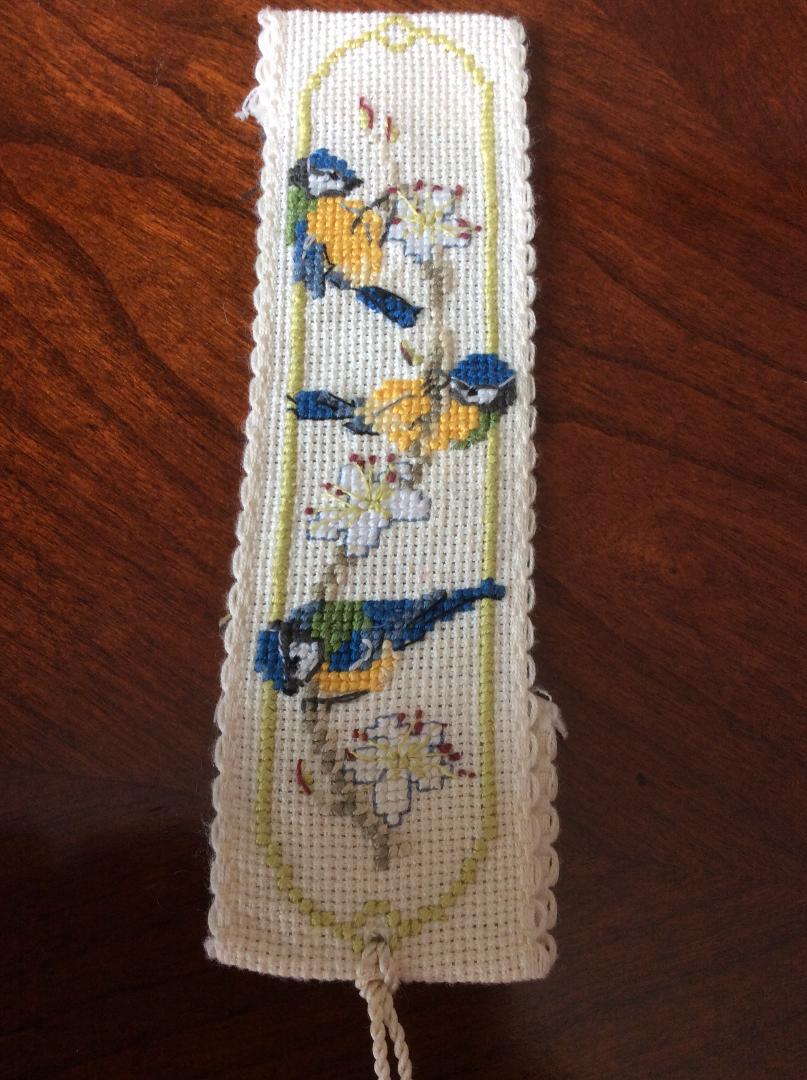




 Bookmarks and Stages by Lou