#Review of Inside No9 Stage Fright #InsideNo9StageFright #InsideNo9 #StevePemberton #ReeceShearsmith #Theatre #TheatrePlay #Stage #UKTour

Inside No9
By Steve Pemberton and Reece Shearsmith

Review by Louise Cannon

Rating: 5 out of 5.

Inside No.9 hits all the right notes from start to finish.

It starts with one of the best and surprising ways to capture an audience’s attention. It has the best short play before the main show about theatre etiquette. It’s one that could be replicated in every theatre before shows. It’s jaw-droppingly amazing with tensions rising, reaching an incredible crescendo. Then the main event begins.

Inside No9 is cleverly quirky, witty and at times scary. It’s a genius stage version of the tv series Inside No9. 

Starring the original creators Reece Shearsmith and Steve Pemberton with a scene of a different unexpected guest star for each performance, who are not told in advance what they’re going to have to do. The ad-lib and how they get around it is funny and all good fun natured. Apparently the list of people wanting to be part of this extraordinary play was exceedingly long.

From screen to stage, this play translates very well onto the stage. The premise is putting on a show, the theatre is haunted and there’s a superstition that you will learn about pertaining to your theatre, so far from the usual and more well-known theatre superstition.

There are many references to past, present actors and comedians and a future show and theatre in general. Some songs also bring levity in a quirky sort of way.
There are some dark, strange goings on occur too in a hammerhead horror type of way.

If you haven’t seen the tv series before, it’s a bit like The Tales of the Unexpected but with darker twists. The series can be caught on IPlayer.

Inside No9 translates very well from screen to stage with the fast-paced, darkly humorous writing. The premise is putting on a show, the theatre is haunted, many references to past, present actors and comedians and a future show and theatre in general. There are some songs that bring levity in a quirky sort of way. Some dark, strange goings on occur too. I may have jumped a couple of times lol.
It’s all strangely enjoyable. Inside No.9 hits all the right notes and leaves you on a high as you leave the theatre.

It is on tour now around the UK and returning soon to London. 
Inside No.9 Tour Dates and Tickets

*Please note I am not affiliated to any theatre nor company.

#Review by Lou of The Seagull by Anton Chekhov – UK Tour starring Caroline Quentin and an ensemble cast – 5 STARS #Theatre #TheatrePlay @cqgardens @quentyquestions @forbesmasson @chichesterft #TheSeagull #WhatsOnStage #UKTour

The Seagull
By Anton Chekhov

Adapted by Mike Poulton
Directed by James Brining

Review written by Louise Cannon

Rating: 5 out of 5.

The Seagull was a play I bought a ticket for as a treat to myself to and was not disappointed, so I have chosen to write a review.
The Seagull
is currently touring. I saw it at the Lyceum in Edinburgh. Next it will swoop into Chichester Festival Theatre, see link below.

The Seagull is a relatable masterpiece!

The play may have been written many years ago, but it still feels fresh today with its eternally modern themes of a family estate which includes a fading actress, a writer and all their desires, ambitions and regrets. It’s fascinating dynamics to observe how everyone emotionally relates to each other, which is sometimes subtle and other times quite explosive in a backdrop of beautiful, well-crafted scenery.
You can really see and feel the chasm that’s created between the ageing actress who likes the traditional and the younger writer who wants to bring something new and more imaginative to theatre. It was a delight to see a bit of play within a play.
Throughout the play, you can see the vulnerabilities showing in how the characters express themselves outwardly and feel, inwardly. It’s a powerful play and one that’s still perfect for our times as the human condition is played out in its many forms, portraying the tragic and comedy of life.

Caroline Quentin sparkles with an exceedingly strong and impressive performance as ageing actress, Irena Arkadina. Her performance transcends into the audience as both the tactlessness and vulnerable sides to her can be both seen and felt. Her timing and ability to portray many emotional complexities within one person are sublime!

Lorn Macdonald plays Arkandina’s ambitious, yet depressive son, Konstantin with sensitivity, vulnerability.

Other stand out performances were Forbes Masson as Dr. Dorn, showing hidden depths, Tallulah Grieve as Masha who gave an expressive performance about how she feels about life, Harmony Rose-Bremner as Nina is convincing as the muse.

The others in this ensemble cast also held their own and gave strong, expressive performances that lure you into their psyche and lives. Together the cast is so powerful that this play makes you care, think, feel many emotions and draws you into their world.

This was the first Chekhov play I’d seen and I urge you not to miss it.

You can book The Seagull at Chichester Festival Theatre here: The Seagull

*please note I am not affiliated to any theatre nor performer. I bought my ticket and I was so impressed I wanted to write a review.

#Review by Lou of Murder: A Search for the Truth. A talk by David Swindle and Heather Suttie, on tour @onetakewoop @crimeexpertise #TrueCrime #TrueCrimeTalk #WhatsOnStage #WhatsOnScotland #Touring

Murder: A Search for the Truth
True Crime Talk by David Swindle and Heather Suttie

Rating: 5 out of 5.

David Swindle is a former senior investigating officer with over 40 years of experience. He and his team have solved many cases, including the high profile murder of Angelika Kluk, a shocking murder committed by Peter Tobin, which he extensively sheds light on.

Heather Suttie is a broadcaster on the likes of Heart radio, book reviewer in the likes of The Sunday Mail (not to be confused with Mail on Sunday) and has a podcast as well as book club.

You can find out where the talk will be next and more at the bottom of my review.

Lots of people are enthralled by true crime and no wonder when murders and other crimes happen around us. The state of mind of someone, the nature v nurture theories, the reasoning behind why someone wants to commit an evil act is fascinating.

What David Swindle and Heather Suttie bring to the stage is compellingly engaging in both content, the presentation of facts and great stage presence.

The most striking and compassionate thing is how David Swindle, although mentions various killers, makes their victims the focus so we never forget them.
In such sadness of the  brutality of the heinous crimes, there’s a warmth and determination that filters through to ensure the victims becomes where the attention of the speakers and the audience lies, not so much the killers.

David Swindle. fascinatingly talks about his time in the police and all the changes he’s seen between, as he calls, the Gene Hunt (Life on Mars) days of 1970 to 2011 and how what is depicted on tv is different and faster paced than real life crime solving. 
In powerpoints you see the transitions made to more joined up thinking and more collaborations with different agencies, including forensic psychologists are used to assist in crime-solving and the advent of and increased technologies of DNA profiling. I wouldn’t bother committing a crime, the advances in DNA are immense, making it harder to commit the perfect crime, best to stay on the right side of the law.

He ended on taking a “deep-dive” into Peter Tobin, including a clip from tv programme, Crimewatch appealing for the public support. There are cold case units around Scotland still solving historic crimes. He sees a time and place where the media can become useful. Intelligently, he does, however, have thought-provoking warnings to “armchair detectives” and “keyboard warriors” and the detrimental damage they can do or at least hamper and slow down the process of solving a case. There’s a lot for people who partake in such activities to think about.

Find out more in the QR code below:

#Interview with comedian and actor Lucy Pearman with Lou on new show, Lunartic #LucyPearman #Lunartic @sohotheatre 29th Sept – 4th Oct #comedy #theatre #stage

Interview with comedian and actor, Lucy Pearman  Lunartic

Interview by Louise Cannon

It gives me great pleasure to be interviewing about her new comedy show, Lunartic, which is transferring from a sold out shows at the Edinburgh Fringe Festival Theatre to Soho Theatre from Monday 29 September – Saturday 4 October 2025 at 9:15pm. Please find how to book at the end of the interview.
Thank you and welcome to Bookmarks and Stages, Lucy Pearman.

Lucy Pearman’s latest show, Lunartic was nominated for the Malcolm Hardee Award for Comic Originality and nominated for Best Variety Show at the Leicester Comedy Festival Awards.
She has also wrote and starred in BBC Three’s Please Help, which was nominated for a BAFTA following its release. She has appeared on Red Dwarf and other tv shows. She was nominated for Best Newcomer at the Edinburgh Comedy Awards in 2017 for her debut full-hour show Maid of Cabbage.
She has successfully had other shows transfer from the Edinburgh Fringe to SoHo Theatre, such as Baggage.

Before the interview, which contains fascinating and entertaining insights into the themes of the play, the BAFTAs, Red Dwarf and some humour, here is a bit about Lunartic.

In Lunartic, the Moon is putting on a show. But, as the Sun keeps reminding her, the Moon will never be a star – and without him, she’d be invisible altogether. Through her trademark blend of surreal character comedy, joyful audience participation and prop-fuelled silliness, Pearman takes us into a huge-hearted story about loneliness, big dreams, and wanting to be seen. As the Sun threatens to switch off the light altogether with a total eclipse, the Moon faces the dark – and the audience is invited to join her in a wonderfully daft celestial adventure.

Without further ado, here is our interview:

  1. Lunartic, it’s a clever, playful, fun name, what inspired you to call your show this?

   I quite like using references to madness because I’ve very often been called those things. My 2018 show was called *Fruit Loop*. So I think the titles just come from all the things I’ve been rightly or wrongly called along the way.

2. Lunartic was a sell-out show at the Edinburgh Fringe Festival and has now transferred to Soho Theatre. How does that feel, to know your show has life beyond a major festival, and what does it take to tour it?

   Incredible! I’m so, so happy that I get to make what’s in my brain and people fancy coming to watch it.

   I think the key to touring something is being sure people will come. I’ve started a mailing list, maybe that will help!

3. Interestingly, the characters in this play are the sun and the moon, with the moon putting on a show and the sun reminding it that it is also required. What inspired this concept?

   Well, I sort of thought about the moon and wondered if she minds that, if the sun switched off, she’d just be a sort of big rock in the dark.

   I’ve had times where I’ve felt a bit like a big old rock in the dark, so I sort of connected with that idea.

   I like the thought that everybody loves the sun so much and is so happy when it’s around, but what if he was a bit of a dick, the villain of the piece I guess.

4. The themes are loneliness and big dreams. How did you weave these into such a celestial storyline, and why do you feel they’re important themes to focus on?

   I have always felt like the moon looks so isolated and sad… I would always talk to the moon after gigs like a really trusty nocturnal colleague.

   I liked the idea that she worked nights but also love the way she pops out in the day sometimes, and I imagined the sun being a bit cross about that, like she’s stepping on his shift a bit.

5. Since your show covers big dreams, what is one of your big dreams and why?

   I had an actual dream that I was a clown wobbling around Liberty, that was quite nice, that feels within my reach. But career dreams… I would love to work with Julia Davis or make film, but also, hand on heart, I’d like to buy a pig.

6. What do you hope people take away from the show?

   Well, nothing, because I will need all the props for the next night. It’s too stressful when people take everything home with them.

7. You were BAFTA nominated for Channel Three’s *Please Help*. Did you go to the party, what was that like? If you didn’t, what did it feel like to know you were nominated for such a prestigious award?

   I did go to the party and I felt like a competition winner, but it was bonkers and amazing.

   My mum lost her shoe, not because she’s such a liability, but the cloakroom threw them away, which wasn’t ideal, to be honest with you.

8. You starred in Dave’s Red Dwarf feature-length special. What was your best experience within this show?

   Oh God, walking on set, meeting the cast, wearing fake custom made fang teeth, pretending I was in space. But my favourite bit was probably eating croissants with Craig Charles.

9. What’s next for you in your successful career?

   I think it’s: buy a pig, then off to Hollywood… with the pig. Me and the pig, the pig’s flying and I’m holding on for dear life… could happen!

You can take a trip to the moon, via Soho theatre by checking out the box office here: https://sohotheatre.com/

Follow her Lucy Pearman here:
Instagram: lpeaman
Website: lucypearman.com

#Interview with Lorna Rose Treen By Lou about 24 Hour Diner People #RoseTreen @Instalorns @sohotheatre #24HourDinerPeople

Interview with Lorna Rose Treen
about 24 Hour Diner People

Soho Theatre – 8th – 13th September 2025

Interview conducted by Louise Cannon

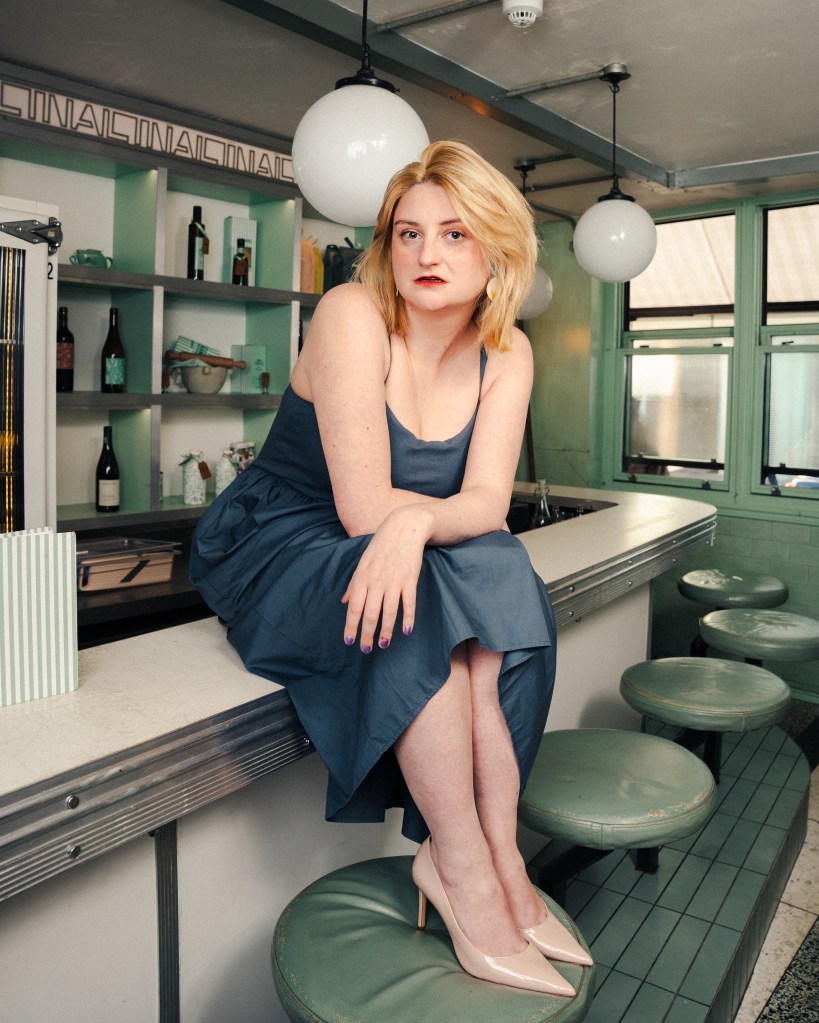
I had the pleasure of interviewing the award-winning actor Lorna Rose Treen about her popular show, 24 Hour Diner People now at Soho Theatre, London. In August 2025, it sold out all 30 shows at the Edinburgh Fringe Festival, coupled with many glowing reviews, it’s the successful stage show you don’t want to miss!
Find out a bit about it below and then onto the interview. At the end of the interview, you can find out how you can get your hands on tickets so you can see the show yourselves and the awards won.
*Please note, I am not affiliated to anyone or anything.

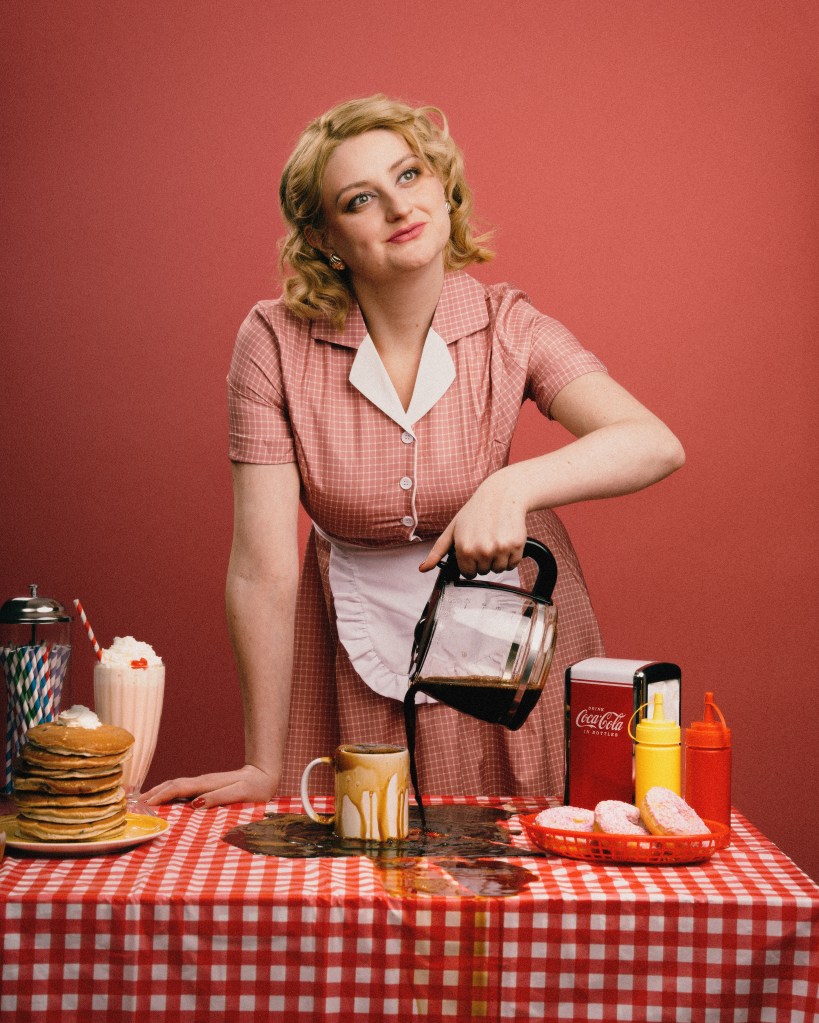
24 Hour Diner People offers up a full-fat collection of eccentric, escapist, and delightfully silly characters – all served with a side of proper jokes. Expect to meet a waitress who dreams of flying, a trucker with unusually long arms, a woman who’s kept her umbilical cord, a 1960s spy on a caffeine high, and a teenager giddy from her first kiss – all somehow coexisting in a strange, time-warped roadside diner.

1. You sold out at the Edinburgh Fringe Festival and had to add extra dates due to demand for your show 24 Hour Diner People. What did that feel like at the largest festival in the world and what are your hopes as your tour it to Soho theatre, London?

It felt like an administrative error! But no it was honestly so nice to see the tickets flying, especially because no one had seen the finished show yet so it was mostly selling because people wanted to spend time with me whatever it was I was gonna do. What a lovely compliment! 

2. You have some eccentric characters in your show. Are there particular people or idiosyncrasies you’ve observed in human behaviour to create your characters?

I love watching documentaries and imitating the way we used to speak in the past. I am a nightmare to watch TV with because I parrot whatever is being said and try to copy the intonation. My grandma taught me this, we were a nightmare duo. 

3. What inspired you to create characters that are seen as being “voiceless” and giving them a voice and in a comical way?

I like watching the background characters in films and TV, especially from years gone by. I love giving a 5 minute monologue to a character who is a background character for a reason. So often these are women, whilst the men get to be funny in the spotlight, so it’s fun to put the attention on the women and make them get the laughs.

4. The diner you’ve created sounds brilliant fun. You say it’s a fantasy Americana seen through your Midlander eyes. What was the pull for you to build this type dineras the premise for you show?

Fringe is long, and if your show has life after fringe – it’s even longer. I wanted to build an environment I wanted to lock in and spend a lot of time in. Americans who’ve seen the show have commented that I clearly love the mundanity of the day to day, but for me a diner in America is a most exciting place to be. Growing up there were diners in every sitcom, drama, musical and film. Even though they weren’t real, they hold a place of play and joy andescapism built entirely from fiction and dreams, that you just couldn’t get in Redditch’s (now defunct) Chicago Rock Cafe.

5. If you could meet anyone in a diner, who would it be and why?

I’d like to meet James Broom from sixthform because he still owes me £20. 

6. You’re no stranger to comedy and have worked with Emily Atack on her show (ITV), Time of the Week (BBC R4), true crime mockumentary, Criminally Untrue and more… what was it like to work on such huge hits and people and how do you take those experiences forward into your expanding comedic career?

Time of the Week is my radio show I co-created with Jonathan Oldfield. We star in it alongside Sian Clifford, who is unbelievably funny. It’s such an honour to be stupid alongside her. She’s like, properly properly good. Series 2 is coming out later this year, and I can’t wait for everyone to hear the nonsense we have written and made Sian say. The writers room and cast are made up of people we not only find incredibly funny, but also people who we love working with. I think sometimes solo performing can feel a little lonely (not when you’re on stage connecting with an audience, but all the organising and writing process). So time of the week is a real beacon for me to connect with my fellow character colleagues like Ada Player and Alice Cockayne, Jodie Mitchell, and Jonathan. And touch base with some of the best new writers like Priya Hall. It’s a real delight to bounce your ideas off someone you think is the funniest person in the world. There’s a reason why American comedy is so successful and I think a big factor is the writer room culture. It really grows and nurtures talent.

7. Going back to 24 Hour Diner People, what do you hope people will take away from it.

I just want them to have had a stupid nice time. I don’t think my comedy will ever make you learn nothin. 

8. Where can people follow you on social media?

Instalorns on instagram 

LornaRegionalTransport on TikTok 

Deborah Meaden on Linked in

Lorna Rose Treen will be performing 24 Hour Diner People at Soho Theatre from 8th-13th September. Tickets here – https://sohotheatre.com/events/lorna-rose-treen-24-hour-diner-people/

Chortle’s Best Alternative Act 2024 – Winner

Channel 4 Sean Lock Award 2023 – Finalist

Dave’s Best Joke of the Fringe 2023 – Winner

Chortle’s Best Newcomer 2023 – Winner

BBC New Comedian 2023 – Semi Finalist

Funny Women Stage Award 2022 – Winner

Funny Women Comedy Shorts Award 2022 – Winner

#Interview with Michael Hughes about his play, The Last Bantam @TheLastBantam @GreensideVenue #EdFringe #Theatre #Play #TheLastBantam

The Last Bantam
Q&A with Michael Hughes

Conducted by Bookmarks and Stages – Louise Cannon

Do you know what a Bantam of the First World War is? Whether you do or not, Michael Hughes, writer and actor of The Last Bantam has a lot of fascinating information about them and what it is like to act this play out. He also has interesting things to say about audiences and what he wishes to do with the play after the Edinburgh Fringe Festival.

I, recently had the privilege of interviewing Michael Hughes about his play, The Last Bantem. March downwards on the page to find out the fascinatingly detailed answers to my short, but loaded questions.

The play is on at The Green Venues, George Street, Edinburgh 12:45pm – 13:45pm up to and including Saturday 23rd August. Find the link after the interview for further details…

1 – What drew you to write a play about the First World War Bantams?

Good question! This is where I’d love to be able to say, ‘Well Louise, my grandfather was a bantam’. Sadly, I’d be lying to you if I said that (it would make a great story though!).
I was watching a video on YouTube of a former US special forces soldier interviewing another former special forces soldier. Both men were massively built. Huge shoulders, big arms, no necks. Very big men.

Now, my grandfather, uncle and two cousins served in the military and none o them looked like these guys. It got me thinking: ‘What’s the best size for a soldier?’

I did a little online research and found myself in a forum discussing this very thing. The initial consensus was ‘bigger is better’. Bigger men are stronger, they can carry more kit and they’re more intimidating to the enemy.
Then someone asked, ‘What about the Japanese?’. Someone else asked, ‘What about the Gurkhas?’ And another asked, ‘What about the Bantams?’

Everyone did a double-take at this point, including me. ‘Bantams? What are they?’ That’s when my journey began. I did some more research and discovered that Britain recruited thousands of men between 5′-5’3” during the Great War, those men were called ‘bantams’and there were books written about them!

I promptly hovered up everything I could find on the bantams, beginning with Sidney Allinson’s 1985 book, ‘The Bantams’

I was fascinated to learn about these men and, being a short man myself, inspired by their courage and tenacity in the face of not just physical danger, but also discrimination and prejudice on account of their height.
Regarded as ‘degenerate’ by some because of their short stature, they signed up in their tens of thousands to serve their country.

2 – The Last Bantam is based on real events. What emotions did you feel when creating and acting out the play?

I prefer to say, ‘inspired by real events’ rather than ‘based on’ actually. While there is documentary evidence for a great deal of what happens in my play, there’s a dollop of my imagination in there too!

Researching The Last Bantam, I felt indignation at the way these short men were treated and pride at their achievements.

Acting out the play, I feel a range of emotions, not always associated with the play itself. For example, the other day I felt simultaneously sorry for and irritated by someone who’s position in the room meant they couldn’t easily see my performance. They picked a seat at the end of a row and someone sat down directly in front of them. They could not see me without craning round the person in front. It was the fault of the poor seating layout, but it bothered me that someone who’d invested time and money to see my show could barely see it. I found myself thinking ‘Why don’t you move?!!!’ I even contemplated stopping the show to find great person a better seat, would you believe that? I didn’t of course, but if any of your readers find themselves in a poor seating position, they have my permission to move to a better one. Yes, your movement will be noticed and it will annoy me a little, but knowing you can’t see the show you paid for because of someone in front of you bothers me more.

Move!

There are other feelings I experience though which are entirely play-related. I try as much as I can, not to ‘act’ my character but to ‘be’ my character. When he’s irritated, I’m irritated, when he’s sad, or angry or scared, I’m sad or angry or scared. I summon and use my own feelings when I’m Patrick Michael Wolfe. It’s quite a rollercoaster!

3 – How did you research The Last Bantam?

I read everything I could, and there’s more out there than you might think. In addition to Sydney Allinson’s, ‘The Bantams’, there’s also books focussing on the Manchester bantams as well and the Cheshire Bantams and at least two books on the Battle of Bourlon Wood. I also drew heavily from Maurice Bacon’s, ‘The Blast of War’, a history of the 15th Bantam Battalion, Notts & Derby Regiment. My character, Patrick Michael Wolfe, is based in this battalion and it was hugely useful to know where precisely they were at various points in the war.

The Blast of War is written by Maurice Bacon. His father and grandfather both served in the same bantam battalion and meeting him last year to discuss his book was very special to me.

Interestingly, during the last couple of years there’s been a number of videos on YouTube about the bantams. There’s a very good one by a Youtuber called The History Guy and another called The History Chap. All these videos seem to have emerged over the last couple of years, much as my play has done. Could there be something in the air I wonder!

4 – You’ve taken great care in the detail of the uniform, right down to accessories, such as the watch. How did you source this and was it in easy or challenging process?

I decided right from the start that I wanted to look the part as much as possible. I’m no historian or costume commissar, but whether it’s a play, a tv series or a film, a poor costume undermines everything! If someone doesn’t look like the person they’re pretending to be, if they don’t meet our visual expectations, we find it harder to join them in the world they’re trying to create.

I originally tried sourcing actual British uniforms from the Great War and realised that not only could I not afford to do that, but a 100+ years old garment probably wouldn’t survive too many Edinburgh Fringes!

Instead I purchased reproduction uniform and kit, taking note of advice from re-reactors as to who provides the best quality. Quality was paramount. I wanted a costume I could use in the long term, not something that would fall apart after a few shows. A costume that didn’t just look right, but felt right too. You’d be surprised how many people want to physically touch the fabric of my costume. They want to feel the weight and the roughness of it.

I sourced most of my costume from Soldier of Fortune, an online militaria costume provider. Having purchased my costume I then had to distress it.

My character is meant to have spent to years fighting in France. His uniform should reflect that and it does. It’s dirty and stained and ripped and torn, with many amateurish in-the-field repairs. Holes are patched over and rips crudely stitched back together, as was done in action.

In some respects, the uniform is a metaphor for the man. It’s dirty, worn and damaged, but it’s still functional. It’s still in the fight. One look at the uniform and the audience knows, ‘This man’s been through it’.

Audiences are hugely impressed by my costume. They really appreciate the effort I’ve made to look as authentic as possible. The public appreciates it too and it’s a huge help when I’m flyering, promoting my show. It cuts through the noise of Edinburgh and it makes me smile to know that feature in hundreds of holiday photographs!

5 – The Last Bantam is a one man play, what does it feel like to be
carrying the whole play in your own and asking the audience to imagine
the scene, since there is no scenery?

Carrying the play in my own doesn’t bother me at all. It’s rather liberating actually. I determine the rhythm and pace of it and I don’t have to worry about fellow actors missing their cues, forgetting their lines or falling out with each other. I was in a comedy show once in which my two fellow cast members had a spectacular falling-out and it almost scuppered the show!

Being a self-employed healthcare trainer has also prepared me to be a solo performer. The roles aren’t that different. I arrive at a place, get changed, engage with a group of strangers and leave. And I’ve been doing that 25 years!

6 – You were a copywriter many years ago, what or who inspired you to change career and take to the stage?

I’m actually very, very new to acting. After a career in advertising I became a nurse and have been a freelance healthcare trainer for over 25 years. I remain both a nurse and a trainer but I got into stand up comedy in 2015 doing the open mic circuit as a character comic. When I wrote the first draft of Bantam in 2023 I assumed I’d be performing it myself.

I’m retrospect, my assumption that it would be me might seem a little presumptuous, maybe even arrogant. After all, I had no acting training and had never done anything like this before in my life. But I’d spent 8 years doing character comedy and over 20 years addressing groups of strangers as a trainer. I knew I could learn my lines and deliver them.

Whether I could deliver them well…well that was for the audience to decide!

7 – What’s next for you and your play?

I need to focus on my day job! I’m a freelance teacher in care homes and my first priority when the Fringe is over is to drum up some training business!I

With regards to The Last Bantam,I’d love to tour it. There’s lots of small theatres in London I could take it to, and many farther afield too. It’s all a matter of logistics and economics. I can accept a loss doing the Edinburgh Fringe, but future shows will need to cover their costs.

I also plan on publishing The Last Bantam and would absolutely love to have the story made into other a tv series or a movie. I might get Danny DeVito in board! I wish I was doing this ten years ago. Back then the BBC produced several films and documentaries to commemorate the Great War.
It would have been the perfect time for the bantams!

8 – Where can people follow you On social media?

The Last Bantam can be found on Facebook, Twitter and Instagram.

You can find more details on the Ed Fringe site here: https://www.edfringe.com/tickets/whats-on/the-last-bantam