#Interview by Lou with Max Fulham about his show Full of Ham at #EdFringe @ThePleasance @maxfulhamcomedy #Comedy

Interview with Max Fulham about Full of Ham

conducted by Bookmarks and Stages – Louise Cannon
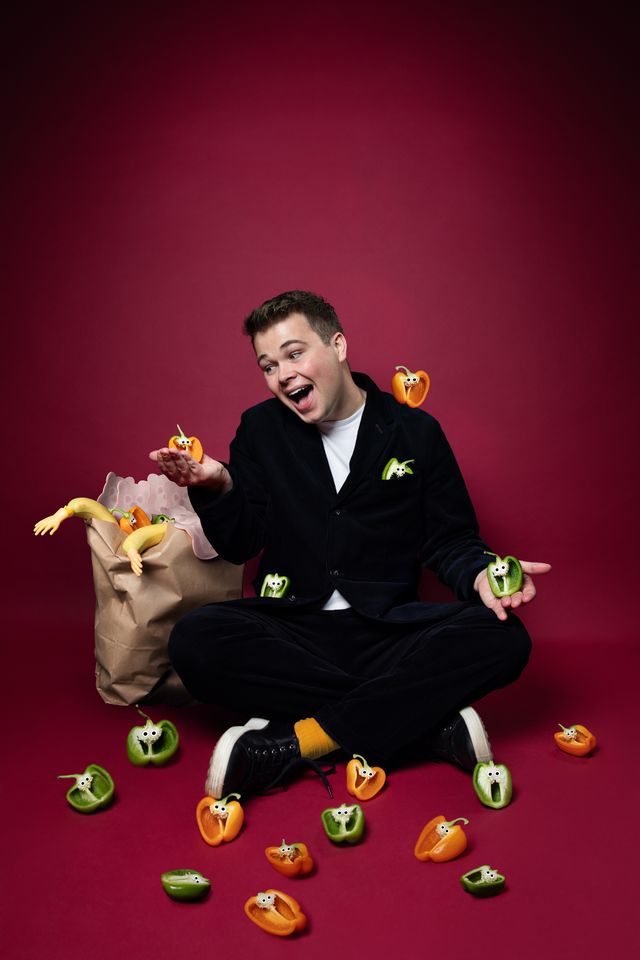
It gives me great pleasure to welcome Max Fulham to Bookmarks and Stages for a Q&A session on his comedy act, playfully named, Full of Ham.

Max Fulham likes to make people laugh through ventriloquism (vent). It’s perhaps not quite all as you’d expect. He has put his own twist on this art-form. He’s worked with some of the biggest stars in show-biz like Craig-Revel Horwood and Mel Giedroyc. He started out in Linlithgow, which is not too far from Edinburgh

Without further ado, let’s find out more through the interview.
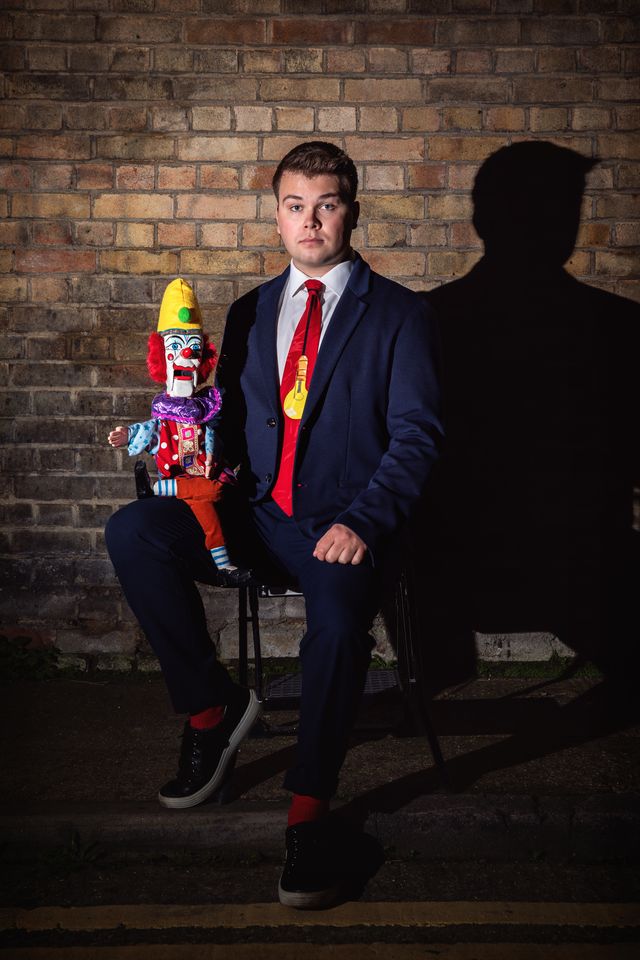
You’re known for modernising and bringing new audiences to ventriloquism, but who or what inspired you to take up this artform and create stage shows with it?

How did you train to do ventriloquism?

I taught myself as a child and there was a little worn patch of carpet in front of the mirror in my bedroom where I used to stand and practice. My first puppet was a little pink hand puppet and it was the first of many over the years I asked for for subsequent birthdays and Christmases. It probably took me a few years before I was even half decent and I am grateful I was still a child because being a bit rubbish can be sort of endearing then!

I took up ventriloquism (or vent if you’re really cool) after my parents bought me a puppet for Christmas when I was nine. I have been hooked on it since then! Having done it for a good few years now, one of the things I realised is that a lot of audiences had never seen ventriloquism live before and also had a few preconceptions about it being a bit old and naff. I suppose that is the main inspiration for trying to take it in some new directions or simply to use it to create the funniest things I can. I have been inspired by many of the greats over the years like Ray Alan and Terri Rogers and I think looking back has what has gone before can be a great jumping off point when wanting to take things in a different direction.
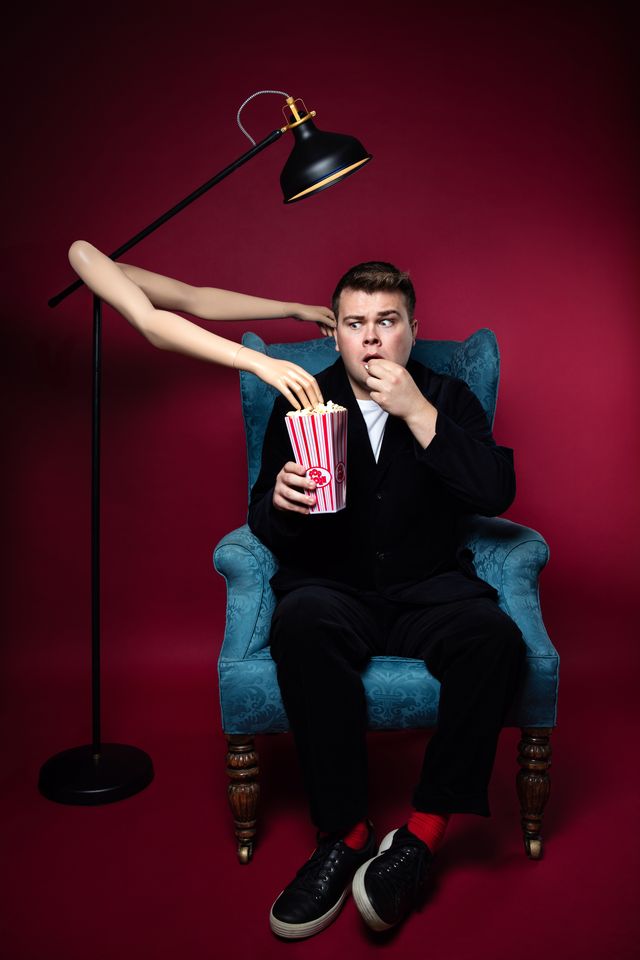
Your style is very different from having a dummy on your knee. You’ve decided to create an inner monologue, use inanimate objects and expressions.

What inspired you to do it this way and what themes do you tend to lean towards in this show and why?

It’s fun to play with what people expect from a ventriloquist and twist it into something slightly different. There may be a puppet as you’d expect at one moment but it becomes something unexpected. I have also really enjoyed exploring stuff that doesn’t use a puppet, what happens if there are multiple characters onstage but I’m the only person there? In terms of themes I feel that the show really goes from the everyday to the absurd, from supermarket checkouts to a box full of intrusive thoughts.

You started life in Linlithgow and then headed to clubs and cruise ships, now home to the Edinburgh Fringe Festival. How has your travels influenced what you bring to your shows?

My travels have enabled me to perform for such a wide variety of audiences which is invaluable experience for any performer. What will sometimes work in one scenario will not work in another and I hope that I am slightly better at working that out now after performing all over the place. The vibe I always want to create in my shows is a sense of unity that we are all there in a room and I have some fun things to show you.

Rowan Atkinson, Mel Giedroyc, Craig Revel Horwood and Terry Fator famously highly rate you, which is fantastic. How did that come about and how does this add to shaping your career as you progress ever forwards?

I have been lucky enough to work with or meet some phenomenal people and some true comedy heroes. I worked with Craig Revel Horwood in pantomime last year, he was the Hook to my Smee and we had a great time! I worked with Mel Giedroyc on her show Unforgivable and she has been encouraging me to do the Fringe since then! Getting to meet and work with these wonderful people is often a nice reassurance that I’m getting at least something right… it also looks good on the poster and I’m very grateful for their kind words!

You’re billed to be appearing in Panto with Alexandra Burke and Dr. Ranj, how are you preparing for that and are you able to share what it will be and where?

Yes! I’m off to Neverland this Christmas (read: Southampton). It is shaping up to be a fantastic show from what I have heard in the meetings I have had so far. One of the amazing things about panto though is that it comes together so quickly and we only start rehearsals a week and a half before the show opens so preparations come a lot later in the year!

What’s next for your solo ventriloquism shows?

I would just quite like to continue doing my nonsense and making people laugh. I am excited to see where the characters and ideas from this Fringe show go, I have a feeling a few of them may have life beyond this show!

Where can people follow you on social media?

You can follow me on Instagram @MaxFulham and on TikTok and Facebook @maxfulhamcomedy.

Max Fulham has brought his show ‘Full of Ham’ to the Edinburgh Fringe the August, every night at 6.40pm in the Pleasance Courtyard. For tickets and more information, visit:: https://www.pleasance.co.uk/event/max-fulham-full-ham

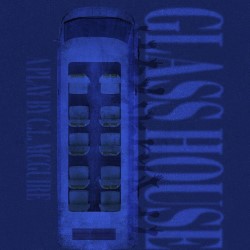
#Review by Bookmarks and Stages – Lou of Glass House #EdFringe @GreensideVenue #Theatre @SandCastlesProductions #EdFringe25

Glass House

Review written by Bookmarks and Stages – Louise Cannon

Rating: 5 out of 5.
Set on a bus, Glasshouse is a palpable, powerful play that creates an intriguing, palpable atmosphere on a bus.
 
The bus is caught in a storm and what ensues is evocative and thought provoking. From the outset it has an intriguing, slightly eerie feel as the rain hammers down. On a small stage, there is great attention to detail to make the seats look like the cast are on a bus, right down to what people are wearing, including the driver.
 
From the bus being plunged into darkness, to getting some light, the audience are introduced to the passengers and a rather intriguing storyline as unexpected events unfold when the bus comes to a sudden halt.

It’s worth mentioning before events change further, there is a rather agile dance routine from one of the passengers, which gives the play a bit of a lift, with exaggerated movements as though they are on a bus. There’s also a bit of humour in that and in some of the dialogue.
 
Conversationally, between all the passengers, it feels natural. The writing and acting is skilful to keep it this naturalistic and not purely monologue in nature, although later there is a particularly powerful monologue where you get more insight to a passenger, that works particularly well, both feeding into the story and addressing the audience.
 
If you were on a bus, looking in, you’d see all sorts of people conversing with each other, some listening and others occasionally talking a little over each other. There are also crossed wires, a noticeable glance here, a touch there, creating rising tensions throughout the play, which all becomes quite palpable. This is strong, convincing acting by this young group of actors.
 
What happens next is even more powerful as the intensity ramps up a gear as decisions to be made as to what to do about a homeless person who is on the bus, but is ticketless. The play at this point has then changed into one that’s quite thought-provoking. It makes you question what you would do in this situation.
 
This is a group of young actors who are ones to watch for now and hopefully into the future. The quality of writing and acting are great now and will only increase further. The potential is huge for these students. I’ve seen students perform before and this group are one of the more exciting and I can’t wait to see what their future holds.

The Edinburgh Fringe Festival is the place to see them until and including 23rd August at Greenside Venues on George Street.
Find out more details and how you can get your tickets here: Glass House
 
Synopsis

Sandcastles Productions

Glass House explores the grimy underbelly of the human beast with unwavering intimacy. A boundary-pushing mocku-theatre piece, the play involves pre-recorded interviews with its ‘real-life’ characters as they share their renditions of what happened on the night of February 14th, 2011. The play uncovers how, on a night of unrelenting rain and flooding in the countryside, a stand-off between a stubborn bus driver and a houseless man who can’t afford a ticket slides into a mire of tension and social conflict.


#Review of Ian Smith – Foot Spa Half Empty by Bookmarks and Stages – Lou. @Iansmithcomedy @TextualHealing2 @BarrelComedy #StandupComedy #Comedy #EdFringe #EdFringe25

Ian Smith – Foot Spa Half Empty

Review by Bookmarks and Stages – Louise Cannon

Rating: 5 out of 5.
Stand up comedian Ian Smith from Have I Got News For You; Live at the Apollo, Just A Minute, The News Quiz etc fame has a live stand-up comedy show not to be missed! The Monkey Barrel in Edinburgh provides a great venue for this. If you want an hour of sheer laughter, this is the stand-up show for you.
 
Ian Smith is a top notch comedian! It is excellently hilarious, always hitting the highest notes of comedy.
 
To find out what he has to say about Edinburgh Fringe leaflets, what Netflix has to do with roast dinners, some tastefully done IVF jokes of his experiences, stress and basketball hoops, you need to see the show.
 
Ian Smith goes from story to story, full of jokes, succinctly with excellent comic timing, then expertly weaving references to part of a previous joke together for great linkage.
 
I went with my friend Orla (not associated with Bookmarks and Stages, just a friend visiting, who says:
‘”Absolutely fantastic – brilliantly told stories woven together into a hilarious, clever performance.”
 
This show and it’s absolutely fantastic. People who see a full show of this when one materialises are in for a real treat. For now, head to The Monkey Barrell venue in Edinburgh to catch this particular show. It’s an hour of laughter very well spent. You can get your ticket to the show of much entertainment here: Ian Smith Foot Spa Half Empty

#Interview by Lou with Nathan Scott-Dunn and Stirling Sands of 1902 by Saltire Sky to mark Hibernian F.C’s 150th Anniversary. From Football to Social Issues, Class and more… @SaltireSkyTC @saltireskytheatre #EdFringe

Interview of 1902 with Saltire Sky’s

Nathan Scott-Dunn and Stirling Sands
about Hibernian FC and much more…

interview by Louise Cannon – Bookmarks and Stages

There’s more to the Off Westend Award Winning play, 1902, than football, as I discovered whilst asking the questions. As much as it is celebrating 150 years of the club, Hibernian FC, we also talked about other themes, such as toxic masculinity, using music in such a play, reflecting working class.

  1. What makes Hibernian FC, Hibs so special that you chose to create a play with this particular football club at its centre?

    Hibernian FC is deeply woven into the identity of Leith and its people. It’s not just a team, it’s family, tradition, and home. For generations, supporting Hibs has been passed down like a birthright. That sense of loyalty, of clinging to hope in the face of disappointment, was what really drew us in.
    The 2016 Scottish Cup win, after 114 years, was a moment that felt like something more than football. It was a collective emotional release, a victory for everyone who had ever believed through all the heartbreak. 1902 uses that moment as a backdrop, not to tell a story about football, but to explore the lives and relationships of the people who live for it. It’s about community, resilience, identity, and how something as simple as a match can carry so much emotional weight for working-class people who don’t always feel represented in mainstream narratives.
  2. How do you feel toxic masculinity can change and how do you deal with this to make an impact in your play?

    Toxic masculinity changes when we make space for vulnerability and when we show that there are other ways to be a man than the one-dimensional, emotionally repressed version we’ve been sold. In 1902, we look at masculinity in a very real, grounded way. These characters argue, lash out, make mistakes but they also cry, admit fear, and support each other in quiet, powerful ways.
    The play doesn’t lecture, it reflects. We see how bottled-up emotions, shame, and societal pressure affect working-class men who’ve grown up being told that showing weakness isn’t an option. Through their interactions, especially in moments of conflict and intimacy, we show that emotional honesty can exist within these tough exteriors.
    The goal isn’t to preach, it’s to represent, and in doing so, invite empathy and change. We’re trying to open up a conversation about how men can still be strong while being emotionally present and accountable.
  3. What genre(s) of music do you use in your show and how did you choose what to put in it?

    The music in 1902 is deeply rooted in identity and place. At the centre of it is the music of The Proclaimers, which we use to underscore the entire show. Their songs aren’t just a soundtrack, they’re the emotional heartbeat of the piece. Being from Leith themselves, The Proclaimers’ music captures the spirit, struggle, humour, and heart of working-class Scotland in a way that’s unmatched. Their lyrics speak directly to themes of home, belonging, loyalty, and love, all of which are central to 1902.
    Their songs allow us to move fluidly between moments of tension, reflection, and celebration. They help us create atmosphere, elevate emotion, and at times give the audience space to breathe or reflect. The music is woven into the fabric of the show, not tacked on, but lived in by the characters.
    Alongside that, we also use authentic Hibs football chants throughout the play. These are the songs you hear in the stands, in the pub, on the streets, full of energy, defiance, and unity. The chants bring the community to life on stage and act as a powerful form of collective expression. For the characters, they’re a release; for the audience, they’re instantly recognisable and deeply nostalgic.
    Together, The Proclaimers’ music and the Hibs chants create a soundscape that’s unmistakably local, emotionally charged, and completely immersive. It’s not just about setting the scene, it’s about capturing the soul of a community.
  4. What research, if any, did you do so the working class in Scotland is portrayed accurately and so everyone can recognise it.

    A lot of the work came from lived experience and working closely with people from the communities we’re representing. This wasn’t about imposing a narrative, it was about reflecting one.
    The script was developed through workshops, conversations, and a lot of listening. We made sure the dialogue was honest, not softened for a wider audience, but kept true to how people actually speak in working-class communities. That includes the humour, the swearing, the silences, and the things that are said without being said.
    We also paid close attention to the cultural references, the emotional rhythms, and the socioeconomic pressures that shape daily life, from debt and employment struggles to family responsibilities and unspoken expectations. Every detail was considered so the people who live this reality can watch the show and feel recognised, not stereotyped.
  5. How important do you feel that the working class is represented in theatre and the Edinburgh Fringe Festival in particular?

    It’s absolutely essential. The working class has historically been underrepresented or misrepresented in theatre. When they do appear, it’s often through a middle-class lens, which tends to flatten the complexity and dignity of working-class life.
    At the Fringe, which can sometimes feel dominated by shows that are inaccessible either financially or culturally, it’s even more important to create space for stories that reflect real people’s experiences. Representation isn’t just about visibility, it’s about ownership. It’s about giving working-class artists the opportunity to tell their own stories on their own terms.
    1902 is part of that effort. It’s theatre rooted in lived experience, told in a language and setting that working-class audiences can connect to. It’s also about making theatre feel like a place where everyone belongs, not just those who can afford a £20 ticket and a glass of wine at the interval. Our ticket prices have remained the same since our inception in 2017 ensuring everyone can access our shows at an affordable price.
  6. Where can people follow you?

    You can follow Saltire Sky Theatre on:

    📸 Instagram: @saltireskytheatre
    🐦 Twitter/X: @SaltireSkyTC
    📘 Facebook: Saltire Sky Theatre
    🌍 Website: saltireskytheatre.com
    Tickets: 1902 | Edinburgh Festival Fringe

We post regular updates, behind-the-scenes content, and info about upcoming shows, and we always love hearing from audiences who’ve connected with the work.

#Review of Scaramouche Jones performed by Thom Tuck by Bookmarks and Stages – Lou #ScaramoucheJones @turlygod #EdFringe #Hoots #Yurt #PottersRow #EdFringe25

Scaramouche Jones
Performed by Thom Tuck

Rating: 5 out of 5.

Scaramouche Jones is a 100 year old clown played by Thom Tuck, who you may know from the likes of Horrible Histories and Penny Dreadfuls. He tells the story on Millenium Eve, after he’s come off stage after a show. What unfolds is a fascinating journey through history and tragedy, with a bit of well-placed humour.

 
Thom Tuck brought a fabulously engaging informality to the show, which brought increased and wonderfully uniquely intense experience that takes you through historical events, some other clowns are also mentioned, which between that and the events of times gone-by creates an authentic play, even though Scaramouche Jones himself is made-up. As the story comes out, Thom Tuck makes you feel, deeply for what unfolds and catches your eye, creating an even deeper, meaningful experience, like he casts a spell on his audience, who lapped up all that they were being told.
 
If, for now, if it goes on tour, or in 10 years time, when he plans to bring it back to the Edinburgh Fringe Festival, this is a show that fascinates and educates as he brings historical events to life and makes you feel all the emotions. Thom Tuck takes some traumatic events of the earth’s history and tells them in an original narrative on one hand and on the other hand, sitting at the juxtaposition, he has elements that will make you laugh. It’s all masterfully woven together to create a performance about a clown with a difference from all the clowns you’ve ever known. 
 
You can still catch it at the Edinburgh Fringe Festival. Check it out here: Scaramouche Jones
 

#Review of The Last Bantam performed by Michael Hughes (review by Bookmarks and Stages – Lou) @TheLastBantam @GreensideVenue #WW1 #TheatrePlay #EdFringe #EdFringe25

The Last Bantam
Performed and written by Michael Hughes

review by Bookmarks and Stages – Louise Cannon

Rating: 5 out of 5.

Bantam’s, not many people know about these soldiers in WW1. The play is a great opportunity to get to really be immersed into their world as the story, based on truth, of 30,000 short men and their war time experiences unfolds. It’s told, by and large, through the eyes of Patrick Michael Wolfe, a teacher from Dublin about this battalion made of British, Irish, Canadian men.

Written and played by Michael Hughes, who engages, even with no set, just a stage. He paints a vivid picture in his dramatic descriptions as he tries to join the war effort, but is found to be too short and ends up joining the Bantams. There’s a bit of frivolity and even a song, bringing a bit of humour in the beginning before the intensities of real war well and truly breaks out.

He embodies The Last Bantam and brings believability and immense attention to detail, from army type mannerisms, right down to the replica costume, even the watch, which I had the privilege of a close up look at. What’s demonstrated in the play, in a highly watchable manner, is a great understanding of the bantams, the preparation they had to do, right down to the store rooms, the attitudes towards them and how they played more of a vital part than people would know in the first world war. The play brings their experiences to life in an engaging manner from start to finish.

To see this impassioned play, check out details here: The Last Bantam