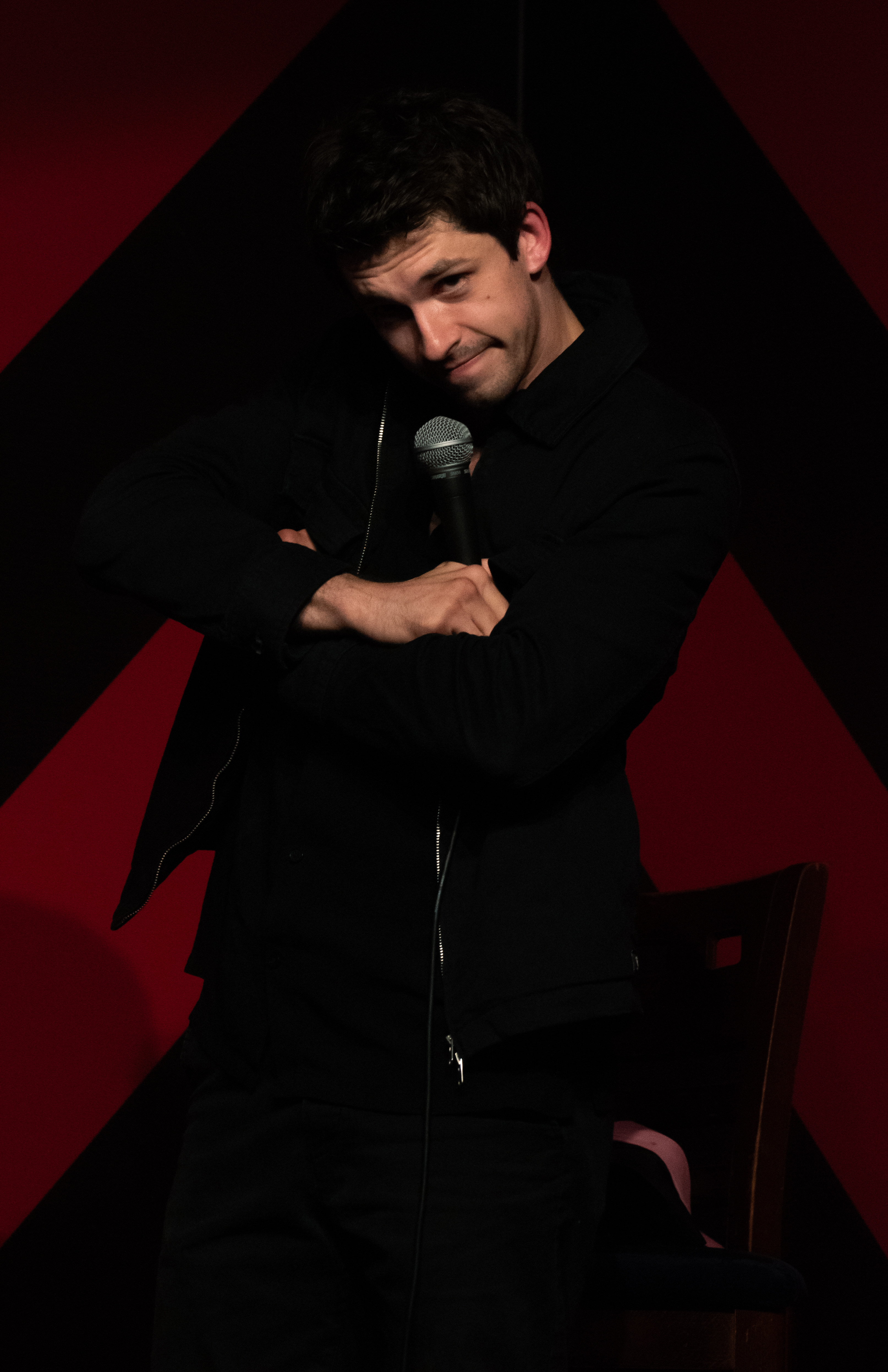
#Interview By Lou with Successful #Comedian Kyle Lucey as we explore the comedy and the life of the man behind ahead of his #tour. #KyleLucey #AlisonGilmour #DirtyAfterDark #Comedy

Interview with Kyle Lucey
Conducted By Louise Cannon
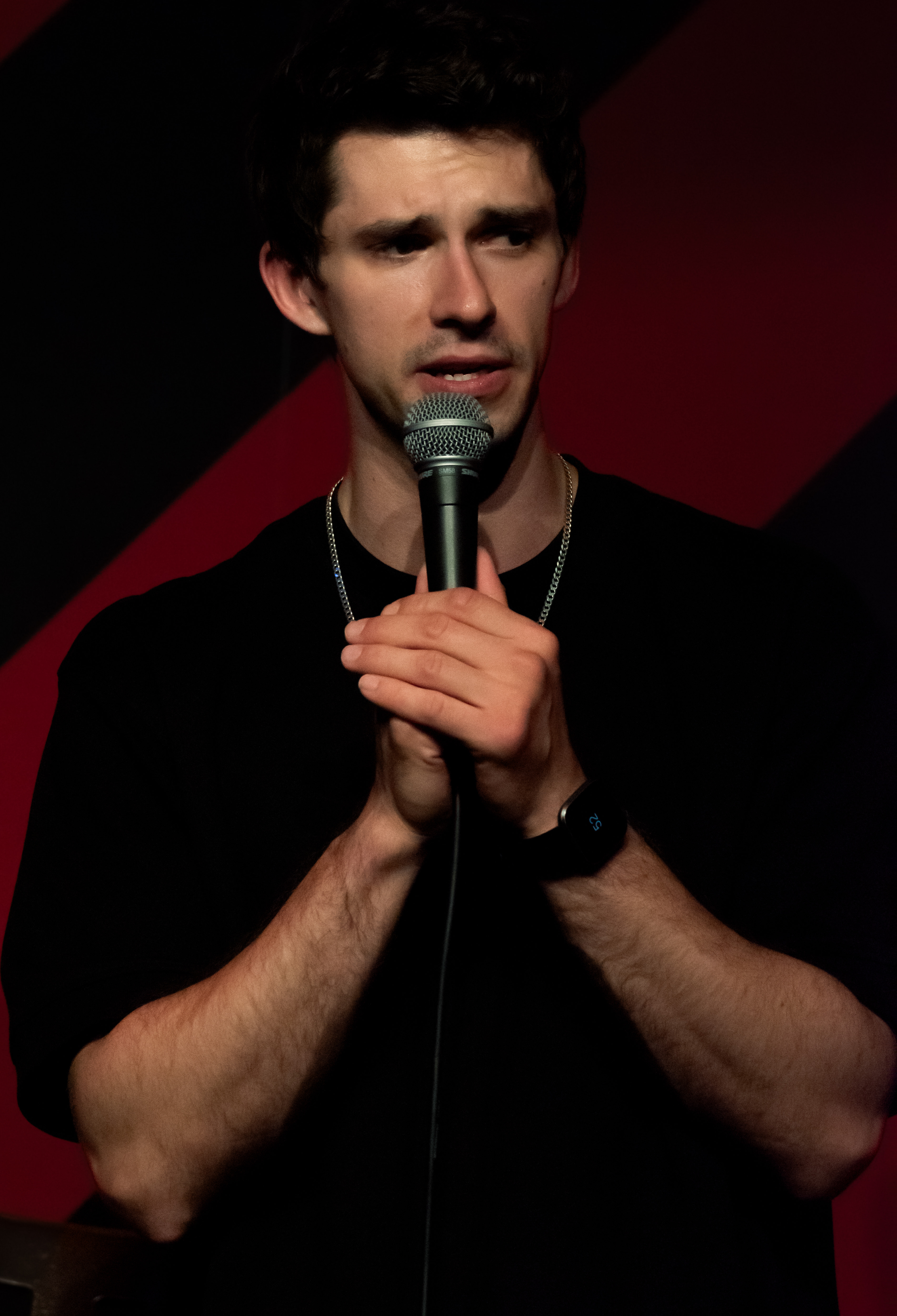
Kyle 4Kyle Lucey is a successful comedian, who has been making his name over the past decade or so. He has performed to thousands of people at world famous venues, such as Massey Hall. Originally from Canada, he settled in Scotland and this year (2024), played a successful show – Dirty After Dark at the Edinburgh Fringe Festival this year.
 I have had the pleasure of interviewing him recently to delve into the man behind the success as we delve deep into his new show and successes and what happened to him in his childhood/formative years with the deep trauma he endured, in a sensitive way.  What was returned via email was brave, sincere, candid and hopeful on many levels. There’s even a touch of humour added.
He had a successful show at the Edinburgh Fringe 2024 and is now embarking on big tour, more about that after the interview.

Please join me in welcoming Kyle Lucey to my blog – Bookmarks and Stages.

*Photos credited to Alison Gilmour

  1. What or who inspired you to be a comedian and what was your route

into this field of the arts?

My earliest inspiration was Jim Carrey. When I was 5 years old, I used to keep a diary called “My life as the young Jim Carrey” this was sort of my first joke book. I would write out funny scenarios to myself and make myself laugh. I had no idea that decades later it would be an actual career for me.

  1. You’ve played at world famous theatres such as Massey Hall and won
    The I Heart Jokes Award twice, how did that come about and feel?
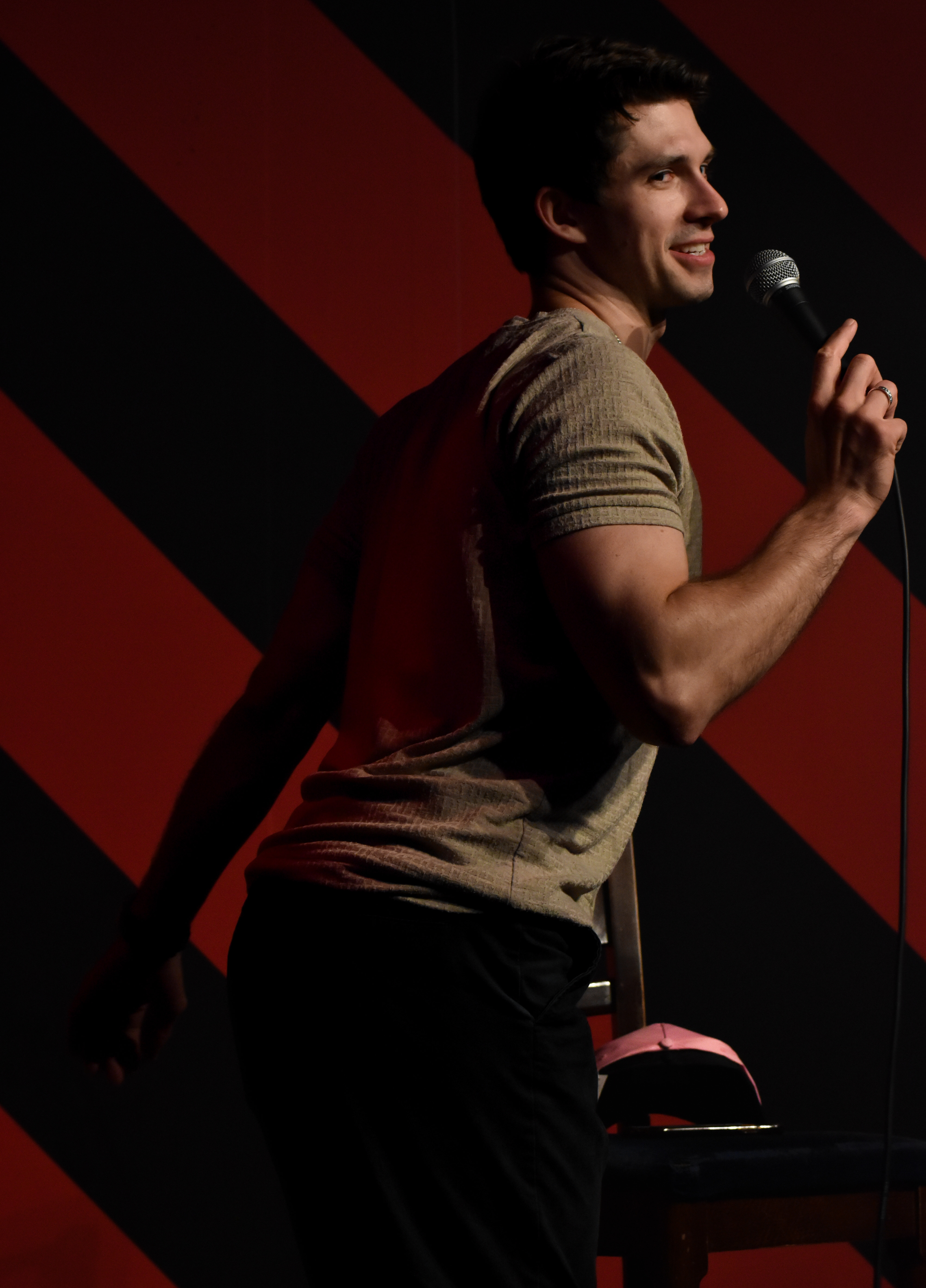
Kyle 5Massey Hall was a big one. 3000 people on New Years Eve. This show is one of the highest honours in Canada. First you need to be signed to the biggest agency in the country, Yuk Yuks. From there you need to be one of Yuk Yuk’s top comedians to be selected for Massey Hall.
The Weeknd, Neil Young, Justin Bieber, Rush, Gordon Lightfoot they all played Massey Hall. And now me, some who grew up in a trailer park! Being considered cream of the crop out of the cream of the crop in my 20’s was so incredibly validating.

It’s such a different thing to perform for that many people since I am more used to playing comedy clubs. The adrenaline I felt that night I literally could not fall asleep and stayed up for two days. I was so honoured to be hand picked by Mark Breslin, the founder of Yuk Yuks. He took me aside one day and told me that I am on the shortlist. My jaw dropped. One of the most exciting moments of my career to date. 

  1. What can audiences expect about your show – Dirty After Dark?

My show is a stand-up show. It is funny and punchline heavy. It’s important that both myself and the audience are having fun or else I should take comedian out of my bio. The way I see it, the jokes in a comedians set are like breadcrumbs. You can take the audience anywhere as long as you properly lead them to that destination joke by joke. Each laugh I get from the audience is a step in the direction I want to take them. My subject matter might be heavy but my 13 years and over 10,000 shows of experience allow me to expertly take them to scary places in a way that is cartoonishly fun. “I can’t believe I laughed at that” is something I hear quite often.

  1. Dirty after Dark feels personal to you, so how do you deal with talking
    about the traumatic times and adding humour to them?

My therapist taught me the metaphor of a lotus flower several years ago. He would tell me, “Lotus flowers grow in mud”. Lotuses are beautiful flowers that grow in dirty swamps. He said that I am both flower and mud and that is what makes me beautiful. As someone who holds unbearable shame from childhood trauma, the lotus flower analogy made me feel less dirty. I became obsessed with taking the mud in my life and adding flowers to it.

My show is funny. It has to be. The subject matter is heavy. I have been abused in everyway one could possibly imagine by the very people who were supposed to love and care for me. This is my mud. To make the mud any less dirty would make the flower that less beautiful. The dirtier the mud, the more beautiful the flower. Horrible subject matter needs only a funnier joke.

  1. You say comedy is a tool for healing, in what way does comedy and laughter help people who have experienced trauma and how can people discover this in a safe, effective way?

My therapist tells me that when children are abused by a parent, they internalize the abuse. It’s easier for a child to understand, “I’m bad” or “I’m in trouble” than to admit, “the person responsible for my well being wants to hurt me”. People live their whole lives thinking they are bad people because they have internalized a traumatic experience. Parents are our first love objects so we need to stay connected to them as they are our life line as children. They are our shelter, our food, our survival. So, we misguide our anger. Your father abused you – you start to hate all men. Your mother abused you – you start to hate all women. I too had so much misguided anger until I spent 10 years in therapy and unpacked who my anger actually belonged to. By moving the internalized anger from inward to outward, we start the important process of metabolizing this natural human feeling. By talking about it on a regular basis we are effectively wringing out every drop of built-up emotion we have been suppressing thus starting our journey into eventual healing.

Making comedy out of my trauma is incredibly therapeutic. It reclaims my power in situations where I was once powerless. I have a joke about being sexually abused but every time I tell it I feel stronger afterwards because I am no longer keeping my abuser’s secret. In fact, I get to stand strong and point out that what they did was wrong. The laughter I get from the audience also tells me that they are in agreement that what happened was wrong – undoing years of gaslighting. I can’t describe how much this heals me because to this day my abuser tells me they were too drunk to remember what happened.

I have seen other comedians and audience members who have watched my show start opening up about their own childhood trauma, thus reducing the stigma around something that many people keep private for years.

  1. One of the aims of your show is to help with the feeling of being alone and break stigma surrounding being abused, specifically in childhood, how is your show projecting this to audiences and do you see it making a difference to people?

When people who have suffered early childhood trauma watch my show, they come up to me and say, “My mom did that to me too”, “My dad also hit me”, “My parents were also drunks”. What started out as me venting about my own trauma suddenly turned into others seeing me as a safe space to come forward about their own pain. I stay behind after shows and talk to people in the audience. Often times I refer them to “The Centre” which is an affordable service in Toronto that assigns people with a therapist right for them. 10 years ago, I walked into The Centre after contemplating suicide. I thought I was fundamentally evil after years of internalizing the abuse I received from my parents. My therapist heard my story and told me that I was “a good person”. Nobody every called me that before. I broke down and cried right there and have been seeing him every week for a decade. I want nothing more than to give the same healing to anybody I meet who has similarly suffered. We are alive only once. Horrible things happen to good people every second of every day. We have to make the best of things or live the rest of our existence with a lesser quality of life. Just because evil gets imprinted on good people does not mean they have to live their life with such a branding. If pain is an ocean, therapy on a consistent basis is like draining a little bit of water out at a time. Eventually people drowning in pain find themselves at shore. I am proud to get that conversation started through my comedy.

  1. You took your show to the Edinburgh Fringe Festival, the biggest of its kind in the world, what were the challenges and the positives and how does this now help you to move forwards to your tour around Europe?
Kyle 3I sold everything in my apartment in Toronto, Canada and bought a one-way ticket to Scotland. I am a dual-citizen with Ireland so my Irish passport allows me to work in every country in Europe. This was my first Edinburgh Fringe Festival and I was blown away by the experience. I was regularly performing 7 shows a day which is unheard of in Canada. Since it’s an international festival it was so cool meeting comedians from all over the world and seeing how funny people are from different countries. I met so many people who ended up employing me at clubs throughout Europe in the months to come. At first there were some challenges. People in the UK have different words for certain things and all my local Canadian references went right out the window. It took me a few days to adjust, but once I did, I was able to communicate my funny to a different culture. I feel like I grew not just as a comedian but as a person after doing the Edinburgh Fringe which I will always be grateful for.

  1. Where can people catch your show?

Kyle 2

I have tour dates at comedy clubs all over England, Sweden, Demark, The Netherlands, Ireland and many more cities and countries to come. If anybody wants to follow me on my journey, they can catch my live dates on my
website kylelucey.com or my Instagram @kyleluceycomedy.

#Interview By Lou with Piotr Mirowski about his AI and his family show – A.L.Ex and the ImpRobots: an AI Show for Kids #EdFringeReview #AI #DeepMind #EdFringe24 #WhatsonEdin #WhatsonEdinburgh Venue 24

A.L.Ex and the ImpRobots: an AI Show for Kids

Interview By Lou with Piotr Mirowski from Deep Mind

AI show

What an honour it is to interview Piotr Mirowski, a scientist who works with A.I. for Deep Mind, a scientific company that is becoming increasingly known. I had not expected that! Here, we talk about the show and also some of the more burning questions of the day about AI, such as when it comes to jobs etc. I feel the answers are fascinating and important.

wp-17244184332893901477097263917498

Let’s welcome to Bookmarks and Stages Piotr Mirowski

1. What can people expect from Artificial Intelligence Improvisation and from A.L.Ex and the ImpRobots: an AI Show for Kids?

wp-17244184106883250941648153611477Artificial Intelligence Improvisation and A.L.Ex and the ImpRobots! are two interactive live experiences featuring professional actors, cute real robots (an Aldebaran Nao), and various flavours of artificial intelligence on stage.

Artificial Intelligence Improvisation is our pioneering improv comedy show with AI: it is for a general audience and addresses conversations about human agency (some actors wear augmented reality glasses and are controlled by AI that sends them lines) or about deep fakes, and at the same it time showcases the ingenuity of human improvisers.

A.L.Ex and the Improbots! is a show for kids and the whole family where fellow young audience members learn fun facts about science and are invited on stage to co-create stories with robots.

In both our shows, Artificial Intelligence Improvisation, and A.L.Ex and the ImpRobots, language models give strange suggestions to human improvisers, giving them an opportunity to react, to incorporate the strange material and then to shine and to demonstrate their talents and sense of humour.

2. Why did you decide to cross science with comedy with an AI robot and what challenges did you have in setting this up?

Our primary aim is to leave audiences, and the younger generations, feeling empowered to critically engage with AI, and to directly explore for themselves through co-creation with the tool, rather than passively.

The show’s creators, Piotr Mirowski (that’s me!), Boyd Branch and Kory Mathewson are academics who are passionately engaged in communicating about science. We are also theatre actors who want to bridge disciplines. Their challenge is to explain, succinctly, the complexity of a fairly complex topic to the audiences, to give them back control over a key technology in their lives. When we started the shows, back in 2016, everything sounded new, from machine learning, to patterns, to biases in data. Today, most people have already tried experimenting with text and image generation via various apps.

The real challenges now, in a way, are to manage the very high expectations about what AI can do! In our very fast paced show, AI tries to react, live and in a fraction of a second, to the mayhem on the stage, and speech recognition and large language models really struggle to keep up!

3. How does it feel bringing a groundbreaking AI Improv show to the Edinburgh Fringe Festival?

wp-17244184222112291279999728947423Kory and I actually brought Artificial intelligence Improvisation to Edinburgh in 2017. Kory (at the time studying for a PhD in robotics at the University of Alberta) and I were doing a duet with a twelve-inch robot and performed for a week at Surgeons’ Hall. The show was very experimental and very rough around the edges, but our friend Colin Mochrie (from Whose Line Is It Anyway?) came to see our show and had some good words about us.

We came back to Edinburgh last year and this year, to perform in a larger space at the Gilded Balloon. We encountered extremely supportive production and tech that made our tech-heavy show a (relative) breeze to get in and get out each day.

As a personification of the AI, our new robot is a bit larger this year, but it is extremely cute and gets lots of enthusiastic reactions from audiences or even from crowds when we take it out to flyer with us.

We’ve also seen amazing productions in Edinburgh that involved robots and AI. Shows that really marked us were the production of Spillikin at the Pleasance in 2015, of Siri by Laurence Dauphinais at Summerhall in 2017, or Robo Bingo by Foxdog Studios last year at Underbelly.

4. How much of an influence do you think AI will have on humans in the future?

wp-17244183969633078057811719133794I see AI primarily as a tool for search and discovery. We have seen inspiring examples of AI tools that can make predictions about the structure of proteins, predictions which can then be verified experimentally by chemists and biologists. I have worked on using AI for making weather predictions, helping expert meteorologists refine weather forecasts, with weather agencies now evaluating how AI can help predict the trajectory of hurricanes. We know artists who have been experimenting with AI tools and exploring the glitch aesthetic of their input to integrate this strange instrument in their process and create unique art.

5. Since working in the field of epileptic seizure predictions, mapping on smartphones and more for the likes of Bing etc, what made you decide to now join Deep Mind to work with AI in the artistic field in co-creations on stages?

The work of co-creation with AI for live theatre performance is done in my spare time and through my theatre troupe, Improbotics.

In my current job, I have worked on navigation, and in recent years, on weather forecasting and applications to climate modelling. However, my exposure to the theatre world inspired me to also focus on the ethical concerns when using AI in the context of the arts, and to evaluate the usefulness of language models as a tool for creative writing. Two years ago (before large language models became so popular), I ran workshops with screenwriters and playwrights trying to write with AI tools: their contrasting reviews were published at a conference on human-computer interaction. At the previous Fringe Festival, I took advantage of my presence in Edinburgh to interview comedians who had been using AI, to understand if large language models are aligned with the cultural values of comedians, and published findings at an AI ethics conference (spoiler alert: the comedians were not impressed).

6. Perhaps the question everyone really wants to know, since everyone talks about it, is: Many people in most industries are worried about their jobs as AI advances ever forwards, how does that make you feel and do you ever worry about your own job in this context?

I believe in the need for empathy and dialogue between developers and the rest of the civil society, in order for us to realise AI’s potential as a tool that benefits everyone.

My personal belief is that we all tend to underestimate the complexity of human activities (in particular when we are talking about other people’s jobs…) and that we forget the need for human connection and for sharing our lived experiences – which simply cannot be automated. The latter point was apparent when we interviewed comedians who had tried using AI for comedy writing.

For these reasons, I do not see AI as a substitute for work or for the process of writing, thinking and creation. I know that there is more to writing than merely putting words on a page, and there is more to computer science and engineering than merely writing lines of code. I believe there are better uses of AI than for the “automation of mediocrity” and am confident we can build a future where AI tools are used to help, not replace human activity.

Tickets here via The Edinburgh Fringe website: https://tickets.edfringe.com/whats-on/a-l-ex-and-the-improbots-present-an-ai-show-for-kids

#Interview By Lou with Titi-Lee about her #EdFringe show – Good Girl Gone Baddie FringeReview @edfringe @JustTheTonic #FringeEdin #WhatsonEdi #Edinburgh #Fringe #EdinburghFringe Venue 338

Interview with Titi Lee about

Good Girl Gone Baddie

By Louise Cannon

Good Girl Gone Baddie can be found at Just The Tonic at Cabaret Voltaire on 24th and 25th Aug 12:30pm age: 18+

Thanks to Tom Brumpton PR for inviting me to interview and for Titi Lee for taking time to answer my questions.

Titi LeeTiti Lee has appeared on popular TV shows including HBO’s Curb Your Enthusiasm and the latest season of Netflix’s Girls5Eva. They play Belle in the feature film The Civil Dead, a Slamdance darling from fellow comedians Whitmer Thomas and Clay Tatum. They/them now have a show at the Edinburgh Fringe called Good Girl Gone Baddie. In this insightful interview you’ll find out more about that title, growing up in Silicon Valley with the tech giants we now know so well, having a film selected for a film festival and more…
Please join me in welcoming Titi Lee to my blog – Bookmarks and Stages.

Here’s a bit to entice you to the show and then onto the question and answers:

1. Girl Gone Baddie is a punchy title, how did you arrive at this?

In Chinese there’s a word “gwai” which means “good”, as in talking about an obedient “good” child. To me, being “good” is complicated, because it’s not just about doing things right, but about following the rules. I cared a lot about following the rules growing up, until I realized that rules seem to constantly be changing, and even when you think you’re doing everything “right”, you will still upset people. The show is about my gender awakening, but it’s also about being comfortable just taking up space and existing in a way that never felt “good” to me. Becoming a “baddie”, that’s a hearkening to the non-binary baddie – the self that I’ve discovered that goes beyond gender norms or typical color-in-the-line rules. And yet, rather than shy away from femininity or masculinity, the “baddie” is all about being unapologetically sexy, in-your-face, and more importantly, confident. And of course,, there’s that Rihanna song – shoutout to the original bad girl Riri.

2. Your show seems very personal to you and self-exploratory, which seems brave. How does that feel when you don’t know how audiences will react?

Thank you, I love that you said that. It can feel scary of course to not know how someone is going to react to your very existence – but that’s what the show is about. For so long I grew up wanting to play by other people’s rules. And yet that doesn’t get you as far as you think it does. Being unapologetically yourself – I think that’s the best way to make space for everyone, including identities that are different from me. I think when people see the show – no matter how they identify – they will feel seen. I can’t control how audiences react, but I can make the show entertaining, and no matter what point of view or background the audiences come from, they will have a good time.

3. Your show explores you being a first-gen Taiwanese American in the heart of Silicon Valley. What was it like to live there during the tech boom?

I grew up right in the middle of it all. Microsoft, HP, Apple, Facebook – I remember seeing the rise of all these companies just down the street from me. We used to go trick or treating at Steve Jobs house (OG’s will know he gave Odwalla bars – not candy!), mostly for the parents to fangirl out. Though I don’t dive deep into the tech aspects of my upbringing there (that’s a different show for a different year), it’s seeped into the high-achieving expectations I grew up with. In the show I talk about my parents meeting at Stanford and their expectations for my twin sister and my little brother and I. It wasn’t until I left the Bay where I grew up that I realized not everyone lives like that – the unrealistically high expectations and overachieving mentality put upon the kids in the Bay is unrivaled to most places.

4. You invite the audience to watch how you’re breaking all the rules and becoming free in yourself and be non-binary, coming out to your immigrant parent, then also covering Covid. How did you find humour in such serious subjects?

Comedy has always been a way for me to cope with the darker matters in life. When I was a kid, when I got in deep trouble with my mom, I would use comedy to lighten the mood. I very much have had oldest sister syndrome in that way. Serious subjects are important to address, but there’s light in everything. Even the darkest of situations, like a loss in the family – which I talk about in my show – can be heavy and tragic, but in the moment of it all, there are comedic moments that you can’t help but laugh at (you’ll have to see the show to hear more about those specifics). 

5. What do you want people to take away from the show?

I want people to see the show and always want to invite me to their birthday party so I will never feel left out EVER! Just kidding, I know that’s impossible, and it’s not really about getting people to like me (although we can’t help but want that sometimes, right?). The message of the show is to “be yourself, all of them”. I hold space for myself and all the complexities within my identity – from the brat sorority girl to the high femme Kpop diva to the teenage boy to the man with BDE. I want people to come to the show and deepen their connection with their own selves, and feel free to exist outside the typical categories and lines we so often put ourselves in.

6. What are the fun aspects and the challenges bringing a show to the Edinburgh Fringe?

The Edinburgh Fringe is a beast unlike any other. It’s such a rollercoaster – one day you’re crying in the rain the next you’re crying in the sunshine… it’s not all tears, but there have been a lot! I’ve had so much fun meeting other artists, soaking in the plethora of beautiful work that’s out there. You meet people and then you see their show and everyone is just lighting their hearts and soul on fire every day over and over for you, it’s really beautiful to see so much pure artistic energy being exchanged.

7. You co-wrote and star in the film, I Think She Likes You, what are the benefits and challenging of doing two roles to create a film?

When we wrote the film, we based it off of semi-autobiographical situations in our separate lives. As comedians, we wanted to be able to play with the complexities of the characters in a bisexual relationship in ways we hadn’t seen before. As two artists of color, we felt it was important to create opportunities for ourselves and put ourselves on screen. It became a very symbiotic, collaborative set with the director, who knew that it was very much our baby and wanted to bring her vision to it while still serving ours. We were so lucky to be able to work with Bridey, who had been fresh off her Sundance feature premiere of Clara’s Ghost, and she understood what we were trying to do from the start.

8. What can people expect from I Think She Likes You?

A lot of laughing, a little bit of crying, and a bit of horniness.

9. What were your experiences taking your film to the Tribeca and Outfest and can you give an insight into how that came about, ie were you invited?

We premiered at Outfest Fusion in Los Angeles, where we shot the film. Tribeca has always been a goal of mine, and when we were selected for the festival it was no question for us. I had to take out a credit card and get into a bit of debt, but honestly it was so worth it. Tribeca opened up new opportunities, we were able to tour the film to over a dozen other festivals, including international festivals, LGBTQ+ and Asian American festivals, which helped us reach our audiences in ways that we wouldn’t have been able to just on our own.

10. You act on tv and on-stage, write and are a rising film-maker. What or who inspires you to choose to work in so many areas of the arts?

Aw man, that’s my overachieving self trying to do everything isn’t it? I have always loved performing, ever since my twin sister and I first danced with a street musician when we were 5 or so and got our first taste of an “audience”, I’ve loved making people laugh. I always knew I wanted to write as that was my passion from the minute I could answer the question “what do you want to be when you grow up?” Writers that inspired me growing up were almost always poets… my early childhood inspirations were Shel Silverstein, Roald Dahl, Jack Prelutsky. I grew into more adult authors, but the spirit of playfulness in poetry for children is something I bring into my comedy and writing even now as an adult making shows for adults (my show is not for children!).

11. How can people watch your film and what is next for you?

The short is out and available to watch on Vimeo and Youtube. I’m working on a feature documentary about how sex scenes are made in Hollywood, from a director/performer perspective where we pull the curtain back on writing, casting, and shooting the film. Other than that, I’d love to take Good Girl Gone Baddie on tour in the UK, and to audiences around the world that want to get in touch with their baddie selves.

Tickets can be obtained from the Edinburgh Fringe Festival website on this page link: https://tickets.edfringe.com/whats-on/titi-lee-good-girl-gone-baddie

#Interview with Sarah Hester Ross about her #EdFringe show – Sarah Hester is What? #EdFringe #WhatsOnEdinburgh Venue 393

Interview with Sarah Hester Ross
By Louise

Just The Tonic Nucleus 10, 11, 14, 16, 17, 18 Aug at 2:30pm Aged 18 plus

Sarah Hester Ross

Sarah Hester Ross is a comedian who is making it big in Las Vegas, has a huge social media following and a show on Apple TV. What she has to say is fascinating, not only about her show, but the depth she is prepared to share about this, social media and a certain movement. We also talked about the Edinburgh Fringe Show and audiences in the UK and US. It gives food for thought, especially when it comes to social media and movement.

Firstly, this a description: “Meet musical comedian Sarah Hester Ross. Following the release of her new comedy special on Apple TV and Amazon Prime, Don’t Mess With a Redhead, comes her debut at the Edinburgh Fringe. Sarah Hester Ross Is What? is a hilarious musical experience that shows you a woman being TikTok famous, who doesn’t want babies and is the leader of the Stop Giving Men Microphones movement. ‘I guess women are funny’ **** (A random guy after the show).”

Let’s welcome Sarah Hester Ross, who has come across “the pond” from the US to Edinburgh.

I wondered if musical comedy and was a path she always wanted to go down. She said:
“Definitely not!” I’ve been a musician all my life, but comedy is kind of new to me, maybe in the past 6-7 years.” It turns out she is a very talented musician. She continued to tell me that it  came about doing duelling pianos, which is what she does in Las Vegas full time. It’s all request like top 40 music like Don’t Stop Believing, Living on a Prayer, Piano Man, people just write down what they want. It then is very comic driven, improv with audience participation and that’s when she realised she had a knack for comedy. She was honest about this on how it took awhile to “figure it all out”. She’s done it for 10 years now, so is like old hand now.

Sarah’s Fringe show is Sarah Hester is What? So we talked about what this is and who is she…

Sarah Hester Ross. 2 jpg

Social Media Chat:

She’s very popular on social media and it came about from this, but she gets called a lot of things in general. “When people don’t know who you are personally or only know you from one visual pointer, one video, one experience, the things you get called tend to be incorrect. The show is basically me mocking that concept of what I get called and then to answer who I really am and what.” She then goes onto talk about expectations, saying “well at the end of the day, I am putting stuff out into the world and how it is perceived is none of my business. I can’t control that. So, in the show Sarah Hester Ross is What, I get to control the narrative, explain who I am, how I want to be perceived and then people can do what they want” I’d hoped that people would then get a rounded picture of her, instead of just being judged on one photo etc. “It’s a nice introduction to who I am, so if you don’t know who I am through social media, you’ll see why people do like me. It definitely isn’t just a show for people who know me online.”

Pros and Cons of Being A Social Media Sensation

Her audience grew in lockdown. She said, “Lockdown was a surge for me, right place, right time, everyone was on their phones, no one was working, so I just massively put out content as much as I could, got an audience and they stuck with me, which is pretty cool.” I’d hoped they’d stick with her. She enthusiastically responded with “I’d like that, I’d like that. Honestly, it’s about consistency online. People, not out of malice or negativity, but people forget, so being consistent with my content and output. I just released my comedy special on Apple TV and Amazon Prime and that’s one of the things, I have to keep reminding people it’s out there because there’s a lot going on in the world. I’m the only one thinking about me 24/7, so I have to keep reminding people.” Which led to us talking about us all vying for some space, which she was in agreement of.

Apple TV and Amazon Prime Show – Don’t Mess With The Redheads

I was curious as to how this came about and the impact on her career.

“For the impact, it’s been the biggest thing I’ve done in my career. Being on 2 large streaming platforms has been huge for me. So far it’s been more bragging writes than anything else.” She then talked about touring. “So I started touring after the pandemic with my one-woman show, mostly comedy clubs and Comedy Dynamics is the production company that released my comedy special. They found me online and they reached out to my agent and it’s history from there. It was very Kismit! Honestly, again right place, right time. I guess that’s kinda my M.O. I’ve just got to be there to make it happen”. Which led us to talk about how sometimes we have to seize the moment.

“Stop Giving Men Microphones Movement”

Mics

I’d just heard of it, so it was intriguing, so I asked her to elaborate on what this is and what the goals were as I was taken aback by this being a “thing” and the striking title. The reply is fascinating:
“The title is quite shocking, so I understand people’s apprehensiveness. It basically came off the idea, there was a trend going round Tik-Tok, maybe 2 years ago that the male podcasts that specifically talk about making crude comments towards women’s issues, women dressing inappropriately, women shouldn’t being doing or that… blah, blah, blah. So that’s kind of where it sprung from.”

“So I wrote this song and I would do these Tik-Tok videos and people really seemed to engage with them and like them and understand by them what I mean by ‘Stop Giving Men Microphones’. It definitely is not let’s stop men from talking, sort of, because if you think about it, and I talk about this in my show a little bit that our entire society was made for men by men and men have had the power, the voice, the say so for centuries and I think it’s time for a change. I think women had the microphone more and the think this is the perfect time for it. There are so many brilliant, talented, smart, creative women out there, but, you know, a lot of them are being seen, but a lot of them aren’t and it’s strictly because they’re women and there’s no argument to it, so that’s kind of part of the whole vibe, and I do. It’s sarcastic, it’s satirical. I’m not saying let’s close the mouths of all men with staples. So everyone just calm down a little bit, but it is to start a conversation of the idea that women have things to say and the things that men say are really ridiculous, like a lot of the time…” (as she chuckles).

Mixing Music and Comedy Being Niche in The US and Victoria Wood and Differences in the US and UK for this Type of Comedy

noteThis led us talking about comedian, Victoria Woodhaha and how she would  take a big topic and either talk about it in straight comedy or she would add music and sing it. It transpires, she “loves Victoria Wood and really has for a really long time”.
It led to me asking about marketing it to the “niche” market so she could say “hey folks, it’s comedy and music together.”
Interestingly Sarah said, “I think it’s a little more niche in America. The world of comedy is boxed in. Comedy audiences are expecting stand-up comedy. I think it’s a little different over here in the UK.”
She then divulged, “And I think that’s why I wanted to be here so badly. I think what I do, for lack of a better word accepted more in the UK, because you have huge comedians, like Tim Minchin, who is iconic” and we talked about other comedy/musicians like Bill Bailey. “These are some iconic musical comedians. Flight of the Concordes was huge in the States, but I know it was huge here in the UK, so it really is just kind of convincing people what I do is proper comedy, but at the same time, I lean more to the music side of things and it’s because I’ve always been a musician and I think also to be the extent of my music being proper good music as well is important to me. I want the recording to be professional. I want it to sound good. I want the melodies to be catchy and free to sing along to. As the musician brain of me, this side of my brain is important to me and I’m not sure that’s always the case with musical comics, but sometimes the comedy is more important than the music, but that’s one of the reasons I love Tim Minchin so much. His music is just flawless. Yes, it can be funny, but he also has this side of just gorgeous music, so I lean towards that a little bit more.

Audience Reaction of US and UK

Sarah candidly talked about this. “To be honest, I haven’t really got a good feel about it.” At time of interviewing she had done 3 shows, which were “pretty light on the crowd, but most of the people there have known me prior, so they have been walking in knowing what to expect, so they’re good audiences. They are kind and reactive, so I haven’t had an opportunity to really showcase to a brand new audience. I’m hoping that will change, but there’s a lot of competition here at the Fringe and over 3000 shows is unbelievable and there’s so much talent here.

Some fun things are “Seeing new acts. I just saw Chris Hall for the first time. We’ve been mutuals on Tik-Tok for a while, but I saw his stand-up and it’s just so very good. Another show I just saw was an American from California, T. Hall, he’s really fantastic.
I’m just looking forward to be surrounded by really talented people and possibly getting inspired. But that is also the challenge in the sense that I am trying to get that attention they are also trying to get. It’s like a frenemies type of thing, so it’s definitely a challenge.

Thank you for your time Sarah Hester-Ross for this illuminating interview.

You can get tickets for her Edinburgh Fringe Festival show here: https://tickets.edfringe.com/whats-on/sarah-hester-ross-is-what

You can also find her for her non-Fringe show on  Apple TV   and  Amazon

#Interview By Lou with Piotr Mirowski about his AI and his family show – A.L.Ex and the ImpRobots: an AI Show for Kids #EdFringeReview #AI #DeepMind #EdFringe24 #WhatsonEdin #WhatsonEdinburgh Venue 24

A.L.Ex and the ImpRobots: an AI Show for Kids

Interview By Lou with Piotr Mirowski from Deep Mind

AI show

What an honour it is to interview Piotr Mirowski, a scientist who works with A.I. for Deep Mind, a scientific company that is becoming increasingly known. I had not expected that! Here, we talk about the show and also some of the more burning questions of the day about AI, such as when it comes to jobs etc. I feel the answers are fascinating and important.

wp-17244184332893901477097263917498

Let’s welcome to Bookmarks and Stages Piotr Mirowski

1. What can people expect from Artificial Intelligence Improvisation and from A.L.Ex and the ImpRobots: an AI Show for Kids?

wp-17244184106883250941648153611477Artificial Intelligence Improvisation and A.L.Ex and the ImpRobots! are two interactive live experiences featuring professional actors, cute real robots (an Aldebaran Nao), and various flavours of artificial intelligence on stage.

Artificial Intelligence Improvisation is our pioneering improv comedy show with AI: it is for a general audience and addresses conversations about human agency (some actors wear augmented reality glasses and are controlled by AI that sends them lines) or about deep fakes, and at the same it time showcases the ingenuity of human improvisers.

A.L.Ex and the Improbots! is a show for kids and the whole family where fellow young audience members learn fun facts about science and are invited on stage to co-create stories with robots.

In both our shows, Artificial Intelligence Improvisation, and A.L.Ex and the ImpRobots, language models give strange suggestions to human improvisers, giving them an opportunity to react, to incorporate the strange material and then to shine and to demonstrate their talents and sense of humour.

2. Why did you decide to cross science with comedy with an AI robot and what challenges did you have in setting this up?

Our primary aim is to leave audiences, and the younger generations, feeling empowered to critically engage with AI, and to directly explore for themselves through co-creation with the tool, rather than passively.

The show’s creators, Piotr Mirowski (that’s me!), Boyd Branch and Kory Mathewson are academics who are passionately engaged in communicating about science. We are also theatre actors who want to bridge disciplines. Their challenge is to explain, succinctly, the complexity of a fairly complex topic to the audiences, to give them back control over a key technology in their lives. When we started the shows, back in 2016, everything sounded new, from machine learning, to patterns, to biases in data. Today, most people have already tried experimenting with text and image generation via various apps.

The real challenges now, in a way, are to manage the very high expectations about what AI can do! In our very fast paced show, AI tries to react, live and in a fraction of a second, to the mayhem on the stage, and speech recognition and large language models really struggle to keep up!

3. How does it feel bringing a groundbreaking AI Improv show to the Edinburgh Fringe Festival?

wp-17244184222112291279999728947423Kory and I actually brought Artificial intelligence Improvisation to Edinburgh in 2017. Kory (at the time studying for a PhD in robotics at the University of Alberta) and I were doing a duet with a twelve-inch robot and performed for a week at Surgeons’ Hall. The show was very experimental and very rough around the edges, but our friend Colin Mochrie (from Whose Line Is It Anyway?) came to see our show and had some good words about us.

We came back to Edinburgh last year and this year, to perform in a larger space at the Gilded Balloon. We encountered extremely supportive production and tech that made our tech-heavy show a (relative) breeze to get in and get out each day.

As a personification of the AI, our new robot is a bit larger this year, but it is extremely cute and gets lots of enthusiastic reactions from audiences or even from crowds when we take it out to flyer with us.

We’ve also seen amazing productions in Edinburgh that involved robots and AI. Shows that really marked us were the production of Spillikin at the Pleasance in 2015, of Siri by Laurence Dauphinais at Summerhall in 2017, or Robo Bingo by Foxdog Studios last year at Underbelly.

4. How much of an influence do you think AI will have on humans in the future?

wp-17244183969633078057811719133794I see AI primarily as a tool for search and discovery. We have seen inspiring examples of AI tools that can make predictions about the structure of proteins, predictions which can then be verified experimentally by chemists and biologists. I have worked on using AI for making weather predictions, helping expert meteorologists refine weather forecasts, with weather agencies now evaluating how AI can help predict the trajectory of hurricanes. We know artists who have been experimenting with AI tools and exploring the glitch aesthetic of their input to integrate this strange instrument in their process and create unique art.

5. Since working in the field of epileptic seizure predictions, mapping on smartphones and more for the likes of Bing etc, what made you decide to now join Deep Mind to work with AI in the artistic field in co-creations on stages?

The work of co-creation with AI for live theatre performance is done in my spare time and through my theatre troupe, Improbotics.

In my current job, I have worked on navigation, and in recent years, on weather forecasting and applications to climate modelling. However, my exposure to the theatre world inspired me to also focus on the ethical concerns when using AI in the context of the arts, and to evaluate the usefulness of language models as a tool for creative writing. Two years ago (before large language models became so popular), I ran workshops with screenwriters and playwrights trying to write with AI tools: their contrasting reviews were published at a conference on human-computer interaction. At the previous Fringe Festival, I took advantage of my presence in Edinburgh to interview comedians who had been using AI, to understand if large language models are aligned with the cultural values of comedians, and published findings at an AI ethics conference (spoiler alert: the comedians were not impressed).

6. Perhaps the question everyone really wants to know, since everyone talks about it, is: Many people in most industries are worried about their jobs as AI advances ever forwards, how does that make you feel and do you ever worry about your own job in this context?

I believe in the need for empathy and dialogue between developers and the rest of the civil society, in order for us to realise AI’s potential as a tool that benefits everyone.

My personal belief is that we all tend to underestimate the complexity of human activities (in particular when we are talking about other people’s jobs…) and that we forget the need for human connection and for sharing our lived experiences – which simply cannot be automated. The latter point was apparent when we interviewed comedians who had tried using AI for comedy writing.

For these reasons, I do not see AI as a substitute for work or for the process of writing, thinking and creation. I know that there is more to writing than merely putting words on a page, and there is more to computer science and engineering than merely writing lines of code. I believe there are better uses of AI than for the “automation of mediocrity” and am confident we can build a future where AI tools are used to help, not replace human activity.

Tickets here via The Edinburgh Fringe website: https://tickets.edfringe.com/whats-on/a-l-ex-and-the-improbots-present-an-ai-show-for-kids

Write Up by Lou of Q&A with Cecelia Ahern @Cecelia_Ahern @BeccaKBryant @LizDawsonPR #Postscript

Q&A with Cecelia Ahern
Ahead of the paperback publication of Postscript
the sequel to PS. I Love You!

I have been given a great honour of joining a small group of book bloggers to collaboratively interview PS. I Love You author Cecelia Ahern. She has now published the sequel – Postscript, in which the hardback is available now. The paperback is available 1st October 2020.

First – the blurb of Postscript and a short review, with a more full on review to follow at a later date. Do follow the blurb, the short review and then onto the Q&A where you can find out some really exciting information about Postscript, what she is writing next and much more…

The PS, I Love You Club.

These are the six words written on a card handed to Holly Kennedy. They’re words that are engraved on her heart – because PS, I Love You is how her husband, Gerry, signed his last letters to her, letters that mark a year she will never forget.

Now, the mysterious club wants something from her. And if Holly can find the courage meet them, she’ll learn what it really means to live life to the full.

Because every love story has one last thing to say…

Postscript pic

Short review

Postscript is just amazing as it tackles so many themes from health issues to grieving. It’s a beautifully written book that has so much emotion within it. The health issues have clearly been researched, but don’t dominate. There is plenty of positivity in this book. It is, even after all these years, is at least as good as PS I Love You, if not a bit better in how it is written. Nothing is lost and there’s everything to gain when reading this, including feeling that it is a really emotional journey, but one taken with passion and feels heartfelt. It’s a great book to get reacquainted with Holly and other characters and meet some new ones too.

Cecelia Ahern pic    Postscript pic  
Q&A

How did you spend Lockdown?

Building Hogwarts Lego. That took about 4 weeks and worked on it for about an hour every evening.
She danced and cooked and walked a lot and got excited when the Irish government also increased the distance of travel from 2km to 5km and could go to a coffee shop to buy a coffee.

Cecelia also has 3 children of the ages of a nearly 1 year old, an 8 and a 10 year old. She hopes never to do homeschooling again.

Do you think as a writer lockdown suited you well?

She reckoned it doesn’t suit everybody, perhaps not extroverts who get their energy from being around other people. She is comfortable about not socialising all the time. She did however miss her family.
She was on maternity leave until May. She then started to edit her new novel (more about that later).#

What sort of research she went into for health issues within the book, such as Cancer and MS?

She wanted to not get into Hollie’s appointments too much to get a balance. There were many drafts and some were more involved than others. There were 4 people who were ill. She wanted more of an introduction to each illness. MS she was fairly familiar with beacause she takes part in the MS Readathon in every year in Ireland.
She wanted to introduce a brain tumour so Hollie was watching a young man going through the same thing.
She thoughtfully pointed out that everyone doesn’t experience the same thing in every illness. She didn’t want to be vague or wishy-washy, but also not too caught up in it. She wanted to concentrate on some of the hope.
She also talked candidly about emphasemia, which is in the book too, as her grandmother had it and had smoked all her life. She talked how there was still humour, even though she was going round with an oxygen tank near the end of her life and wanted some of the humour to come through, which she does well.

From Writing PS I Love You and so many years later, Postcript. How was it for you to write the sequel?

She was never going to write Postcript as she was perfectly happy with how it ended and PS. I Love You was a huge success. PS. I Love You made her and she didn’t want a sequel to break her. She also likes writing different books year on year.
In 2012 she thought about the things that you do for people you’re going to leave behind, so got inspired to write a story from the opposite perspective of PS. I Love You and also then from the perspective of people about to say goodbye and the preparations. She really wanted to put Hollie in it and look at it from Gerry’s perspective. She then had to find the seeds she planted in PS I Love You, like sunflower seeds within that book.
She talked about how it was really challenging to write. In Postcript she has to look at the letters again and looking at the positives and not so and wanted to address how there was conflict between them.
She started to write before she told her publishers to see if she could and felt emotional enough about it, which she did.

Who did you write the book for?

She wrote it for her and those who really love PS I Love You and had it in mind that so many people loved that book. She also looked at the tone of the book and also show the writer she was then and the writer she is now, but without taking too many wild leaps, like in her short story collection, and went back to the humour and sweet tone of PS I Love You.

How did you feel when Postcript went out to readers?

She said that a lot of people have read it before-hand and tries not to get hung up on that, but hopes it is better than the first novel.

The members of the PS I Love You Club. How did you decide which problems to bring into the club and are there any you thought of and discounted?

I wanted to have different illnesses. She knew from the beginning she wanted a mother and the Will idea. Geneka is her favourite. She wanted a mother and a Will and having her want to learn to write letters for her child.

Film

Postcript will be made into a film. Hillary Swank emailed Cecelia wanting to read Postcript. She will be in the film because she said of all the films she has made, PS I Love You is mentioned the most and everyone involved in that film say the same thing. The same production team and writer will be involved again in the film. She has a lot to juggle from the book and the PS. I Love You film.

What author inpires you in your work most of all?

She reads fiction and loves crime fiction, especially Karen Slaughter and Lee Child and Jane Casey. She loves One World Publications because they publish and translate from all over the world. She also loves poetry, such as those from Sarah Cross. She also reads YA novels.
If she ever wrote a crime novel, she would write golden-age crime novel, not the forensic side.

Her next novel is called Freckles, due in autumn 2021. It’s works around the theme that comes from a phrase “You are the average of the five people you spend the most time with.”
It’s about a character who is very logical and straightforward parking-warden. She hears this expression and starts to look at the people around her and wonders if she wants to be the average of those five people and if she could curate her life in who she wants to be. So, she reaches out to certain people to see if she can be the average of those.
There is also a lot going on in her life that makes her want to do this.’

Postcript is published in paperback on 1st October 2020.

Postscript pic