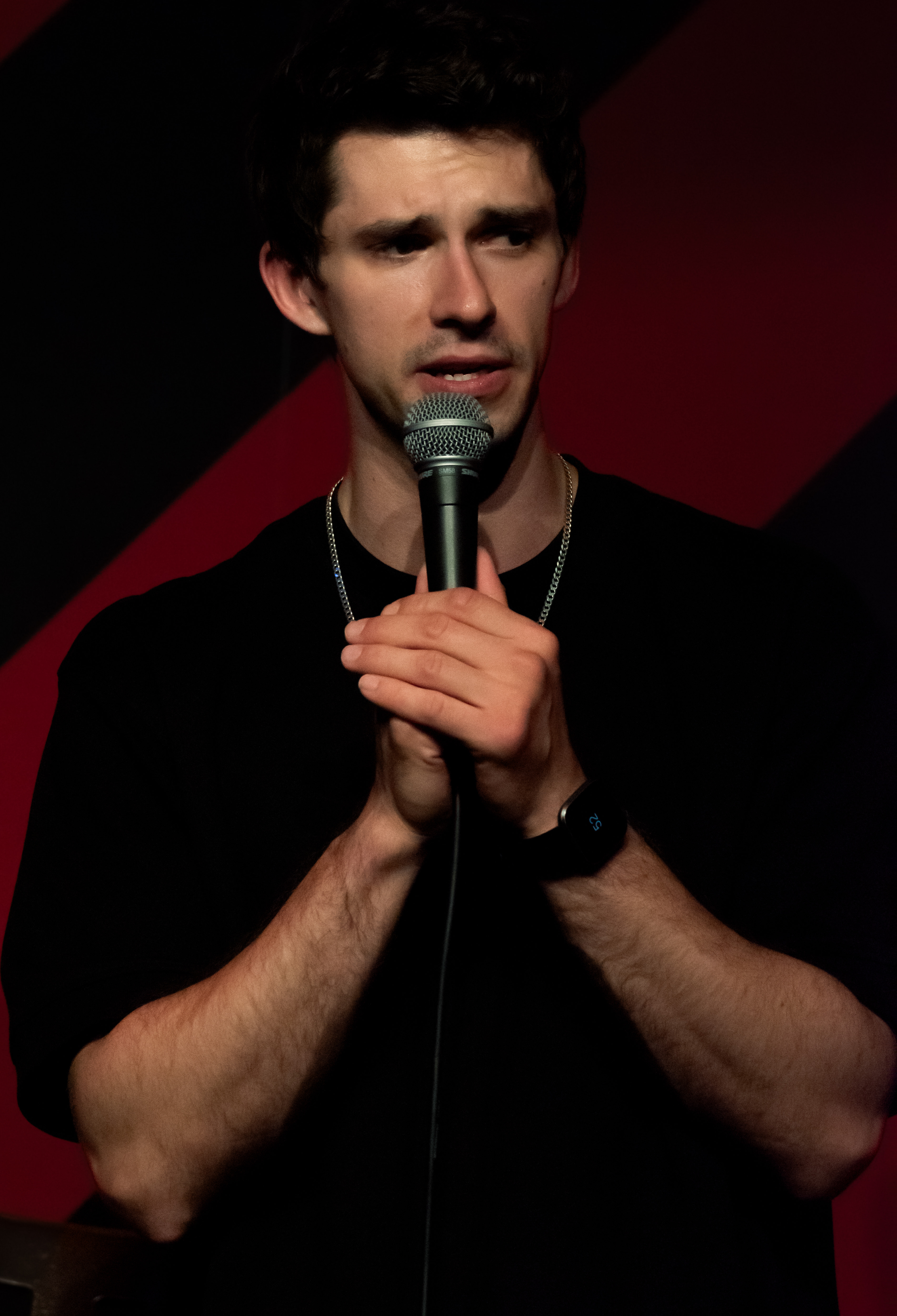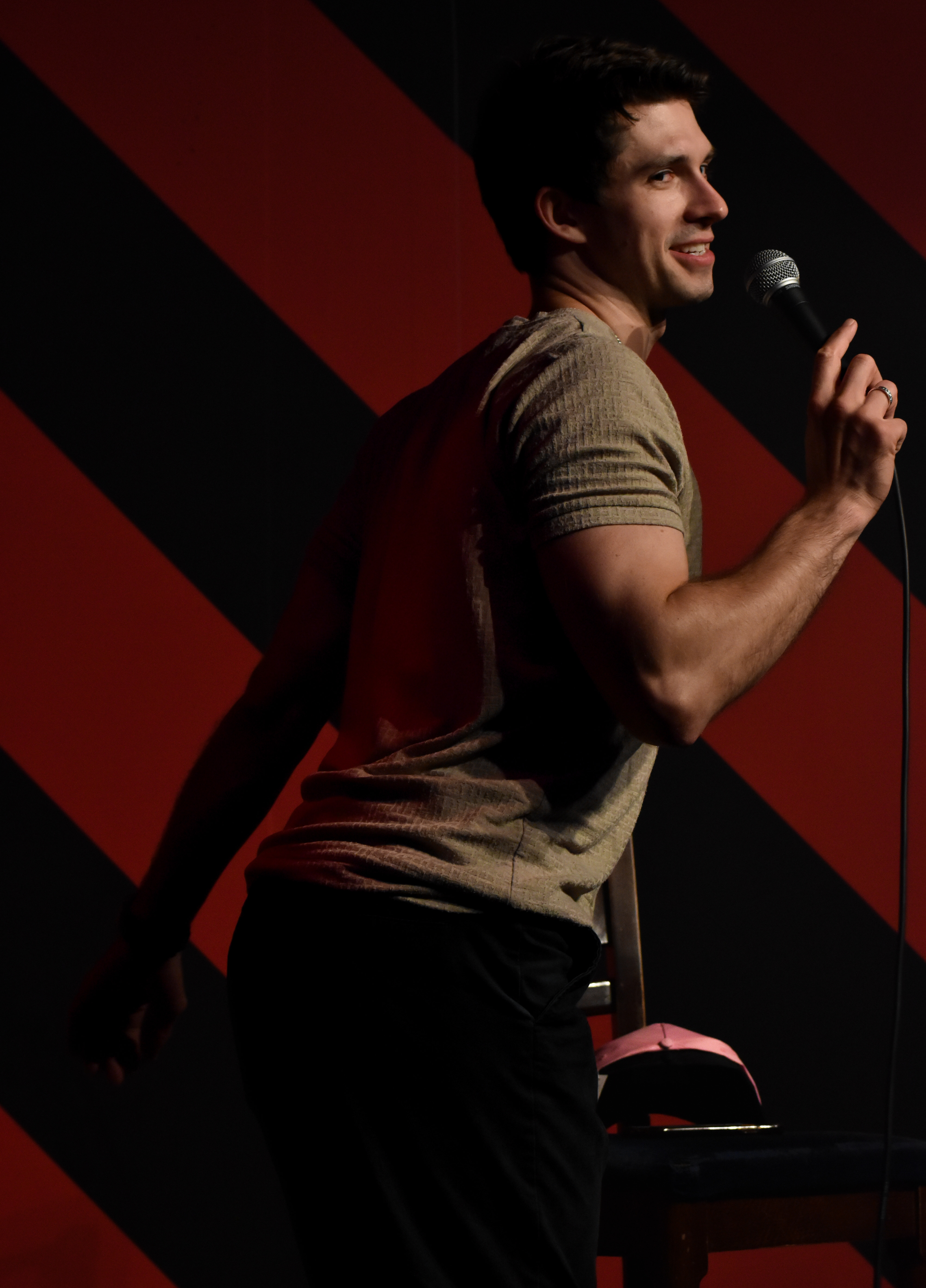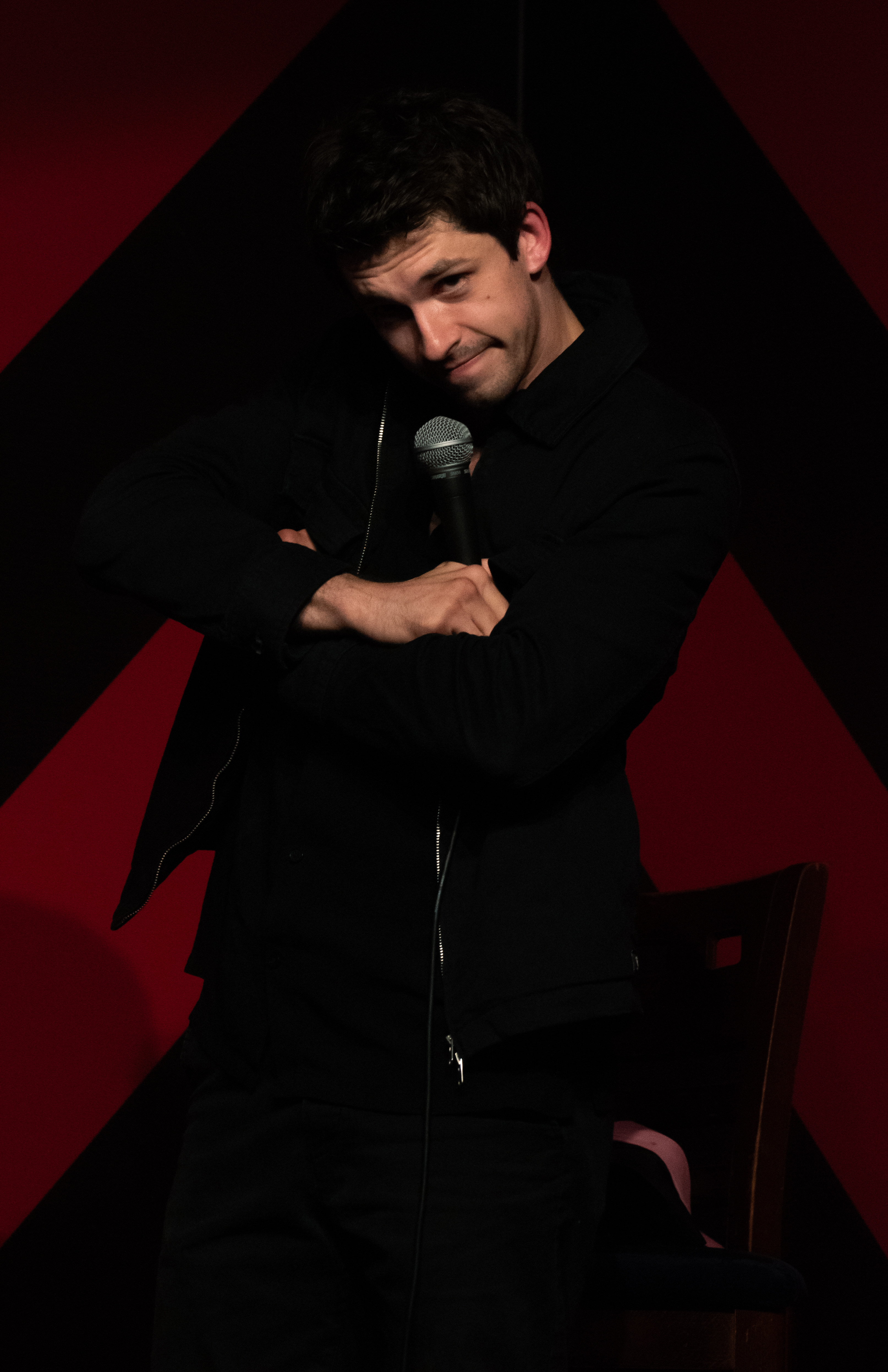
#Interview with Sarah Hester Ross about her #EdFringe show – Sarah Hester is What? #EdFringe #WhatsOnEdinburgh Venue 393

Interview with Sarah Hester Ross
By Louise

Just The Tonic Nucleus 10, 11, 14, 16, 17, 18 Aug at 2:30pm Aged 18 plus

Sarah Hester Ross

Sarah Hester Ross is a comedian who is making it big in Las Vegas, has a huge social media following and a show on Apple TV. What she has to say is fascinating, not only about her show, but the depth she is prepared to share about this, social media and a certain movement. We also talked about the Edinburgh Fringe Show and audiences in the UK and US. It gives food for thought, especially when it comes to social media and movement.

Firstly, this a description: “Meet musical comedian Sarah Hester Ross. Following the release of her new comedy special on Apple TV and Amazon Prime, Don’t Mess With a Redhead, comes her debut at the Edinburgh Fringe. Sarah Hester Ross Is What? is a hilarious musical experience that shows you a woman being TikTok famous, who doesn’t want babies and is the leader of the Stop Giving Men Microphones movement. ‘I guess women are funny’ **** (A random guy after the show).”

Let’s welcome Sarah Hester Ross, who has come across “the pond” from the US to Edinburgh.

I wondered if musical comedy and was a path she always wanted to go down. She said:
“Definitely not!” I’ve been a musician all my life, but comedy is kind of new to me, maybe in the past 6-7 years.” It turns out she is a very talented musician. She continued to tell me that it  came about doing duelling pianos, which is what she does in Las Vegas full time. It’s all request like top 40 music like Don’t Stop Believing, Living on a Prayer, Piano Man, people just write down what they want. It then is very comic driven, improv with audience participation and that’s when she realised she had a knack for comedy. She was honest about this on how it took awhile to “figure it all out”. She’s done it for 10 years now, so is like old hand now.

Sarah’s Fringe show is Sarah Hester is What? So we talked about what this is and who is she…

Sarah Hester Ross. 2 jpg

Social Media Chat:

She’s very popular on social media and it came about from this, but she gets called a lot of things in general. “When people don’t know who you are personally or only know you from one visual pointer, one video, one experience, the things you get called tend to be incorrect. The show is basically me mocking that concept of what I get called and then to answer who I really am and what.” She then goes onto talk about expectations, saying “well at the end of the day, I am putting stuff out into the world and how it is perceived is none of my business. I can’t control that. So, in the show Sarah Hester Ross is What, I get to control the narrative, explain who I am, how I want to be perceived and then people can do what they want” I’d hoped that people would then get a rounded picture of her, instead of just being judged on one photo etc. “It’s a nice introduction to who I am, so if you don’t know who I am through social media, you’ll see why people do like me. It definitely isn’t just a show for people who know me online.”

Pros and Cons of Being A Social Media Sensation

Her audience grew in lockdown. She said, “Lockdown was a surge for me, right place, right time, everyone was on their phones, no one was working, so I just massively put out content as much as I could, got an audience and they stuck with me, which is pretty cool.” I’d hoped they’d stick with her. She enthusiastically responded with “I’d like that, I’d like that. Honestly, it’s about consistency online. People, not out of malice or negativity, but people forget, so being consistent with my content and output. I just released my comedy special on Apple TV and Amazon Prime and that’s one of the things, I have to keep reminding people it’s out there because there’s a lot going on in the world. I’m the only one thinking about me 24/7, so I have to keep reminding people.” Which led to us talking about us all vying for some space, which she was in agreement of.

Apple TV and Amazon Prime Show – Don’t Mess With The Redheads

I was curious as to how this came about and the impact on her career.

“For the impact, it’s been the biggest thing I’ve done in my career. Being on 2 large streaming platforms has been huge for me. So far it’s been more bragging writes than anything else.” She then talked about touring. “So I started touring after the pandemic with my one-woman show, mostly comedy clubs and Comedy Dynamics is the production company that released my comedy special. They found me online and they reached out to my agent and it’s history from there. It was very Kismit! Honestly, again right place, right time. I guess that’s kinda my M.O. I’ve just got to be there to make it happen”. Which led us to talk about how sometimes we have to seize the moment.

“Stop Giving Men Microphones Movement”

Mics

I’d just heard of it, so it was intriguing, so I asked her to elaborate on what this is and what the goals were as I was taken aback by this being a “thing” and the striking title. The reply is fascinating:
“The title is quite shocking, so I understand people’s apprehensiveness. It basically came off the idea, there was a trend going round Tik-Tok, maybe 2 years ago that the male podcasts that specifically talk about making crude comments towards women’s issues, women dressing inappropriately, women shouldn’t being doing or that… blah, blah, blah. So that’s kind of where it sprung from.”

“So I wrote this song and I would do these Tik-Tok videos and people really seemed to engage with them and like them and understand by them what I mean by ‘Stop Giving Men Microphones’. It definitely is not let’s stop men from talking, sort of, because if you think about it, and I talk about this in my show a little bit that our entire society was made for men by men and men have had the power, the voice, the say so for centuries and I think it’s time for a change. I think women had the microphone more and the think this is the perfect time for it. There are so many brilliant, talented, smart, creative women out there, but, you know, a lot of them are being seen, but a lot of them aren’t and it’s strictly because they’re women and there’s no argument to it, so that’s kind of part of the whole vibe, and I do. It’s sarcastic, it’s satirical. I’m not saying let’s close the mouths of all men with staples. So everyone just calm down a little bit, but it is to start a conversation of the idea that women have things to say and the things that men say are really ridiculous, like a lot of the time…” (as she chuckles).

Mixing Music and Comedy Being Niche in The US and Victoria Wood and Differences in the US and UK for this Type of Comedy

noteThis led us talking about comedian, Victoria Woodhaha and how she would  take a big topic and either talk about it in straight comedy or she would add music and sing it. It transpires, she “loves Victoria Wood and really has for a really long time”.
It led to me asking about marketing it to the “niche” market so she could say “hey folks, it’s comedy and music together.”
Interestingly Sarah said, “I think it’s a little more niche in America. The world of comedy is boxed in. Comedy audiences are expecting stand-up comedy. I think it’s a little different over here in the UK.”
She then divulged, “And I think that’s why I wanted to be here so badly. I think what I do, for lack of a better word accepted more in the UK, because you have huge comedians, like Tim Minchin, who is iconic” and we talked about other comedy/musicians like Bill Bailey. “These are some iconic musical comedians. Flight of the Concordes was huge in the States, but I know it was huge here in the UK, so it really is just kind of convincing people what I do is proper comedy, but at the same time, I lean more to the music side of things and it’s because I’ve always been a musician and I think also to be the extent of my music being proper good music as well is important to me. I want the recording to be professional. I want it to sound good. I want the melodies to be catchy and free to sing along to. As the musician brain of me, this side of my brain is important to me and I’m not sure that’s always the case with musical comics, but sometimes the comedy is more important than the music, but that’s one of the reasons I love Tim Minchin so much. His music is just flawless. Yes, it can be funny, but he also has this side of just gorgeous music, so I lean towards that a little bit more.

Audience Reaction of US and UK

Sarah candidly talked about this. “To be honest, I haven’t really got a good feel about it.” At time of interviewing she had done 3 shows, which were “pretty light on the crowd, but most of the people there have known me prior, so they have been walking in knowing what to expect, so they’re good audiences. They are kind and reactive, so I haven’t had an opportunity to really showcase to a brand new audience. I’m hoping that will change, but there’s a lot of competition here at the Fringe and over 3000 shows is unbelievable and there’s so much talent here.

Some fun things are “Seeing new acts. I just saw Chris Hall for the first time. We’ve been mutuals on Tik-Tok for a while, but I saw his stand-up and it’s just so very good. Another show I just saw was an American from California, T. Hall, he’s really fantastic.
I’m just looking forward to be surrounded by really talented people and possibly getting inspired. But that is also the challenge in the sense that I am trying to get that attention they are also trying to get. It’s like a frenemies type of thing, so it’s definitely a challenge.

Thank you for your time Sarah Hester-Ross for this illuminating interview.

You can get tickets for her Edinburgh Fringe Festival show here: https://tickets.edfringe.com/whats-on/sarah-hester-ross-is-what

You can also find her for her non-Fringe show on  Apple TV   and  Amazon

#Interview By Lou with Piotr Mirowski about his AI and his family show – A.L.Ex and the ImpRobots: an AI Show for Kids #EdFringeReview #AI #DeepMind #EdFringe24 #WhatsonEdin #WhatsonEdinburgh Venue 24

A.L.Ex and the ImpRobots: an AI Show for Kids

Interview By Lou with Piotr Mirowski from Deep Mind

AI show

What an honour it is to interview Piotr Mirowski, a scientist who works with A.I. for Deep Mind, a scientific company that is becoming increasingly known. I had not expected that! Here, we talk about the show and also some of the more burning questions of the day about AI, such as when it comes to jobs etc. I feel the answers are fascinating and important.

wp-17244184332893901477097263917498

Let’s welcome to Bookmarks and Stages Piotr Mirowski

1. What can people expect from Artificial Intelligence Improvisation and from A.L.Ex and the ImpRobots: an AI Show for Kids?

wp-17244184106883250941648153611477Artificial Intelligence Improvisation and A.L.Ex and the ImpRobots! are two interactive live experiences featuring professional actors, cute real robots (an Aldebaran Nao), and various flavours of artificial intelligence on stage.

Artificial Intelligence Improvisation is our pioneering improv comedy show with AI: it is for a general audience and addresses conversations about human agency (some actors wear augmented reality glasses and are controlled by AI that sends them lines) or about deep fakes, and at the same it time showcases the ingenuity of human improvisers.

A.L.Ex and the Improbots! is a show for kids and the whole family where fellow young audience members learn fun facts about science and are invited on stage to co-create stories with robots.

In both our shows, Artificial Intelligence Improvisation, and A.L.Ex and the ImpRobots, language models give strange suggestions to human improvisers, giving them an opportunity to react, to incorporate the strange material and then to shine and to demonstrate their talents and sense of humour.

2. Why did you decide to cross science with comedy with an AI robot and what challenges did you have in setting this up?

Our primary aim is to leave audiences, and the younger generations, feeling empowered to critically engage with AI, and to directly explore for themselves through co-creation with the tool, rather than passively.

The show’s creators, Piotr Mirowski (that’s me!), Boyd Branch and Kory Mathewson are academics who are passionately engaged in communicating about science. We are also theatre actors who want to bridge disciplines. Their challenge is to explain, succinctly, the complexity of a fairly complex topic to the audiences, to give them back control over a key technology in their lives. When we started the shows, back in 2016, everything sounded new, from machine learning, to patterns, to biases in data. Today, most people have already tried experimenting with text and image generation via various apps.

The real challenges now, in a way, are to manage the very high expectations about what AI can do! In our very fast paced show, AI tries to react, live and in a fraction of a second, to the mayhem on the stage, and speech recognition and large language models really struggle to keep up!

3. How does it feel bringing a groundbreaking AI Improv show to the Edinburgh Fringe Festival?

wp-17244184222112291279999728947423Kory and I actually brought Artificial intelligence Improvisation to Edinburgh in 2017. Kory (at the time studying for a PhD in robotics at the University of Alberta) and I were doing a duet with a twelve-inch robot and performed for a week at Surgeons’ Hall. The show was very experimental and very rough around the edges, but our friend Colin Mochrie (from Whose Line Is It Anyway?) came to see our show and had some good words about us.

We came back to Edinburgh last year and this year, to perform in a larger space at the Gilded Balloon. We encountered extremely supportive production and tech that made our tech-heavy show a (relative) breeze to get in and get out each day.

As a personification of the AI, our new robot is a bit larger this year, but it is extremely cute and gets lots of enthusiastic reactions from audiences or even from crowds when we take it out to flyer with us.

We’ve also seen amazing productions in Edinburgh that involved robots and AI. Shows that really marked us were the production of Spillikin at the Pleasance in 2015, of Siri by Laurence Dauphinais at Summerhall in 2017, or Robo Bingo by Foxdog Studios last year at Underbelly.

4. How much of an influence do you think AI will have on humans in the future?

wp-17244183969633078057811719133794I see AI primarily as a tool for search and discovery. We have seen inspiring examples of AI tools that can make predictions about the structure of proteins, predictions which can then be verified experimentally by chemists and biologists. I have worked on using AI for making weather predictions, helping expert meteorologists refine weather forecasts, with weather agencies now evaluating how AI can help predict the trajectory of hurricanes. We know artists who have been experimenting with AI tools and exploring the glitch aesthetic of their input to integrate this strange instrument in their process and create unique art.

5. Since working in the field of epileptic seizure predictions, mapping on smartphones and more for the likes of Bing etc, what made you decide to now join Deep Mind to work with AI in the artistic field in co-creations on stages?

The work of co-creation with AI for live theatre performance is done in my spare time and through my theatre troupe, Improbotics.

In my current job, I have worked on navigation, and in recent years, on weather forecasting and applications to climate modelling. However, my exposure to the theatre world inspired me to also focus on the ethical concerns when using AI in the context of the arts, and to evaluate the usefulness of language models as a tool for creative writing. Two years ago (before large language models became so popular), I ran workshops with screenwriters and playwrights trying to write with AI tools: their contrasting reviews were published at a conference on human-computer interaction. At the previous Fringe Festival, I took advantage of my presence in Edinburgh to interview comedians who had been using AI, to understand if large language models are aligned with the cultural values of comedians, and published findings at an AI ethics conference (spoiler alert: the comedians were not impressed).

6. Perhaps the question everyone really wants to know, since everyone talks about it, is: Many people in most industries are worried about their jobs as AI advances ever forwards, how does that make you feel and do you ever worry about your own job in this context?

I believe in the need for empathy and dialogue between developers and the rest of the civil society, in order for us to realise AI’s potential as a tool that benefits everyone.

My personal belief is that we all tend to underestimate the complexity of human activities (in particular when we are talking about other people’s jobs…) and that we forget the need for human connection and for sharing our lived experiences – which simply cannot be automated. The latter point was apparent when we interviewed comedians who had tried using AI for comedy writing.

For these reasons, I do not see AI as a substitute for work or for the process of writing, thinking and creation. I know that there is more to writing than merely putting words on a page, and there is more to computer science and engineering than merely writing lines of code. I believe there are better uses of AI than for the “automation of mediocrity” and am confident we can build a future where AI tools are used to help, not replace human activity.

Tickets here via The Edinburgh Fringe website: https://tickets.edfringe.com/whats-on/a-l-ex-and-the-improbots-present-an-ai-show-for-kids

Write Up by Lou of Q&A with Cecelia Ahern @Cecelia_Ahern @BeccaKBryant @LizDawsonPR #Postscript

Q&A with Cecelia Ahern
Ahead of the paperback publication of Postscript
the sequel to PS. I Love You!

I have been given a great honour of joining a small group of book bloggers to collaboratively interview PS. I Love You author Cecelia Ahern. She has now published the sequel – Postscript, in which the hardback is available now. The paperback is available 1st October 2020.

First – the blurb of Postscript and a short review, with a more full on review to follow at a later date. Do follow the blurb, the short review and then onto the Q&A where you can find out some really exciting information about Postscript, what she is writing next and much more…

The PS, I Love You Club.

These are the six words written on a card handed to Holly Kennedy. They’re words that are engraved on her heart – because PS, I Love You is how her husband, Gerry, signed his last letters to her, letters that mark a year she will never forget.

Now, the mysterious club wants something from her. And if Holly can find the courage meet them, she’ll learn what it really means to live life to the full.

Because every love story has one last thing to say…

Postscript pic

Short review

Postscript is just amazing as it tackles so many themes from health issues to grieving. It’s a beautifully written book that has so much emotion within it. The health issues have clearly been researched, but don’t dominate. There is plenty of positivity in this book. It is, even after all these years, is at least as good as PS I Love You, if not a bit better in how it is written. Nothing is lost and there’s everything to gain when reading this, including feeling that it is a really emotional journey, but one taken with passion and feels heartfelt. It’s a great book to get reacquainted with Holly and other characters and meet some new ones too.

Cecelia Ahern pic    Postscript pic  
Q&A

How did you spend Lockdown?

Building Hogwarts Lego. That took about 4 weeks and worked on it for about an hour every evening.
She danced and cooked and walked a lot and got excited when the Irish government also increased the distance of travel from 2km to 5km and could go to a coffee shop to buy a coffee.

Cecelia also has 3 children of the ages of a nearly 1 year old, an 8 and a 10 year old. She hopes never to do homeschooling again.

Do you think as a writer lockdown suited you well?

She reckoned it doesn’t suit everybody, perhaps not extroverts who get their energy from being around other people. She is comfortable about not socialising all the time. She did however miss her family.
She was on maternity leave until May. She then started to edit her new novel (more about that later).#

What sort of research she went into for health issues within the book, such as Cancer and MS?

She wanted to not get into Hollie’s appointments too much to get a balance. There were many drafts and some were more involved than others. There were 4 people who were ill. She wanted more of an introduction to each illness. MS she was fairly familiar with beacause she takes part in the MS Readathon in every year in Ireland.
She wanted to introduce a brain tumour so Hollie was watching a young man going through the same thing.
She thoughtfully pointed out that everyone doesn’t experience the same thing in every illness. She didn’t want to be vague or wishy-washy, but also not too caught up in it. She wanted to concentrate on some of the hope.
She also talked candidly about emphasemia, which is in the book too, as her grandmother had it and had smoked all her life. She talked how there was still humour, even though she was going round with an oxygen tank near the end of her life and wanted some of the humour to come through, which she does well.

From Writing PS I Love You and so many years later, Postcript. How was it for you to write the sequel?

She was never going to write Postcript as she was perfectly happy with how it ended and PS. I Love You was a huge success. PS. I Love You made her and she didn’t want a sequel to break her. She also likes writing different books year on year.
In 2012 she thought about the things that you do for people you’re going to leave behind, so got inspired to write a story from the opposite perspective of PS. I Love You and also then from the perspective of people about to say goodbye and the preparations. She really wanted to put Hollie in it and look at it from Gerry’s perspective. She then had to find the seeds she planted in PS I Love You, like sunflower seeds within that book.
She talked about how it was really challenging to write. In Postcript she has to look at the letters again and looking at the positives and not so and wanted to address how there was conflict between them.
She started to write before she told her publishers to see if she could and felt emotional enough about it, which she did.

Who did you write the book for?

She wrote it for her and those who really love PS I Love You and had it in mind that so many people loved that book. She also looked at the tone of the book and also show the writer she was then and the writer she is now, but without taking too many wild leaps, like in her short story collection, and went back to the humour and sweet tone of PS I Love You.

How did you feel when Postcript went out to readers?

She said that a lot of people have read it before-hand and tries not to get hung up on that, but hopes it is better than the first novel.

The members of the PS I Love You Club. How did you decide which problems to bring into the club and are there any you thought of and discounted?

I wanted to have different illnesses. She knew from the beginning she wanted a mother and the Will idea. Geneka is her favourite. She wanted a mother and a Will and having her want to learn to write letters for her child.

Film

Postcript will be made into a film. Hillary Swank emailed Cecelia wanting to read Postcript. She will be in the film because she said of all the films she has made, PS I Love You is mentioned the most and everyone involved in that film say the same thing. The same production team and writer will be involved again in the film. She has a lot to juggle from the book and the PS. I Love You film.

What author inpires you in your work most of all?

She reads fiction and loves crime fiction, especially Karen Slaughter and Lee Child and Jane Casey. She loves One World Publications because they publish and translate from all over the world. She also loves poetry, such as those from Sarah Cross. She also reads YA novels.
If she ever wrote a crime novel, she would write golden-age crime novel, not the forensic side.

Her next novel is called Freckles, due in autumn 2021. It’s works around the theme that comes from a phrase “You are the average of the five people you spend the most time with.”
It’s about a character who is very logical and straightforward parking-warden. She hears this expression and starts to look at the people around her and wonders if she wants to be the average of those five people and if she could curate her life in who she wants to be. So, she reaches out to certain people to see if she can be the average of those.
There is also a lot going on in her life that makes her want to do this.’

Postcript is published in paperback on 1st October 2020.

Postscript pic

#Interview By Lou with YA Author Craig Leener @CraigLeener about his YA Book There’s No Basketball On Mars, Sport and more…

It gives me great pleasure to interview Craig Leener about his YA Book There’s No Basketball On Mars, Why he writes YA, About his Autistic character, his thoughts on instant replay, find out what his stand-out basketball moment is and more…
Firstly, let’s start with the blurb for There’s No Basketball On Mars and then on the interview.

Theres No Basketball on Mars

Blurb

Lawrence Tuckerman is a fan of probabilities — well, any numbers and math, really. It’s an interest that goes hand-in-hand with his autism. It’s also how he met his best friend Zeke, who is off fulfilling his dream of playing basketball at the University of Kansas. Now Lawrence expects his life in Los Angeles to become even less social and more routine — just the way he likes it. He plans to finish high school as he pursues his own far-off dream of manning Earth’s first mission to Mars . . .

Then the improbable happens: Lawrence is recruited for a top-secret mission of cosmic proportions! The whole operation relies on him realizing the full potential of his 1-in-6-billion mind — without freaking out. The rocket-science math is a no-brainer, but is he made of the right stuff to manage the communication and cooperation of a team effort . . . without his best friend?

  1. Who or what inspired you to write a novel and in-particular for the YA market as opposed to other age groups?

    As is the case with most writers, I wanted to write a book, but I really didn’t know how to, and I was at that point of my life where it was time to make good on the threat or move on. So, I read seven books on how to write a novel, and the storyline soon began to fall from the heavens. I told my son about it, and he said, “Hey, Dad, that sounds like a YA.” All of that happily coincided with my volunteer work mentoring young journalists.

  1. What’s are the differences and similarities in writing a novel to you being a sportswriter?

    Writing sports for a newspaper involves relying on one’s wits whilst navigating a looming deadline. Conversely, as a novelist, I have the good fortune to live in my imagination as the clock remains safely at arm’s length.

And the similarities are there as well, certainly in executing the proper mechanics of grammar, usage and punctuation, but also in structuring a story that takes the reader on a journey that includes a moment of equilibrium, followed by a trigger, a quest, a series of critical choices, then a climax, potentially a reversal, and then finally a resolution.

  1. What inspired your title – ‘There’s No Basketball on Mars’?

    Those were the first words I wrote when I began to draft the manuscript. I remember the moment. It was eery and humbling, like I was serving as typist for some kind of higher power trying to get my attention. The fun part was looking for the ideal opportunity to shoehorn those exact words into the story.

  1. Interestingly, your character, Lawrence Tuckerman is autistic, how important is it that readers are now increasingly seeing a diverse range of characters within books?

    When I set out to write my first novel, I sat down for breakfast at a coffeeshop in Hollywood with a YA librarian I met through my daughter-in-law. Over flapjacks and Canadian bacon, I asked the librarian what publishers were looking for from new authors. Without hesitation, she said underrepresented characters. And in that moment, the intrepid, neurodivergent Sherman “Lawrence” Tuckerman was born.

Books that offer young readers a chance to explore diversity and inclusion are a true reflection where we’re headed as a society — and it is long overdue.

  1. Lawrence is recruited for a top-secret mission that is going to take him realizing the full potential. How challenging do you think that is for both your character and people in general to discover and know what that full potential is?

    I threw a lot of challenges and obstacles at Lawrence in the book. I felt it was important for readers to experience the Sultan of Square Root learning and growing as the stakes rose to greater heights. I believe that discovering your true potential starts with gaining an understanding of what your true calling is — the reason why you’re on this earth.

Lawrence knew early on that he was born to be the mathematics flight specialist on NASA’s first-ever manned mission to the Red Planet. For most people, though, that sort of epiphany can be elusive. It often takes many years of the closed-eye process to discover it.

  1. What would a stand-out moment of a basketball game be for you and what team do you support?

    For me, there’s nothing quite like a perfectly executed fast break, where all five players on offense are moving in total grace and harmony and awareness of what their teammates are doing as the play unfolds.

I support high school and community college basketball programs all over the Greater Los Angeles area. At the college level, my favorite teams are UCLA and the University of Kansas.

  1. It is said that you are a lifelong opponent of the instant replay in sports. What made you come to this decision?

    To my way of thinking, there is intrinsic value in the human element’s potential to influence the outcome of athletic competition, inadvertently or otherwise. It’s another way of saying that we’re all perfect in our inherent imperfection. And I have it on good authority that James Naismith, who invented basketball on Dec. 21, 1891, would not have wanted future technology to replace a well-meaning person in a striped shirt and a whistle around his neck.

  1. You sit on the board of directors of CSUN’s Journalism Alumni Association serving as the organization’s director of scholarships, how did this come about and what, in brief, does that entail?

    I learned about the organization from the sports editor at the newspaper where I used to cover local high school sports. He and I are both CSUN graduates. The JAA board meets six times a year to brainstorm ways to support student journalists and raise money for academic scholarships.

  1. What are you reading or writing just now?

    I’m currently drafting the sequel to There’s No Basketball on Mars. (Insider intel: Look for Lawrence to potentially travel to the moon in this one!)

10. Where can people find your work?

The Zeke Archer basketball trilogy and my follow-up Mars novel are available wherever books are sold in the solar system.
You can also find the books inside the Little Free Library that’s in the front yard of my home in the suburbs of Los Angeles.

#Interview by Lou with Author – Tim Maleeny about his book – Hanging The Devil and much more…

Interview With Tim Maleeny by Lou

The Hanging Devil is Tim Maleeny’s latest mystery book, set in the art world and today, I welcome him to my blog for a Q&A, where you will get to know more about more about why he writes in the Mystery genre, he also discusses AI Technology, Poisons, Art, How to follow him and more…

Tim Maleeny has won the Macavity Award and the Lefty Award. This book is a fascinating look at art forgery and heists, based on actual crimes, featuring a unique third-person POV within the private investigation mystery subgenre.

Without further ado, find out about the blurb and then what Tim Maleeny has to say. His answers truly are insightful and fascinating.

Blurb

Hanging the DevilIt was supposed to be a simple job: steal the paintings, leave the forgeries…

When a helicopter crashes through the skylight of the Asian Art Museum, an audacious heist turns into a tragedy. The only witness to the crash is eleven-year-old Grace, who watches in horror as her uncle is killed and a priceless statue stolen by two men and a-ghost? At least that’s how the eerie, smoke-like figure with parchment skin and floating hair appears to Grace. Scared almost to death, she flees into the night and seeks refuge in the back alleys of San Francisco’s Chinatown.

Grace is found by Sally Mei, self-appointed guardian of Chinatown. While Sally trains Grace in basic survival skills, her erstwhile partner Cape Weathers, private detective and public nuisance, searches for the mysterious crew behind the robbery before they strike the museum a second time. As the clock winds down, Cape enlists aid from some unlikely allies to lay a trap for a ghost who has no intention of being caught-nor of leaving any witnesses alive to tell the tale.It was supposed to be a simple job: steal the paintings, leave the forgeries…

Now, you know more about the plot, please proceed onto the interview.

  1. Who or what inspired you to write novels and in the mystery genre?

wp-1700081845142Thanks to my parents I grew up surrounded by books. Dime paperbacks from the thirties, historical novels, science fiction adventures, pulp thrillers and noir mysteries, along with books about the Greek myths and a small collection of leather-bound classics. I always knew I wanted to write fiction but didn’t know where to start until I began writing short stories. At the time, the bulk of what I was reading for pleasure was crime fiction, and I found my voice in those stories. A mystery can incorporate any style of storytelling, from humor to horror, historical to romance, or all of the above. The only necessary ingredients for a mystery novel are equal parts intrigue and suspense, the rest is up to you.

  1. Hanging the Devil is an art heist. What research did you do into art crimes?

A story that began as a museum heist turned into an international thriller by the time I finished writing because it turns out there is quite a bit of mischief in the art world. Auction houses and museum directors who look the other way as known forgeries are sold and displayed as original masterpieces. Specialized police units in countries around the world, like the Carabinieri Art Squad in Italy and the Cultural Heritage Division of Interpol. Thieves, smugglers and forgers on government payrolls. When I first walked into a museum to check their security and begin my research for Hanging The Devil, I never would have guessed that I’d discover an underground economy where organized crime, greedy government officials and some of the world’s biggest museums conspire to keep the art world a mystery.

  1. Do you like art and if so, what’s your favourite piece?

I am an art lover but would never claim to be an art expert. Learning about art is like reading a book—it begins with a visceral reaction to an idea, and before you know it, you’re empathizing with the characters on the canvas, then learning all you can about the history and context of the painting. Art has inspired me to study history and learn about other cultures, but my tastes, like my interests, run the gamut from comic book art to classical paintings and everything in between. I’m as likely to fall in love with a velvet Elvis as a Rembrandt, as long as it strikes a chord and looks good on the wall. For Hanging The Devil, it was crucial to know what an art forger or thief would look for in a painting, so I spent a lot of time researching the techniques of famous painters. And since part of the story takes place in present-day China, it was essential to understand the historical significance of paintings and sculptures from the 18th century that could be on display at San Francisco’s Asian Art Museum, where the robbery in the first chapter takes place.

  1. You’re said to do excessive research into exotic poisons and other things. What fascinates you about poisons and what is the most exotic poison you’ve discovered to be in existence?

My first major short story was called “Till Death Do Us Part,” the title story in an anthology edited by Harlan Coben for the Mystery Writers of America, about an older couple who’d been trying to poison each other for over forty years, a marital game of chess between two masters. From Arthur Conan Doyle and Agatha Christie to more modern mysteries, poisons always make the puzzle more perplexing, often unseen and undetected except by the sharpest eye. I’m fascinated by any poison used as a weapon in the natural world, whether it’s secreted by a tree frog, jellyfish, or octopus. My favourite might be the venom of a blue-ringed octopus, a cute little critter that can kill you in under a minute if you get on its bad side. And you can’t go wrong with poisons from plants, like cyanide, which can be found in the pits of apricots and cherries; or arsenic, which is found in rice. So if you want to become a criminal mastermind or famous detective, crack open a book on chemistry and start taking notes.

  1. Hanging the Devil is darkly comical as well as mysterious, how do you go about injecting some humour into what are essentially dark subject matters, such as murder?

Humor is a bridge to empathy. When reading fiction, a smile or laugh helps you connect with a character faster, and so much of the misdirection in a mystery can happen when one character deflects with humor rather than share their true feelings. And when two characters with competing agendas collide, it may not be funny to them, but we’re laughing from having been in equally frustrating situations ourselves. Consider your favorite TV show or sitcom. When Lucille Ball is working on the assembly line in the chocolate factory with Ethel it’s pure mayhem, a nightmare for them but pure comedy for those of us watching.

I wanted Hanging The Devil to be exciting and suspenseful but also fun. Some books are quiet walks in the garden, but mine are more like a drunken ride on a roller coaster.

There is a great tradition of understated humor in noir fiction, often a hard-bitten cynicism peppered with wry observations about the human condition. Those hardboiled mysteries are the books that inspired me to write crime fiction, and later I discovered writers like Elmore Leonard, Loren Estleman, and Ross Thomas, virtuosos who seamlessly blend humor into their narratives through their very real-life characters. People do stupid things, and when you’re a criminal, any misstep can have devasting—and hilarious—consequences. I’m less interested in writing about a perfect crime than a perfect plan that goes horribly wrong, because in life, as in any good mystery, you never really know what happens next.

  1. What made you decide to have an 11-year-old witness a guard being murdered and how did you put yourself in your character’s shoes to be able to write about their perspective?

I vividly remember what it felt like to be that age, the confidence of youth coupled with a growing realization that the world is so much bigger than you are. As for 11-year-old Grace, the witness to the museum heist in Hanging The Devil, fortunately I have two amazing daughters for inspiration when writing about a clever, creative and courageous character.

  1. People are watching AI fairly carefully and discussing it, what is your perspective on this?

Ah, this is a big topic. So-called AI has tremendous positive potential and is being successfully applied in so many ways in business, science, even medicine—but there is definitely a dystopian side to AI that is starting to show its face. We have a co-dependent relationship with our digital devices and spend every waking moment on a digital landscape that is manipulated by companies that want to sell us something and monitored by governments that want to track everything we say or do. In countries around the world it’s become incredibly Orwellian almost overnight, so although I’m a technophile at heart, I’d argue that today’s inventors are not thinking things through in their rush to build what’s next. We’re at a moment in our civilization when our tech is more advanced than we are, and our brains are not ready to handle some of the software that’s already shaping how we live. A recent study showed that the average adult attention span is now less than nine seconds, so we’re turning into a civilization of goldfish.

  1. Hanging the Devil will be published on 14th How will you be celebrating?

The best way to celebrate a new book release is to go on tour! I’ll be signing copies of Hanging The Devil in New York on the 15th of November and then head to Scottsdale, San Francisco, Houston and LA on the first leg of the tour, meeting readers and reconnecting with booksellers who love mysteries as much as I do.

  1. What is next for you?

Currently I’m procrastinating but have plenty of writing to do, most importantly the next book featuring Cape and Sally. There is also a standalone novel I’ve been thinking about for a while, a YA adventure if I can make the time, and a couple of short stories on the horizon.

  1. Where can people follow you?

Readers can reach me through my website www.timmaleny.com or follow @timmaleeny on Instagram, where I post updates on books I’m writing and books I’m reading.

#AuthorInterview with Lou for Blue Lunar & The Apex Grail Author R.L. Baxter #RickyBaxter @ZooloosBT #BlueLunarAndTheApexGrail #Fantasy #BlogTour

Q&A with Blue Lunar & The Apex Grail Author –
R.L. Baxter

Q&A By Lou – Bookmarks and Stages
 

It gives me great pleasure to interview R.L. Blue Lunar about his book – Blue Lunar & The Apex Grail as part of the Zooloo blog tour. Let’s give a warm welcome to Ricky Baxter.
You’ll discover his inspiration and what he particularly likes about the fantasy genre, discover the heroes, where you can follow him and more. Ahead of the interview, let’s find out a bit about him and then check out the cover and discover the blurb.

About the Author

Ricky Baxter Author Photo

Ricky Baxter is a London born, fantasy author of novels and short novellas. He is an avid blogger, giving advice and thoughts to fellow creators from all walks of life. Starting out as a composer after graduating with a Ba(Hons) in music and multimedia, Ricky worked for many independent short film directors, gaining notable IMDB credits. Since then, he has embraced his earlier passion for writing fictional stories.

Blurb

Blue Lunar and The Apex Grail Book Cover (1)In a world where the gods have long deserted mortals, a powerful sorcerer emerges from a 100-year-old prison. Releasing an army of beasts, he enters a path of destruction while searching for an ancient relic.

Tasked with challenging the darkness, a pure and naive-hearted boy named Luke embraces his destiny to defeat the wizard – for the promise of a better tomorrow.

Equipped with a divine armour, fashioned by the most powerful goddess, Luke will journey across the land in pursuit of the dark sorcerer, making unforgettable allies and bonds along the way. However, as a long-buried tragedy slowly comes to light, the boy will question everything he believes in… including his destiny.

Without further ado, let’s head to the first question.

1. Who or what inspired you to write novels?

I was actually inspired to write novels thanks to my secondary English teacher. At the time, I was heavily into gaming, films and TV shows but I couldn’t find a way to create my own stories. One day, my English teacher tasked the whole class to write their own story! I believe the assignment was named “Original writing”, and it changed my life forever. I wrote my first story ever and it was named “Rei’s great adventure”, a story about a boy who could transform into a tiger. I received an A+ for my work, which surprised both myself and teachers. Since then, I have been writing ever since and I probably will continue to keep writing forever!

  1. What do you particularly like about fantasy and what made you choose this genre to write in?

I love fantasy for the sheer fact that it isn’t the real world. As amazing as the real world is,  I adore fantasy because it provides a wonderful escape/break from our lives for but a moment.  To have characters, laws and history that is wildly detached from our own is wonderful. At the same time, I love who certain parallels can be found between fantasy and our reality as well. Problems such as war, love and friendship are just as vital within fantasy as it is the real world. As such, fantasy has always been my genre of choice, as I can get to tell stories that we all can somewhat relate to, yet in an amazing world of make-believe. I especially chose this for Blue Lunar & The Apex Grail for that very reason.

  1. Who are the heroes of your book and how did they emerge to write about?

The three heroes of my story are: Luke, Aurora and Umbra. Luke is the main hero, being a boy tasked with saving the world. He is naive , kind and thoughtful. At times he can live in his own thoughts, causing him to be overly critical of himself and hesitant. He possess a divine suit of blue armour that allows him to do what no normal person can. My idea for Luke came from childhood TV shows such as power rangers, where the heroes could transform into a powerful version of themselves. Aurora is a master female swordsman. She is strong and focused. Born with a mysterious golden eye that allows her to heighten her skills, many fear her for being different. As such, she tends to not trust others easily. I thought of Aurora upon watching an anime named Claymore. Within that anime, there was a character named Teresa who was almost perfect in every way, to the point of being envied and hated by her comrades. Lastly is Umbra, a boy who claims to be a vampire, although he has no problem being out during daylight. He possesses the uncanny ability of immortality which he almost never explains. He likes to laugh, rub people the wrong way and is seen as the joker of the trio. However, his smiles belie a seriousness to him which he keeps hidden. Umbra was thought due to the need to create a mystery character that is somewhat hard to fully trust.

  1. What’s your process of creating a fantastical world?

That’s a great question! I typically imagine just enough of the world to get started, without knowing everything about it. For example, in the case of Blue Lunar & The Apex Grail, I knew enough that it was a world with lands yet to fully be explored, and that a blue moon orbits the world. From there, I create as I go along, in many ways seeing the world through the main character’s eyes. This not only helps to get the story moving, but also keeps a level of excitement from an author perspective, for of course the last thing I would want is to grow bored of my own world. Essentially, I create the laws of the fantasy world (gods, mortals and demons etc) and then allow my imagination to do the rest. In many ways, I’d like to think that the creation of fantasy worlds take a certain kind of faith in the imagination.

  1. In your bio it states a wide and varied career, it says you started out composing music. What genre did you compose and where can people find it?

Yes I used to compose music! In fact, I am quite the piano player. I used to compose orchestral background music to short films in my university days. I absolutely adored composing piano and string pieces. You can find music to a past short film here: https://www.youtube.com/watch?v=ndVrjap6n_c

  1. Where can people follow you and find out more about your book?

You can find me on on Instagram @authorricky

I am also on Amazon and good reads at Ricky Baxter

Thank you for having me!