Celebrating The Enduring Love of Roald Dahl for Children and Adults #RoaldDahl #RoaldDahlDay2019 @QuentinBlake #ChapterBooks #TalesoftheUnexpected #Kidslit #Fiction #Humour #Fantasy #Family #Friendship

Celebrating the Enduring Love of Roald Dahl

This is a short article on the enduring love of Roald Dahl. Today is the anniversary of his birthday and what we call Roald Dahl Day.
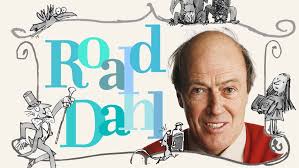
Roald Dahl Pic

In the Beginning

Roald Dahl was born in 1916 in Llandaff, Cardiff, Wales. He wrote from his shed using HB pencils. He wrote for children and adults. His books live on in both book and film form. Sometimes the films are done well and sometimes they are not, that’s always the nature of films however, no matter who the original creator is. Some stories have also been adapted for TV and Radio.

Roald Dahl Day
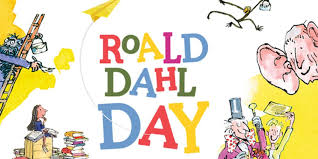
Roald Dahl Day

Schools and libraries across the country tend to celebrate Roald Dahl every 13th September – his birthday. This year’s theme for Roald Dahl Day is Matilda. She is courageous and has a love of reading, even though it means going against her parents and isn’t seen as being trendy. The book is fun and has magic within it, but it is also sweet and gentle with Miss Honey, but then there is a marked contrast between her and Miss Trunchbull, which makes for great characterisation and story-telling.

The Books and Films

RD books

The books feed into children’s desires and imaginations. Take chocolate for example. There is Charlie and the Chocolate Factory and what child wouldn’t want to join Charlie Bucket and the eccentric Willy Wonka in a factory that experiments and creates chocolate and sweets, even in this more health conscious society. The follow-up – Charlie and the Great Glass elevator has some adventure and also takes children a little into the political world and what the USA was like at the time Roald Dahl was writing about.
There is magic in The Witches, The Magic Finger and Matilda and family and school life as themes, that also have mild trepidation and villains and heroes. Charlie and the Chocolate Factory was made into live action films – two of them.

James and the Giant Peach also has magic and heroes and villains. There is also friendship and adventure and a need for escape as James wants to escape his two gruesome aunts.

There is fun with The Enormous Crocodile that takes children through the jungle meeting different animals and with just enough scariness that children really enjoy when the crocodile wants to eat children.

Fantastic Mr Fox is also about nature and animals, but this time about the need to understand and look after them. It also has a political element, but on a child level about the landscape and fox hunting. This was also made into a CGI film and there was a song I remember learning when I was in primary school for the baby foxes. We acted it out and I was a baby fox.

There is also Daniel, Champion of the World about a boy and his plans. This was made into a live action film

There’s mischief to be had in the Twits and George’s Marvellous medicine. There’s also elements of inventiveness. George’s Marvellous Medicine was used for a Jackanory story on tv.

The Giraffe, The Pelly and Me shows teamwork, friendship and entrepreneurship as they set up their own window cleaning company and there is also some trepidation with a burglary in a grand house.

The BFG with his good dream catching skills befriends Sophie and the two become lovely friends.

Esio-Trot was the last book to be published in Roald Dahl’s lifetime. For those who haven’t worked it out, it is Tortoise spelt backwards.  Esio-Trot tackles loneliness and is about Mr Hopper trying to make a connection with Mrs Silver, who he has loved from afar. This was made into a film for tv.

Boy and Going Solo are both Non-Fiction and tell of Roald Dahl’s life. It may sit generally in the children’s non-fiction area, but really both children and adults will gain fascinating knowledge from them. There was a documentary style programme about them on tv.

Revolting Rhymes is exactly that and has twisted takes on fairy tales. There used to be a tv series also inspired by this with chef Gary Rhodes showing how to make revolting recipes inspired by the book with his assistant – actor, Pam Ferris.

There are books that are not only for children too, although the main emphasis seems to be on children. He also wrote really dark stories for young adults and adults alike that are twisted tales such as Skins and Tales of the Unexpected, which were on TV. Tales of plants that could talk; tattoos that someone wanted and could have straight from another person; tales of sinister bedsits etc.

There are also other books too that have been and are being produced.

Further Facts

Roald Dahl wrote everyday from 10 am to 12 noon and then from 4 pm to 6pm. His first book wasn’t what people imagined it to be – Charlie and the Chocolate Factory, it was The Gremlins, those furry, cute characters that change when wet and well, aren’t so cute after that.

This was not the end of his talent. He worked with illustrator Quentin Blake (more about him later) and with James Bond creator Ian Fleming and created Chitty, Chitty Bang Bang and worked on the book for the film of this and of James Bond: You Only Live Twice. He and Ian Fleming worked together prior to this during the second world war, providing information for MI6. Roald had also been in battles during the war too. He was with the Royal Air Force (RAF) until 1946.

Roald Dahl had 5 children and married twice. He has a granddaughter still living – Sophie Dahl. 

Roald Dahl died on 23rd November 1990. He was 74 and was suffering with myeldysplastic syndrome (a type of blood disease). He is buried in the cemetery of St Peter and St Paul’s Church in Great Missenden, Buckinghamshire. He was buried with some of his favourite things, including: a power saw, HB pencils, chocolate, red wine and his snooker cues.

Inspiration and Importance

Roald Dahl’s stories and screenplays endure as does the love for them. He had a talent for knowing what people like and to be able to us universally broad themes to create magical worlds and fun and adventure. He had a talent to bring about some really dark stories and yet aiming them just right for his target audience. It now also helps that schools and libraries celebrate his life. He is still an important author within this age of computer technology as children and adults read less. Mention Roald Dahl and everyone knows his books, which is a good place to start. Curiosity about authors will hopefully come too as so many have led or do lead such fascinating lives. Roald Dahl is everywhere, in his own work and has inspired other authors and it is seen in their work, such as now there are people like David Walliams and other writers who are similar to him, whom it is evident must have been inspired by Roald Dahl.

Quentin Blake

Quentin Blake Books

Now it wouldn’t be right not to mention Quentin Blake too. He illustrated many of Roald’s books and has many fabulous books of his own creations too that are so full of fun and excellent illustrations. His books are now of many, his most well-known perhaps being Mister Magnolia and Mrs Armitage.

Children’s Laureate and other Awards

The Children’s Laureate seems to have been around forever, or so it is sometimes assumed, but it wasn’t until 1999 this post was created. Today in 2019, as I write, it is Cressida Cowell. In 1999, the very first Children’s Laureate was Quentin Blake.

He has also received so many awards for his books, including the Whitbred award. He has also been personally recognised and has certainly been living an illustrious life. He was made CBE in 2005, is an RDI and has numerous honorary degrees from universities throughout the UK. He received a knighthood for ‘services to illustration’ in the New Year’s Honours for 2013, and became an Honorary Freeman of the City of London in 2015. It is an impressive career and impressive to be recognised so much for all his work that endures and I am sure will also endure, not just through his collaboration with Roald Dahl, but also the work he has produced himself too, which is quite some body of work indeed as he has always worked in illustration and even illustrated for Punch magazine.

An Additional Career

Quentin also has another career. He works as a curator for exhibitions in well-known famous places – the National Gallery, the British Library and the Musée du Petit Palais in Paris. In the last few years he has begun to make larger-scale work for hospitals and healthcare settings in the UK and France where his work can be seen in wards and public spaces.

In Conclusion

So, two great men who inspire and whose work will, I am sure will continue to for generations to come with libraries and schools and parents and children all playing their part. There books I am sure will always be somewhere in bookshops, on library shelves and hopefully also in the hands of readers. I am also sure that they will be inspiring other current and future authors for years to come.

Roald-Dahl

The Magic of Julia Donaldson and the Illustrators #JuliaDonaldson #NickSharrat #LydiaMonks #Williamaeford #MacMillanKidsUK #Bookbug #ScottishBookTrust #Kidslit #Picturebooks #ChapterBooks

The Magic of Julia Donaldson and the Illustrators


even-more-julia-donaldson-pics.jpg

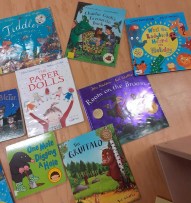
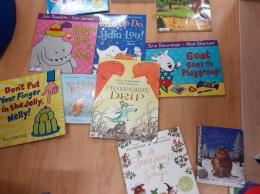
Julia Donaldson, an author’s name who just trips off the tongue so easily when talking about children’s books. Who can’t help but love what she has done for children’s literature. From the Gruffalo to Stick Man and everything in-between. So many bookshops and libraries have them, even the community library I run here in Scotland has so many of her books.

What Perhaps Make her books so popular?

Perhaps it is the fact she is a genius at writing in rhyme. Children love rhythm in stories. There is also repetition and this in turn helps make them interactive as children can latch onto key repetitive sentences and say them out loud, once they are known. Perhaps it is the brilliantly vivid illustrations. Perhaps it is the stories, there’s just enough fun and trepidation and pace within them and they are excellent to read aloud, as so many parents and librarians and teachers have discovered over the years.

The Illustrators

The books all have been excellent illustrated. Possibly the best known  illustrators linked with Julia Donaldson’s books are – Axel Scheffler who also has his own series of books – Pip and Posy and has also illustrated for other books too. Nick Sharratt who illustrates so much like the ever popular Tracy Beaker and Shark in the Park series amongst many others. There is also Lydia Monks and David Roberts. These people also all add to the enduring love of her books. Children are really captured by the big, bold illustrations, which always pair up so well with the text. Their books are always worth looking out for. I plan to write more about a couple of these illustrators in a future blog/essay post.

Julia and Nick books                                        Julia D and Nick S

  Learning to Read and Using Her Books in a Fun Educational Sense

There are a great selection of books and have been for many years, which help children learn how to read. Julia Donaldson also has her own books to add to the plethora of stories which help children with phonics and beyond. Her series is Songbird Phonics and are again beautifully illustrated and are also well-conceived. They are an excellent addition. There are many books in this series to aid children’s development educationally in the 3Rs sense too (all her books have something that children can learn from as there are indeed from all books in one way or another, whether they are for children or for adults).

There are many resources that can be downloaded for free from her website, which contain many activities that are useful for both schools and libraries, which in my view is thoughtful and they do seem to be well-thought out and are sectioned into each book that she has written, so they can be part of a focused activity.

There is always something great that children can gain from her books and she even provides free resources, which are great as I have tried and tested them in the library. There are also soft toy merchandise so that her stories can be acted out or to just have them to accompany a story. I have seen them and they look and feel fabulous.

Chapter Books and Interactivity

There are also books that aren’t termed as picture books, there are books for slightly older children such as Swallows about the migration of birds and a message having to travel many miles. Again there are wonderful illustrations and something to learn from the story. It too has excellent scope for interactivity, given just a little imagination from the deliverer. I once, and may repeat it as it was so successful, played Chinese Whispers with a class of school children to show how a message may change as it travels. There are many other things you can do for this.

There are also books such as the Princess Mirror belle series, which is great for the more advanced readers and have less illustrations within them, but do have lovely front covers by Lydia Monks. They are about a princess with a purpose. 

Longevity

Julia Donaldson’s books are no doubt books that will be around forever, perhaps even have a longevity of someone like Enid Blyton for example. Some of them have already been in existence for over 10 years already, which is hard to believe, but time does fly. The Gruffalo and so many of her books are talked about as though they have just been written and are hot off the press. They still seem as fresh to new generations of children as they did when they first appeared on shelves.

Julia’s books have now been adapted for both tv and stage as well, to the delight of many. She does go to book festivals, especially the Edinburgh Book Festival. Have I ever met her? Sadly no, but never say never. Would I like to? Absolutely, to say a huge thank you to what she has brought to libraries and children’s literature. 

Children’s Laureate – 2011 – 2013

Julia Donaldson was appointed Children’s Laureate between 2011 and 2013, today as I write this it is Cressida Cowell, who I am sure will, like her predecessors, do something good within her role. In her laureate role Julia Donaldson has campaigned passionately against library cuts and closures. Sadly libraries are still closing and libraries (mine included and others and  the job went too and now I am leading a community library to compliment the local authority) are not always taken seriously enough by governments, even when there are people within government who claim to be passionate about books and education and libraries. There are also other factors at play too. The main thing is that she tried to have all libraries saved and has shown she cares as many authors etc do.

Bookbug Sessions

She is also instrumental to Bookbug sessions (rhymes, songs and stories that are provided for Free, often by libraries in Scotland). People are trained prior to leading a session and provided with the resources to deliver. There are also Bookbug                     Co-ordinators around Scotland.

Bookbug sessions help reduce the negative effects of poverty and every session is always free and benefits babies and young children.

Singing rhymes and sharing stories support children’s language, learning and social skills. They also support bonding between baby/child and the adult with them.

I lead Bookbug and they do involve some preparation work, but they are fun to do and knowing that it is something so worthwhile being to be involved in, makes it even better, but then I like to do things for communities and always have included books in some way or another and have done for over a decade in some form or another and still I am relatively young (under 40 at time of writing this). This time around it is for a community library and whenever the local authority libraries that I used to work in are in need too.

Conclusion

I think that the magic of Julia Donaldson will be around for generations to come as will Bookbug (so long as there are no more cuts). She goes to book festivals, the Edinburgh Book Festival in-particular to meet her audience and to bring her stories to life and that too will no doubt add to her appeal and her ability to be relevant and current, even though she has been writing since at least 1993 with A Squash and a Squeeze.
She has won many awards and deservedly so and is still writing today.

I totally rate her and the illustrators associated with her for bringing so many great stories that can be worked with more than one way as they can be read straight or can prompt a conversation of discovery for children.

There are some authors who write similarly to Julia Donaldson who are emerging. I of course rate Nick Sharratt, but the author who I am thinking about at this moment is William AE Ford who writes Timothy Mean and the Time Machine. I mention these people because it is important and good for children to be able to try out other authors too.

So here’s to Julia Donaldson and the illustrators who have and indeed the people who publish her books, which is now over 70 and long may it all continue.

julia-donaldson-pics.jpg

The Influence of Music within books, writing and more

A Short Essay of The Influence of Music within Books, Writing and More

music notes    book clipart

I, these days find rooms can sometimes be too quiet, so I was listening to some music on Spotify that got me suddenly thinking of music, film and books. Not least because as I was randomly looking, up came an option called “Reading Soundtrack”. It is theme tunes and incidental music to listen to whilst reading. I have found it fills the room with nice music, but with no words, all just instrumental, which means writing and reading can still be concentrated on, and yet there’s now no complete silence. Don’t get me wrong, there are times when I like complete and utter, blissful silence or I need it to concentrate at a different level on something. Other times, it is just good to have a music filled room and get on with things so the mind doesn’t wander onto a million other thoughts. I like music in general, we all have particular songs that generate different memories and emotions or can conjure something quite exquisite up in the imagination. Music is a powerful medium, whether it is instrumental or is in song. We all have favourite pieces and those pieces that just get on our nerves. Music can conjure up memories for some; sometimes bad, sometimes sad, sometimes deep joy, sometimes a brightness. We also have pieces that we know so well, that it can drift into the room and into our subconscious that we can work and have a music-filled room without it being a distraction.

So, the Spotify Reading Soundtrack has 54 (at time of writing) relaxing tunes on it. To name a few books that became films and have music on this soundtrack – it begins with The Boy Who Flew Away, there’s also Mocking Jay, Jane Eyre, Christopher Robin, Spiderman, A Testament of Youth, Lord of the Rings, The Maze Runner, Game of Thrones, Schindler’s List, Band of Brothers, Geisha, Cinderella, The Imitation Game, Cloud Atlas and many others. All are peaceful enough to use whilst reading or writing. It really is worth a listen to. I cannot claim to reading all the books, nor to have seen all the films that are mentioned in this soundtrack, but they are all peaceful and have an air of calm about them. There’s no need to concentrate on the music, instead concentrate on the work you do and the music does the rest as it penetrates through the mind, but without piercing into it and envelopes you in a peaceful embrace of music notes without you having to think of it. All you have to do is think about the real task in hand. I have written short stories (3 got published), all with music on at various points in the process, I have written a few blogs with music on and done the more mundane things such as ironing with it on. You just find what is right for you and the tunes and songs that you most enjoy.

music notes

In September 2018 I wrote a blog about Music within Books and Music to Die For off the back of a panel I had watched at the Morecambe and Vice Festival. It shown that musical influences are being used more in books. More than what I had really thought about. 

Alan Parks uses 70s music such as Small Faces and David Bowie for the cultural scene in 1970’s Glasgow.

Joe Thomas has music references that are used to categorise different parts of his book in some ways, for themes of political, joy and melancholy that are infused into his first novel, “Paradise City”, which is set in Sao Paolo.

Hugh Fraser has music in Stealth that is set in the 1960’s that create the right atmosphere for the time period of the club, especially, that features within his book.

Joanne Harris has music in BlueEyedBoy, which gets mentioned at the beginnings of each chapter, which sets a certain tone.
book clipart
The above list just names a few. There is music mentioned in children’s books, young adult books, adult books. There are numerous non-fiction books about music as a genre or about its creators, whether it is the artist, the composer, singer etc.

Music can play a vital part within some books, in setting the scene and/or atmosphere. There are many films that are written from books. Within many of the films there is music throughout, it creates a sense of time and place sometimes. Take a period piece, say, any of Jane Austen’s books for example, there are many dances within the season. Music gets mentioned and watching the tv dramatisation or film versions and there it is as it would have been. So, sometimes music can be very deliberate, would be a bit odd to read about a dance or watch one without hearing the music (since this was before the era of silent disco of course). Other music can be used as incidental music or to create a certain mood or to build up tension. Done well in film/tv or written well in books, it can have a good desired effect and can fill the imagination even more as the mind’s eye for the written word creates the scene or when watching, can tense up the body and have you on the edge of your seat or make you think how lovely a scene is. This can also be true of the stage. Of course in a musical, there’s music and song to convey the story, it’s obvious, but take plays for example too, okay there’s not often song, but sometimes there can be music, to create the atmosphere and/or a scene or give even more of the sense of a time era, whether it is past or present. Often, but not always, music is used in the form of characters listening to a radio, so it can also be used as an activity within that character’s day. The music however always appears to be carefully selected, so it fits and that’s the same for film and tv.

In both the written and the spoken word, music can create different emotions, when done well. When it isn’t done well, however, it can become too much or so grinding that the viewer no longer feels the flow of the music and acting working in harmony, or reader can either become too bogged down in the music that the atmosphere is lost.

The thing is however, that music spans into everything. Music is a universal language. For decades there have been music festivals showcasing all sorts of genres, from pop to rock and classical to folk and can be read about and listened to on so many platforms. Whatever the genre, the art form, it has this innate ability to partnership with it all to enhance a story or be a medium inwhich the story itself is told in. It has become such an important part of global culture within everything we watch or read or do. Music is many things to many people and has so many topics within it, that it can present itself on the stage and within books as part of the story that is being told. Music itself is a story being told. Music itself is subjective, but then, so are the books you read, the tv and films you watch and the stage musicals and plays you see, which also assists its ability to be within every other art form too.

I will digress slightly for a moment, take a painting or a photograph of an orchestra or just a solo piano or a guitar. We may not actually be able to hear the music being played – it’s a painting after all, but the majority of us know what these instruments sound like, so can imagine it, so even in something like a painting, music can sometimes still be part of the story being told.

When I think about it, all music tells a story within itself too, no matter the genre. Some time in the not too distant future I am going to return to music and tales and have an interview published with a particular musician and songwriter who’s style of music definitely tells a story, owing especially to the genre she composes within. I am not intending, not at the moment anyway, in branching out into music reviews, but it is a medium that crosses all art forms, including those I concentrate on within this blog.