#Interview with Comedian, Director, Actor Stuart Laws on new tv series, directing comedy specials and more… #StuartLaws #Comedian #Actor #Director #TVDrama #Stage #Patience #Channel4 #ComediansTakingPenaltiesWithChloePetts #StandUp

Interview with Comedian, Director, Actor Stuart Laws
conducted by Louise Cannon

Stuart Laws is known for his stand-up comedy, directing well-known comedians James Acaster, Rosie Jones and Nish Kumar and is highly respected amongst many other comedians too. I was given the opportunity to interview him on Bookmarks and Stages where we covered what it was like to direct the aforementioned comedians, his latest projects, including acting in channel 4 drama, Patience, Comedians Taking Penalties with Chloe Petts, a new web game show, Is It A Bone?, his inspiration to do these many jobs and being neurodivergent in the tv world, for him it’s autism. After the interview you can also discover his latest live shows for February and March 2026.
Welcome Stuart Laws to Bookmarks and Stages and thanks to PR, Julian Hall for creating this opportunity. Now, let’s begin our interview…

  1. You’ve done stand-up comedy, appeared in dramas, directed, it’s a great achievement. What spurs you on?

A desperate desire to prove my enemies wrong. Also, I do find it funny to not see a friend for 3-4 months and then when they ask – “oh what have you been up to?” to be able to provide a list of genuinely surprising new developments. I love watching TV, comedy, film and so to be any part of it fills me with excitement. As long as I can I will keep doing as many different, fun things until it’s very clear I’m not good at those things. VERY CLEAR. It’ll have to be VERY CLEAR.

  1. Who or what inspired you to act, direct and do comedy?

When I was a kid it was films like Jurassic Park and Back to The Future or stand up comedy like Lee Evans or Harry Hill’s Channel 4 show, then I got older and it was things like Twin Peaks and Arrested Development. Once I had started doing stand up comedy and was making short films I was really inspired by new acts that I met on the circuit and loved watching perform and made me want to be better. Chuck in enough arrogance to believe that I could help them be even better and bam, it all started to coalesce.

  1. You’re appearing in Channel 4 drama, ‘Patience’, can you tell us a little bit about the character you play?

Alex is a member of the adult autistic support group that Patience Evans, the lead character played by the brilliant Ella Maisy Purvis, attends and so I get to stretch my acting muscles by playing an autistic adult. When the audition came in I remember being excited because I don’t get a huge amount of scripted and definitely very little drama auditions so I knew I wanted to nail it. Because the show has a strong sense of humour running through it I knew I wanted to lean into that, especially knowing the character was across multiple episodes – it’s a good chance to have a think about the wider context and life of your character. Saying that, it’s not a huge part but a delight to play and the production team so good and the first series of the show so compelling and fun to work that I knew I wanted to be involved and to be able to add whatever details and experience I could.

  1. You’re a go to director for comedians, James Acaster, Rosie Jones and Nish Kumar, what is your process to direct other comedians and have you got any favourite moments when directing these comedians in-particular?

Directing a comedy special is a lot about just getting the cameras in and making sure the lights look nice and the comedian is as good a mental space as possible to do their show as well as they can. I’m there to put out fires, be a sounding-board and to ensure the crew all are supported and can do what they do best. The next level up is a chance for me to work with the comedian, watch the show in advance, suggest structural tweaks or new lines, to eventually know it inside out, know the vibe of the comedian and talk about themes, tone and style they’re looking to achieve and what of my ideas are interesting to them – it could be to do with the style of how the cameras move, where they’re positioned, what the lighting is like and how we want the audience to feel while watching. Then I get to have conversations with heads of department about the best tools for those ideas and prep the crew as best as possible about how they can make the plan a reality. We recently shot Nish Kumar’s new one and we discussed dutch angles, 70s directors and Stop Making Sense, for James Acaster we talked about wrestling, 3:2 open gate aspect ratio and creating a sense of perpetual motion so that the cameras all cut together smoothly in the full 360 degree audience set up. That’s the fun of it for me, knowing that there’s certain things a stand up special needs to have but to also know that there’s wiggle room to express what makes the comedian brilliant, to make the jokes and the themes land even harder.

  1. You have a new SO TV series of ‘Comedians Taking Penalties with Chloe Petts.’ What are your football skills like and is there a particular football team you support?

I’m a Spurs fan and a Gotham fan and played for Goldhill FC for 23 years. I’m not a good footballer but I’m pretty solid and I think I’m happy with that, let’s put it this way – there is one cup final that my team played in that’s called The Stuart Laws Final – and I’m pretty happy with that. When I met Chloe on the circuit we immediately bonded over football and both being absolute lads so getting to write on and be in this series is a real dream come true. What is less exciting is the physical toll of playing football for 10 hours straight, two days in a row on the hottest days of the year. I think it took a couple of weeks for my body to recover and I can absolutely tell in some of the penalties that I haven’t dived because my brain refused further injury.

  1. What was your favourite moment of ‘Comedians Taking Penalties with Chloe Petts?’

Harriet Kemsley being on any TV is a promise of a good time and in her episode I suggested that she do a run-up from the halfway line for her last penalty. She of course immediately ran to the halfway line to do it and after a 15 second run-up she kicked the ball and it went so far wide that science still doesn’t really understand it. It was so funny and such a perfect denouement. Aside from that, it really was the team – they were so welcoming and supportive and that was all from Chloe and Andy at the top. They had brilliant ideas and worked so hard to turn the concept from a fun summer kick about into a genuinely funny and charming series that I HOPE HOPE HOPE gets a second series.

  1. You’ve created new web game show series ‘Is It A Bone?’ It sounds intriguing, with it involving a different sense: sight, sound, touch, smell, and taste.. How did you come up with the idea?

I was at dinner with comedian Chloe Radcliffe and she asked for her bone marrow dish to be boxed up to take with, it was served on a bone and they put that into the box and dropped it down on our table. Chloe said “IS IT A BONE???”. I laughed and then said that it was a game show and then immediately started laying out what I saw as the format. I then mentioned it to Rhys James and he said yeah of course that’s a show and we riffed more, then I took it to Al & Nick at my production company and they both had their own great ideas. Then we got Ben Mumford on board as a producer and he brought even more ideas. That got us to shoot day where Sam Lake the host and all the brilliant guests brought even more of their own ideas to it – that’s what I liked the most, creating a set up for the comedians to be funny and do what they like, knowing we could get them back onto the format when appropriate.

  1. . For ‘Is It A Bone?’ How did you choose your contestants?

I texted a bunch of people “Would you like to be a contestant on a game show I’ve developed, it’s filming at my office studio, you’d be in two episodes and it’ll take a couple of hours?” And they just all said yes. Like, didn’t even ask for more details about the show or what they’d have to do. Which means that each of them is genuinely reacting in the moment to what’s happening. How did I choose who to text? I went through my phone and thought who is damn funny and would team up well with others? I’d say that’s 35% of my address book to be fair, so more people will be getting texted for series 2 in 2026.

    12.You’re autistic, what advice would you give to other people who want to enter showbiz who also autistic?

It’s becoming more welcome and accepting of neurodivergence, which is handy considering the percentage of people in the entertainment industry who are neurodivergent is probably higher than the average population. It can be tough, it isn’t necessarily guaranteed that every project, location, team will be open or aware or able to make adjustments but it is becoming more common. Hopefully through my increasing awareness of it and trying to be vocal and supportive where I can I can play a part in it becoming more normalised in conversation. I’m aware that I’m privileged in being white, straight, able-bodied, low needs and therefore that makes my path smoother in disclosing. I know of a good number of people who are reluctant to disclose because they feel the discrimination is palpable or it makes them feel less secure. Hopefully that is changing.

   14. Where can people follow you and your work on social media?

You gotta get on instagram, though I am now trying to crack on with building my mailing list – I send out semi-regular updates with exclusive stuff and links to tickets and other cool things before they go public. Sign up at www.stuartlaws.com

Latest Live Shows

10th February @ Pleasance London
Comedians Beer Mat Flipping Championship 
6th March @ Pleasance London
Stuart Laws as Michael Caine Saying Never for One Hour

#Interview by Lou with Writer and Actor Ollie Maddigan on his award winning play, The Olive Boy showing in January 2026 @O.maddigan @Theoliveboyshow @swkplay #RonnieAncona #TheOliveBoy #Theatre #Play #WhatsOnTheatre #OllieMaddigan

Interview with Ollie Maddigan on theatre play,
The Olive Boy

Interview by Louise Cannon

Showing at Southwark Playhouse Borough in January 2026, Olive Boy is award winning (Offie Award) and has previously had successful runs at both Camden and Edinburgh Fringe Festivals. I have had the great opportunity to interview Ollie Maddigan about his play, Olive Boy, performed and written about him, with timely voiceovers performed by impressionist/comedian/actress, Ronnie Ancona. We delve into losing his mum at 15, counselling, making sense of the world and more… I thank Ollie for his courage, willingness and honesty in answering my questions on such a sensitive topic as I recognise it’s one thing to perform it, but quite another to be interviewed about it.
Here’s a bit about the play and then there’s the interview and details of how you can see the play.

“When Ollie was fifteen, his mum died, and he was the one who found her. The Olive Boy explores his attempt to make sense of life at a time when everything was falling apart, yet he was expected to carry on as normal. It looks at what it means to grow up with that kind of loss, especially as a teenage boy navigating school, friends, first relationships and the pressure to keep quiet about how you’re actually feeling. 

A therapist’s recorded voice, played by Ronni Ancona, runs through the piece, reflecting the distance he felt in counselling at the time and the wider silence around boys expressing grief and all the emotions that come with it.”

Firstly, congratulations on having The Olive Boy transfer from Camden Fringe to the Edinburgh Fringe Festival, where it sold out and winning an Offie Award to having a dedicated London season. What does that feel like and how does this inspire you to keep going?

Simply put, it feels great. You never imagine, when you’re first creating a show, that it could grow to this level, so I feel completely privileged. Watching The Olive Boy move from a tiny Camden Fringe run to Edinburgh, to a national tour, to an Offie Award, and now to a London season has genuinely been one of the highlights of my career. It’s been overwhelming in the best way. In terms of what inspires me to keep going, I think you know instinctively when something has reached its end and when it hasn’t. For a long time, I felt there was still more to do with this show and more people it could reach. That said, the run at Southwark might be the final chapter for The Olive Boy and if it is, it feels like the right place to end it.


  1. Secondly, sorry to hear about the loss of your mum at such a tender age.

The Olive Boy is about exploring a 15-year-old Ollie finding mum dead and trying to make sense of the world. What impact did that have on you at 15 years old and the adult you now?


Losing my mum at 15 changed everything. At that age you don’t really have the emotional language to understand something so sudden, so you just try to keep moving and hope you’ll catch up with yourself later. It forced me to grow up quickly, but it also left a lot of confusion that I didn’t unpack until adulthood. As an adult, I can see how much that moment shaped my humour, my outlook, and the way I connect with people. The show has been a way of finally giving that younger version of myself some space to be heard, and in doing so, it has allowed me to understand the adult I became.


  1. What did it feel like looking back to when you were 15 years old and what did you gain from this as that younger you tried to make sense of a world without mum physically in it anymore?


Looking back at myself at 15, I mostly feel a mixture of compassion and frustration. I can see how hard I was trying to make sense of something that didn’t make any sense. When you lose a parent that young, you’re suddenly pushed into a world that feels far too adult, but you’re still very much a child trying to keep up. What I gained from revisiting that younger version of me was perspective. I realised how much he was carrying without the tools to process it, and how he used humour and distraction to survive it. Writing the show allowed me to acknowledge that, rather than judge it. In a way, it gave that younger me the space and understanding he never had at the time.


  1. Therapy is still a bit taboo for some people, but it was more so for boys at a certain time, and a bit for even girls at a certain time too, but what was it like for you to attend counselling? You talk about reflecting the distance you felt, what effect did that have and would you ever consider counselling or recommend it to people now therapy is slowly opening up to wider ranges of people?


Counselling was a complicated experience for me at that age. It wasn’t something boys really talked about, and I remember feeling quite distanced from it, almost like I was watching myself go through the motions rather than actually opening up. I didn’t have the vocabulary to express what I was feeling, so it felt easier to stay on the surface.

That distance definitely stayed with me for a long time. It meant a lot of emotions got stored rather than processed, and I’m only now, as an adult, realising how much that shaped me.

Would I consider counselling now or recommend it? Absolutely. I think the stigma is slowly shifting, and people are starting to see therapy for what it really is: a space to understand yourself better. I wish I’d had the tools back then to make the most of it, but I can recognise now how valuable it can be, especially for young people who are trying to navigate grief or upheaval.


  1. After your mum died, there was a pressure felt to keep quiet about your emotions. What was living up to that pressure like?


There was definitely a pressure to keep quiet about what I was feeling after my mum died, and living up to that was exhausting in ways I didn’t understand at the time. When you’re young, you think staying silent is the same as staying strong, so you push everything down and hope it will sort itself out.

Looking back, that pressure created a kind of emotional numbness. I became very good at performing “being fine,” even when I wasn’t. It took years to recognise how much energy went into holding everything in, and how isolating that can be. The show has helped me confront that silence and acknowledge the cost of it.


  1. When trying to make sense of this world you were living in without your mum, what conclusions did you come to between then and now?


When I was 15, I didn’t come to many real conclusions at all. I think that’s the point: you try to make sense of a world that suddenly doesn’t make sense anymore, and most of what you land on is survival rather than understanding. At the time, my conclusion was simply to keep going, keep my head down, and hope things would eventually feel normal again.

Looking back now, the adult version of me can see that there is no neat conclusion to losing someone so central. What you find instead is acceptance. You learn that grief doesn’t disappear; it just changes shape as you grow. You learn that you can carry loss and still build a life around it. And you realise that the world without my mum physically in it is still a world she shaped through the memories, the humour, the resilience, and the perspective she left behind.


  1. Ronnie Ancona plays your counsellor in a recording. What was that like to have her on-board and be on stage yourself, knowing it was just her voice that carried through?


I mean, come on — it’s Ronni Ancona. Who better to play a character called “The Voice” than someone famous for her vocal impressions?

For me as a performer, it was a strange but exciting dynamic. You’re on stage responding to someone who isn’t physically there, but because it’s Ronnie, the performance feels alive. Her delivery is so precise and nuanced that it gives you something real to play off. It elevated the scenes and added a layer to the show that audiences always respond to.


  1. How did you inject humour into what feels heartfelt and such a personal play?


Teenage boys are funny. No matter what they’re going through, they’re crude, ridiculous, and absolutely convinced they know everything. I wanted to show that when you’re grieving as a teenager, you don’t suddenly stop being a teenager. You can be dealing with the biggest loss of your life and still be just as focused on trying to get past the child-blocker on the computer.

That contrast felt important to capture – the messy, contradictory reality of being fifteen and grieving, but still undeniably a teenage boy.


  1. What do you get personally from telling your story on stage in-front of a live audience?


There’s something grounding about standing in front of a room full of people and saying, “This happened, and it shaped me,” and feeling them meet you with empathy rather than judgement. It’s not about reliving the past; it’s about making sense of it in real time. When audiences laugh at the stupid teenage moments or fall silent during the heavier ones, it reminds me that grief is universal, and that there’s value in being open about it.


  1. What do you hope the audience will get out of your show, Olive Boy?

What I hope audiences take away from The Olive Boy is a sense of recognition. Whether they’ve experienced grief themselves or not, I want them to connect with the idea that growing up is messy, complicated, and never as straightforward as you expect it to be. If people leave feeling seen, or feeling like their own story makes a bit more sense, then the show has done its job. Above all, I want people to feel that, even in difficult chapters, there can still be humour, connection, and a way forward.

  1. Where can people follow you/your play?


O.maddigan on Instagram for me and Theoliveboyshow on Instagram for the show!

The Olive Boy will be performing at Southwark Playhouse from 14 January to 31 January 2026. Tickets and information: https://southwarkplayhouse.co.uk/productions/the-olive-boy/

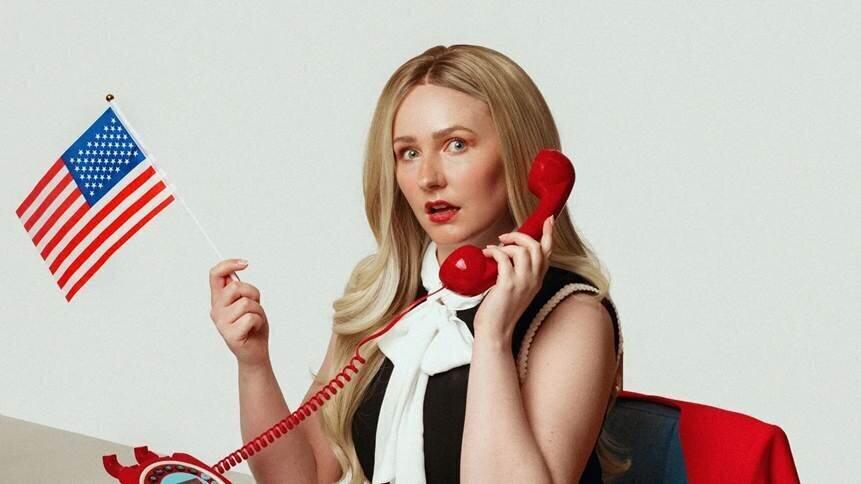
#Interview with Writer/Performer Leigh Douglas on Political Satire Stage Show – Receptionist of the United States (ROTUS) @leighdouglascomedy @ParkTheatre #Theatre #Stage #Satire #ReceptionistOfTheUnitedStates

Interview with Leigh Douglas
Receptionist of the United States
(ROTUS)

Interview by Louise Cannon

20th January – 7th February 2026 at Park Theatre, London

After a successful run at the Edinburgh Fringe Festival, today, I present an interview I did with writer/performer Leigh Douglas on her political satire, Receptionist of the United States, set to be staged at Park Theatre, Finsbury Park, London in February 2026. (ticket link after the interview). We talk about American politics, the conservative women behind those corridors of power, the internal journeys in those corridors, the contradictions, her views on Donald Trump and more…

Receptionist of the United States is said to be “A sharp, satirical and very funny look at the conservative women behind America’s corridors of power, ROTUS follows Chastity Quirke, a White House receptionist and staunch Republican as her blind faith in the system begins to crack and she’s forced to reckon with the consequences of her own complicity.”

Thank you very much for your time, let’s begin…

What or who inspired you to become a comedian and do political satire?

Coming from Ireland, there’s an explicit link in 20th century Irish history between art (theatre especially) and politics. My granddad lived through a lot of that history, born in 1929. He grew up with several relatives who signed with a mark as they couldn’t read or write. My granddad himself was self-educated from the age of 12 onwards and was one of the most well-read and funniest people I’ve ever known. He went on to write for the stage as well as radio, and he instilled in our whole family that literacy is power. My granddad and I were very close, and until he passed away in 2024, he would often be one of the first to read a new piece of my work. He didn’t pull punches with his criticism, even when I was a child. There is no doubt much of my love of the theatre came from him. I was at the Edinburgh Fringe doing a split-bill with my fellow comedian, Sophie Garrad, when I got the call to say he had gone into hospital. He told me not to come home; the show must go on. In terms of stand-up and comedy, I was raised on the likes of French and Saunders, Kathy Griffin, and Smack the Pony. In university, I studied Brecht and discovered The Thick of It. I knew I wanted to make work that brought together a feminine sensibility but tackled politics.

You take a funny look at the conservative women behind America’s corridors of power: what fascinates you most about them?

I’m not above aesthetics and there’s no denying that the aesthetic of American conservative women is compelling and aspirational. If you’re in any way drawn to glamour, there’s something about powerful American conservative women that will always be compelling. This is no accident. A huge part of their calculus is to fulfill some kind of patriarchal fantasy of what a woman should be. Then there’s the delicious hypocrisy of their stated goals and views, dripping in self-righteous moral superiority and privilege. It’s camp. Their gender performance is almost as studied as a drag queen persona. As a lesbian who spends quite a bit of my time stomping around London in Doc Martens, it’s enormous fun to drag up as one of these women.

Receptionist Of The United States (ROTUS) is about Chastity Quirke, who is a White House receptionist who is fiercely loyal to the Republican side and its President in a “blind” manner, who then reluctantly becomes self-aware. How do you think that feels, and how important do you feel it is to show how paths of sheer certainty can still change.

When we give up on hope for humanity, we might as well give up and go home. Everyone comes from a context, and no matter what their political beliefs might be and no matter how misinformed they are, everyone has a reason for believing what they do which is grounded in something true to the reality of their lived experience. In writing Chastity, I wanted to come to understand what circumstances might create a woman with diametrically opposed political views to my own. I could then game out where those views might lead her, not to mention what it might take for the bubble to burst for her. If Chastity Quirke is an anti-feminist Scrooge, what three ghosts might come to visit her? If the spread of right-wing fascism is going to be stopped, we have to hope that some of the foot soldiers are redeemable under the right set of circumstances. Otherwise, we’re writing off half the population forever.

How did you go about working out where the internal journey begins and how it ends?

The interesting thing in writing about complicity, culpability and political criminality is that no one in Chastity Quirke’s world is going to say exactly what they mean. Those who say the quiet part out loud will be weeded out as disloyal or set up as the fall guy. Chastity, as someone who thrives in this world, is reading between the lines all the time to work out where she stands, what exactly is being asked of her, and what chess move she should anticipate next. She begins with absolute certainty that she knows what move everyone else will make next. Her internal journey begins the first time someone makes a move she doesn’t see coming. As the show progresses and Chastity loses control, she is surprised more and more frequently by the actions of others. Her internal journey ends when the rules she’s been playing by are thrown out the window by the most powerful players and she realises she never had any control at all.

The play is partly inspired by real people. How did you research those people for the play to ensure you got their part of the story right in how they are portrayed?

Of course I went to traditional primary sources like Cassidy Hutchinson’s memoir, Enough. The way she wrote about her time in the Trump White House and her ultimate decision to testify to the January 6th investigation was the initial inspiration for much of the show. However, I then also scrolled all the way back in time on Karoline Leavitt’s Instagram to see how she was presenting herself online years before she was ever White House Press Secretary. I listened to right-wing podcasts like Sincerely American to make sure that Chastity’s vernacular and mode of expression was authentic. I also drew inspiration from the way conservative influencers present on social media and in reality TV. There is an indisputable link between the glamorization of conservative lifestyles in shows like Secret Lives of Mormon Wives, social media accounts like Ballerina Farm, and the presentation of conservative women working in the White House. It’s all promoting the same conservative values and politics.

Where do you stand on politics and President Donald Trump?

Safe to say, I think Donald Trump is a menace and I find the state of what’s happening in the United States currently demoralising, frightening and dangerous. I wrote ROTUS in January 2025 as he was being inaugurated for his second term as a way of processing my grief. The Democrats have their own problems, of course, but, in my view, they’re a right sight more compassionate, capable and compelling than the alternative we’re living through now. I was working as a barmaid in a North London pub when Alexandria Ocasio-Cortez was first elected to Congress; if she ever runs for president, she’d get my vote. To me, she’s always represented the working woman living under capitalism. I’d also love to cast a vote for Jasmine Crocket or Pete Buttigieg.

What do you feel the pressures, contradictions and moral consequences faced by young women operating within hard-line conservative politics are, and how do you use this in your show?

The contradiction at play for young women operating in conservative politics is that Republicans are the party of Christian fundamentalism. The rhetoric of the hard right is that a woman’s greatest priority should always be her role as a wife and mother. Therefore, if you’re an ambitious young woman in right-wing spaces, you have to go husband hunting in a manner befitting a Jane Austen novel in order to remain in line and on message. You have to tell other young women that having a career is a distraction, whilst you yourself pursue a demanding career. Balancing your career and having a family cannot be perceived to be a struggle. You have to portray yourself as superwoman, effortlessly fulfilling both roles perfectly. If you admit to struggling or just not wanting a family, you’ve failed as a woman.

ROTUS was highly successful at the Edinburgh Fringe, what did that feel like and what are you looking forward to most at Park Theatre?

It was incredibly meaningful to me that Chastity and the show connected with people. It was exhilarating to feel like a piece that I’d written, partly as a way of processing my own grief at seeing Kamala Harris lose the 2024 presidential election, was also an outlet for audiences. In Ireland, we have wakes when someone dies that are often some of the most riotous, most brilliant parties you’ll ever go to. Something about the experience of doing ROTUS at Edinburgh felt cathartic in a similar way.

Where can people follow you on social media?

@leighdouglascomedy

ROTUS: Receptionist of the United States is at Park Theatre from 20th January – 7th February 2026. Tickets available HERE.

#Interview by Lou on The Fit Prince (Who Gets Switched On The Square In The Frosty Castle The Night Before Christmas @awkwardprods @KingsHeadThtr #Christmas #Theatre

Interview by Lou with Linus Karp on
The Fit Prince (Who Gets Switched On The Square
In The Frosty Castle The Night Before Christmas
2 December 2025 – 3 January 2026
King’s Head Theatre, London

Welcome Linus Karp to Bookmarks and Stages. Thank you for the opportunity to interview you. They have a new show this Christmas running from  2 December 2025 – 3 January 2026. See further details, plus a link after the interview. First, here’s the synopsis of what it’s about, then there’s an entertaining and interesting interview about the play, its created location, subversion, Christmas films and so much more…

Panic! In Swedonia. The King is dead, and the Prince in line to the throne is unmarried – if he doesn’t find someone soon, he must forfeit the crown!
Meanwhile, in New York City, baker Aaron Butcher is butchering his career as a family baker. His puppet colleague, the ever-optimistic Jenny Puppetson, secretly enters him for a mysterious royal commission in the faraway land of Swedonia: Aaron has been chosen to bake the wedding cake for the Prince himself.
Extremely reluctantly, and mostly to spite his ex, Aaron accepts. Maybe a commission in a suspiciously familiar, completely fictional country will fix his problems…
Audiences are invited to Swedonia – the perfect setting for the ultimate queer parody of all those Netflix and Hallmark romcoms you love to cringe at; the chaotic queer cousin to them all.
Written by and starring Linus Karp and Joseph Martin, with original music by Golden Globe–nominated songwriter and producer Leland (Troye Sivan, Charli xcx, RuPaul’s Drag Race) and multiple surprise cameos, The Fit Prince is a joyous subversion of heteronormative romcoms and a love letter to Karp’s native Sweden.

Without further ado, let’s find out what was said:

What inspired your play?

Joseph and I spent Christmas 2022 ill with covid. For close to two weeks, we watched endless Netflix and Hallmark holiday films. We felt like we wanted to put our own awkward prods spin on one of those stereotypical storylines, making it queer to the max. We added A LOT of audience participation, cameos from many of our fave people, some catchy musical numbers written by Leland and, of course, some beautiful puppets. 

The play is said to flick through the Net of traditional holiday movies, bringing all their Hallmarks together in the signature awkwardprods way. How did you go about weaving the feeling of those types of films into your play and what attracts you to this type of comedy?

There is something really fun in embracing clichés and predictable moments and then create surprises around that. It’s also fun to take what is traditionally heterononormative stories and make them queer. 

 The play is set in the fictional place in Swedonia with a prince who is next in line to the throne and is yet unmarried, which poses a problem. It sounds a bit fairytale like, what inspired this part of the premise in your play?

We wanted to create a fictional world, that’s to some extent removed from reality. Being Swedish, it felt really fun to play with people’s ideas of what Sweden is in creating that world – making Swedonia equal parts a fantasy land and a love letter to Sweden.

There’s a lot of playfulness in the names, Aaron Butcher and Jenny Puppetson, what were the discussions like when coming up with those names?

I thought Puppetson was a really funny name, Joseph wasn’t sure, but I put it as a placeholder in the first draft, and soon enough we both loved it. Because Aaron’s a baker it just felt very stupid that his surname would be Butcher, and we love stupid.

There’s romance and a bit of subversion, can you tell us a bit more about that?

Well, it’s Christmas. And at Christmas you tell the truth. Which is that love, actually is all around. So it felt natural to incorporate that into the story. The people need more queer love stories.

What are some of you favourite Christmas films?

Dolly Parton’s Christmas on the Square, The Christmas Prince, The Princess Swithch, A castle for Christmas, The Knight Before Christmas – Josh Whitehouse who is the romantic lead in that film actually makes a video appearance in Fit Prince. And the show also sees a tribute to the Queen of Netflix Christmas movies – Vanessa Hudgens.

What do you like most about Christmas?

Personally, I never feel like it’s Christmas until I’m performing our show the Fit Prince at King’s Head Theatre. 

Where can people find out more about and follow your play

Head to your favourite social media and follow @awkwardprods to find out more about Fit Prince, and our other shows; Gwyneth Goes Skiing and Diana:The Untold and Untrue Story

The Fit Prince (Who Gets Switched On in the Square in the Frosty Castle the Night Before Insert Public Holiday Here) is at King’s Head Theatre from Linus Karp and Joseph Martin, with original music by Golden Globe–nominated songwriter and producer Leland . Tickets available HERE

#Interview by Lou with the Countess Dracula, A Gothic Comedy, Actress, Joanna Holden premiering at Camden People’s Theatre Halloween 2025 #Dracula #Halloween #Theatre @CamdenPT @CamdenPeople

Interview with Actress, Joanna Holden
on the play Countess Dracula, A Gothic Comedy
Premiering at Camden People’s Theatre 29th Oct – 1st Nov 2025
see further details after the Q&A

Interview by Louise Cannon (Lou), Bookmarks and Stages

Countess Dracula is primed and ready for Halloween. Just what does this fabled creature have to do with the Menopause? Inspired by Bram Stoker’s famous Dracula, the play turns everything on its head as it promises to explore it all in a uniquely entertaining way.

I recently had the privilege of asking some questions about the play to Joanna Holden. First, here’s a little bit about her working class background and what she’s become renowned for, then we shall begin with the questions. After this, you will find a link to how you can see this play at Halloween.

Joanna Holden is a renowned performer with over 25 years experience as an actor, director, clown and facilitator. Born and raised in a working class family in Scunthorpe, despite a career spanning the globe she has never lost her northern roots. A long time collaborator with Told By An Idiot and John Wright she has also worked with Directors such as Roxana Silbert, Stephen Daldry, Cal McCrystal and Angela De Castro. In an extensive career Joanna has worked with companies including Cirque du Soleil, Kneehigh, The RSC, The National Theatre, Bristol Old Vic, Hull Truck, Soho, The Royal Festival Hall, York Theatre Royal, Theatre By The Lake, Bolton Octagon, Northern Stage and Sheffield Crucible.

What attracted you to the role of Countess Dracula?

The idea that a woman could play one of literature’s most terrifying characters and express that cold blooded, dark, evil soul was exciting to me, especially as a woman of 57. I might not have lived thousands of years, but there’s an awareness of the years I’ve lived, if that makes sense. Going through the menopause, other Dracula characteristics resonated with me: an acute sense of my mortality, a fear of ageing and feeling like the living dead, and the horror that is the menopause for some women. The lack of sleep, what can I do with that nighttime wakefulness and the madness that comes with it! On a more positive note, it has also been interesting to explore the power that Dracula has over his world and the people in it, at a time when I felt I was losing power in my own life. What delight can I find in that, and what lessons can I and we, the audience, explore in that!

There have been many adaptations of Bram Stoker’s original creation of Count Dracula, from stage to film to even a cartoon on TV when he’s a duck. What drew you to the classic book and then to put a whole different spin on it, and do you think Bram Stoker would approve if he was alive today?

One day I was slumped on the underground, holding up my chins, contemplating my tiredness and lack of libido. Who was this person I didn’t quite relate to? The thought of sucking young men’s blood for their testosterone came into my mind, weird as it may sound, and I started to contemplate the idea of a female Dracula allowing her rage, her appetite, her need to survive to be let loose on the world. I started to read the novel and also spoke to other menopausal women who seemed to relate to this comparison, and so began to explore the role of Countess Dracula through the gaze of a menopausal woman. The Dracula or vampire myth is a fertile genre to be played with, adapted and explored, and it continues to fascinate us, which is why I guess there are so many adaptations. I think women in Bram Stoker’s time were viewed, unfortunately, very differently. I would hope Bram would be open minded enough to be excited by the idea!

Do you feel plays that re interpret a classic character draw not only something different from the original text, but draw people to be curious about it again, whether they already know it or are newcomers to it?

I think it draws out recognisable elements from the text and observes them through a different lens for a new audience, using those elements to explore a new angle in an ever changing world. Dracula is in all our psyches, everyone has a notion of who he is and what it’s about, so we are given a head start there and are able to subvert this to say something new. I hope that makes sense. At the same time, the piece should also hopefully stand alone, whether you have read Dracula or not.

The play confronts the menopause and all that it can bring, its rage, sadness, madness and humour. What do you hope to get across to the audience with this essential topic and mixture of emotions?

Half of the audience will go through this or will have been through it, and the other half will have mothers, lovers, etc., who will experience this transition in one way or another. We ran some workshops in Scunthorpe with menopausal women, and they had so much to share and say. They all had different journeys, but there was an overwhelming sense of the need to share, to laugh, to talk, to cry, to be open about their fears, and the sessions were so cathartic. I hope that we can find some of that in our show. It is a journey, and you are changed by it, so how do we embrace that, find acceptance, and at the same time harness the power that comes with the experience?

I have no idea if you’ve been through menopause yourself or not. If you have, is there anything in the play you could relate to, or what research did you feel you had to do so the message was authentic?

I am post menopausal, as are many of my friends, and of course on our team there are partners of menopausal women. The brain fog, the memory loss, the lack of self esteem and confidence, the questioning of who you are, the being disappeared and wanting to disappear, the wanting to shout expletives, they were all there whilst making the show, so they’ve become part of the show. And also, the delightful opportunity to play Countess Dracula with all her power and not give a monkeys what the world thinks!

This adaptation playfully interrogates society’s treatment of ageing women. How is the playful nature achieved, and how important do you feel it is to bring humour to quite serious topics?

I guess we know that it can be a difficult journey, but we don’t want to go to the theatre and see exactly our own lives. We want to be able to laugh at the ridiculous elements, the mad situations when you can’t remember a name, or you’ve put the TV remote in the fridge, or you’ve set off somewhere on the wrong day for the wrong meeting. Through entertainment, we can find a united laughter of recognition and community.

What do you like about Halloween, and do you have any traditions or superstitions you follow?

The opportunity to be naughty, to be outside of etiquette, and to trick or treat, and the opportunity to scare and be scared. It’s the end of the summer, and the dark nights are coming in, with the exciting fear of what happens in the darkness, whether there are ghosts and evil spirits in that darkness. I like to have a tin of sweets by my door for the youngsters, but I can’t fit into my skeleton costume anymore!

Where can people follow you on social media?

@ofthejackel on Instagram is the best way to keep up with everything that is going on with the show.

Countess Dracula will run at Camden People’s Theatre from 29 October – 1 November 2025. Ticket link is HERE.

#Interview with Phillip Arditti and Nina Bowers on their new play, English Kings Killing Foreigners and more… on to 18th Oct 2025 @sohotheatre @realfaketheatre #WhatsOnStage #Theatre #Shakespeare #EnglishKingsKillingForeigners #StagePlay

Interview with Phillip Arditti and Nina Bowers
on Stage Play – English Kings Killing Foreigners and more…
Soho Theatre, London
Tuesday 16th September – Saturday 18th October 2025

interview by Louise Cannon
Bookmarks and Stages

I had the pleasure of interviewing Phillip Arditti and Nina Bowers about their new play, English Kings Killing Foreigners. An eye-catching title if ever I saw one, which we discuss as well as the topics of the play and what it’s really about – Shakespeare’s Henry V. We also take you a little bit behind the scenes to the rehearsal room, the state of the Arts, working with Olivia Coleman and Jed Mercurio in other plays and more…

As an Actor Nina has performed in a wide range of projects at Shakespeare’s Globe, The Kiln Theatre Royal Stratford East, The Gate Theatre, and the Barbican. Credits include: all 19 Characters in Anna Deveare Smiths’ Twilight Los Angeles 1992 directed by Ola Ince and Rosalind in As You Like It at the Globe in a “standout performance” (Time Out)

Alongside acting Nina writes and makes work that has been performed at The Yard, ICA, Camden People’s Theatre.

Having grown up in the Jewish community of Istanbul, Philip moved to London and trained at RADA. He first became known for his portrayal of Uday Hussein in the HBO/BBC mini-series House of Saddam. 

He has since played leading and supporting roles on stage and screen. Most recently in Jed Mercurio’s Covid drama Breathtaking and opposite Sheridan Smith in No Return, both for ITV.  He was a regular at the National Theatre between 2008 and 2018 and was part of Michelle Terry’s Globe Ensemble through 2019 where he played the title role in Henry IV.

Upcoming: Philip will return to The Spy Who Came In From The Cold for its Soho Place transfer this winter, following a sold out premiere at Chichester in 2024.

What inspired the title, English Kings Killing Foreigners?

Great question! Well we wanted something bold and brash and a bit clickbaity. Doing a show about Shakespeare’s Henry V could sound a bit blah and boring. But the show is the opposite of that it’s this wild edgy dark comedy and we wanted the title to reflect that and make a statement. Also the play is really about the process of actors who are having to assimilate in different ways to Englishness and asks the question; does the foreign part of you have to die to make way for Englishness? To be accepted? So the title is a nod to that. 


– The play is inspired by your real-life experiences of starring in several productions of Henry V, including one at the Globe Theatre where you first met.
How do you feel those experiences have influenced your working relationship together?

This play really wouldn’t exist without us meeting at the Globe. It was an amazing experience, one that is so uncommon now, to have a company of ten actors do 5 plays together over the  course of a year! Being together and living with Shakespeare’s History plays for that long allowed us to have long discussions about what his plays meant for us that we wouldn’t have had otherwise. We’re so grateful for that time and space, it’s so rare to get the space as freelance actors to reflect deeply on the work that you’re doing and your relationship to it.

– How did you choose which experiences to put into the play and how did working together assist in you creating and making the piece evolve into a brand new play?

Very few of our real experiences are in the play, but the events in the play have roots in our real lives if that makes sense? It’s kind of like fanfiction of our lives. Our approach to writing is about taking a very small moment or comment from our lives and then expanding it into a full drama. Kind of the opposite of de-escalation. We look at tiny moments where we may have felt, something was strange or interesting or funny and we push it to the most extreme. Then once we had all these great moments and scenes, we started knitting them together and the play grew really organically from there. 

– The synopsis says: “… English culture with a frank and bold criticism of the institution of Shakespearean theatre in the UK…” How do you view Shakespeare, what are your feelings towards him and his work?

When you approach Shakespeare there’s two things you’re talking about; there’s the actual plays and then there’s the brand and the cultural resonance  that Shakespeare has. Which is a legacy that is tied up with elitism and British exceptionalism. We’ve both had great experiences with Shakespeare and difficult ones, some of the parts we’ve gotten to play in Shakespeare are really liberating, and powerful. But we also think it’s worth being critical, especially when it comes to the ‘problem plays.’ Shakespeare isn’t going anywhere and as a fixture of the culture he can take some robust interrogation.

– With cultural identity being a hot topic just now, how did you set about turning what can be a heated debate into a piece of comedy and why do you feel this is important?

There’s plenty of anger and commentary when it comes to the topic of identity but there aren’t as many spaces to laugh about it. Both of us have many intersecting identities, cultures and have lived in different places, and when you’re in the position of being many things, you really can see the absurdity of rigid classifications of identity. Absurdity is a great source of humour, and humour is a wonderful way of highlighting absurdities so it’s a perfect match for us. The show gives space for people to laugh while also maybe feeling challenged and uncomfortable and we think that’s really powerful to have those things together. It allows people to engage in a different way and make discussion feel possible.

– There’s a glimpse in the play, within a play of the micro-aggressions within the rehearsal room, is this based on what you’ve experienced and/or witnessed? In what manner have you added it into the play?

 We’ve both experienced our fair share of microaggressions in the rehearsal room but the ones you see in the play aren’t necessarily things we’ve directly experienced. Or some of them we have experienced outside the theatre world, it’s a real mix.

– What do you hope people take away from English Kings Killing Foreigners?

We hope people feel like they have more space to process the current political moment, we’ve had lots of people reflect that back to us after seeing the show and that’s been so amazing. 

– Philip Arditti, you’ve previously worked with Olivia Colman, Omid Djalili and Gugu Mbatha-Raw amongst other famous, well-known people, what was that like and did you learn anything new or find yourself being influenced by them? Did they divulge whether you influenced them in a positive way in their careers?

Yes, all of them had such humility and authenticity which is inspirational, it must be difficult to hold on to a sense of self when surrounded by so much attention, so I’m always struck by how they manage to do that, I’m in awe. I’m so grateful to them that they came out to support a fundraiser I put together in 2023 for the earthquake in Syria.

– Philip Arditti, you acted in Jed Mercurio’s Covid drama Breathtaking, which was very moving. What emotions did you feel acting in a drama with such immediacy with a topic that affected the whole human race in varying ways?

It felt like it was a really important story to tell, what the health care frontline staff went through. The extent to which they were abandoned by the high echelons of power is really shameful and being part of telling that story in a small way felt important. Those people literally risked their lives to care for covid patients, and no amount of celebration would be enough.

– Nina Bowers, you were credited as all 19 characters in Anna Deveare Smiths’ Twilight, how did you ensure all of them were different from each other and remember your lines, accents for each one?

Well I had a great accent coach Hazel Holder to help me. Also, all of the people I played were real so I scoured the internet for footage of them and if I couldn’t find someone I’d find footage from the time (the play was set in the 90s) and try to model that person off of someone else. I also drew every one of my characters and had all the portraits pinned up in my dressing room, I used colours/styles that meant something for each person, the pictures were like little portals into each character. I also used key phrases and poses for each character.

– You’ve appeared on many stages many times, especially Shakespeare’s Globe Theatre, how does it feel to have the experience of walking in the footsteps of so many thesps, dead and alive, with all that history running through a building and across the well-trodden boards?

One of the great aspects of our profession is camaraderie across generations and we have always cherished working with older actors, and being part of a long line of storytellers.

– Arts funding is increasingly under scrutiny and threat, theatre tickets in mainstream theatres, in some cases, astronomically pushing audiences further away from trying out new writing and actors, how do you feel this is affecting the future of theatre, what do you think the personal cost is to both audiences and actors/playwrights and all those behind the scenes and do you see a brighter future?

The structure of the buildings that we work in, the ecology of having loads of producing houses, was set up when there was more funding for the arts. Currently it feels hopeless because there aren’t the resources to keep that system going, and the expectation of the theatre community, including audiences, hasn’t shifted to accommodate that reality. However, we are hopeful that new structures will develop in response to these economically and politically challenging times. If we respond to the moment we are in, the work is bound to be exciting. 

– Where can people follow you on social media?

@realfaketheatre 

Realfaketheatre.com

English Kings Killing Foreigners is currently running at the Soho Theatre until 18th October. For tickets and more information, visit: https://sohotheatre.com/events/english-kings-killing-foreigners/