Bloody Scotland Panel – Dark Islands Featuring Morag Pringle, Ronnie Turner, Chris Barkley
review written by Louise Cannon
⭐⭐⭐⭐
Rating: 4 out of 5.
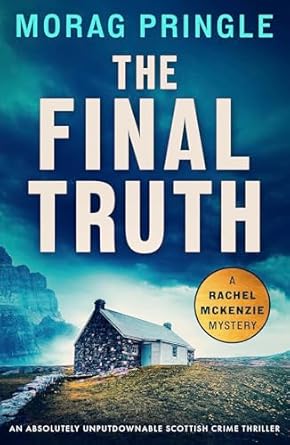
Morag Pringle’s book is The Final Truth. She used to write medical romances for Mills & Boon, which appears of higher quality writing than perhaps some readers give credit to. She mentioned about the high standards and high quality that has to be adhered to and met, which in-turn honed her skills.
Ronnie Turner’s book is Small Fires she is interested in folk lore, fairytales, nature vs nurture, identity, beauty, psychology. Now, this sounds an intriguing, yet winning combination to explore.
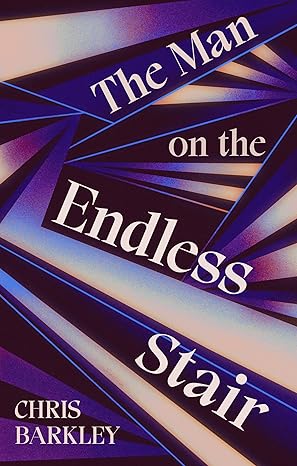
Chris Barkley talked of Man at the End of the Stair being a metaphysical, locked room mystery.
I read and reviewed this book and it is thought-provoking with strong themes and exceedingly atmospheric. It pulls you in with its ability to intrigue and its intensity.
They drew you into their talk of their islands, creating a sense of dark, moody atmosphere as they talked of losing phone signals, creating a claustrophobic feeling. Folklore and myth being woven together like a tapestry. Ronnie was especially interested in this and in-turn made you enter that world.
Chris Barkley brings up many thought-provoking points, such as an island being a psychological symbol. They all mentioned how trauma and guilt is a journey. You could tell, they really examined these traits of the human condition and the what happened to a person to cause trauma.
Their books aren’t all heavy, they explained how there is a sweet innocence thread through them to lighten the themes and reading experience up a bit.
The talk was really fascinating, especially at the beginning and the middle. Some of the talk of writing experiences was interesting too, but it did feel like it lingered there a little too long, when the interest was that feeling of being or actually being on an island.
Featuring Sir Ian Rankin, James MacPherson and Gray O’Brien
review by Louise Cannon Bookmarks and Stages
⭐⭐⭐⭐⭐
Rating: 5 out of 5.
Three incarnations of Rebus presented themselves on stage in an outstanding, fascinating talk about that famous detective, created by Sir Ian Rankin. In the mix, James Macpherson created the audio version and Gray O’Brian played Rebus on stage in A Game Called Malice.
There were many insights, I certainly hadn’t really considered before, such as the grey, sometimes controversial themes of football teams were brought up in a humorous manner, as to whether Rebus is a supporter of Hibs or Hearts, both highly rival teams. Ian Rankin also talked about prisons and colour coded clothing systems when they are out and about. Possibly only something you would know if you work in the service or an author doing research.
Each author talked about how they bring Rebus to screen, picture him, act him, play a little around with scripts, bringing something earlier than perhaps later, to hit a better landing of a line or a joke. When it comes to stage, how something can be tweaked at the last minute, in this case by Ian Rankin. It gave deep insight into what an audience doesn’t see, so isn’t usually privy to how everything builds and comes together. There were fascinating insights how Gray O’Brien takes a character onto the stage and how James Macpherson creates audio versions of the book. You could tell they care about who they play and, testament to them, however they bring Rebus to life off the page, with their own interpretations of the character, they bring something believable that’s compelling to watch or listen to, that still rings true to Ian Rankin’s creation. All three seem a powerhouse in the way they keep Rebus alive in so many formats.
What is also very insightful and perhaps a little reflective, adding even more depth of interest is how each actor brings something different to Rebus and how Ian Rankin is still interested and still learning about his creation by watching and listening to how people play him.
A Puzzle of Rebuses panel was compelling, fascinating and humorous. It was genius in bringing 3 different incarnations of Rebus and see how they can also all work together.
Life On The Edge Talk featuring William Shaw, Chris Chibnall. GD Wright
⭐⭐⭐⭐⭐
Rating: 5 out of 5.
All three authors aren’t strangers to crime in seemingly serene, scenic places on coasts, coffee shops and communities of people who know each other well. They then twist it up a bit and delve into the psyche of a place and create a believable crime scene. They talked about the importance of making the reader believe that a crime could take place in an area and making it authentic.
William Shaw is known for book series, DS Alex Cupidi and more… GD Wright is known for After the Storm and Into the Fire Chris Chibnall is known for Broadchurch, Dr. Who and more…
The scenery plays a big character in each of the authors books, in the main, the characters change from book to book, but the constant is the scenery, that sense of place within each of them. What was interesting was how they write in places they know rather well and how they handle writing somewhere so close to home. They talked about Life and Death on the Edge. It’s a clever title. It perhaps isn’t what you think it means, it’s about being at the edge of something and you can’t go anywhere, you’re hemmed in. The authors are very good at allowing audience members minds paint a picture that also carries the talk along in fascinating directions, as you envisage the imagery of their books. In most cases, even after many books, they write what they know, with the additions of researching certain topics, such as how to get deer antlers. It sounds rather involved.
They each have their own writing techniques with no real planning, sometimes visualising characters and hearing their voices and in-terms of Chris Chibnall, he was interesting in explaining the differences between writing for screen and for the written page.
The panel was jovial and sounded in good spirits as they brought tales of crime, how they researched it, rather astonishingly, what was researched. Some internet histories are going to look rather interesting in themselves. They also brought humour and frequently had the audience in peels of laughter. The authors had imparted that they only met that day, but they came across as very natural and succinct, in a sense, in-tune with each other, making for a very cohesive, highly entertaining talk. It was the type of talk that was very easy to just settle into as time whisked away at a fast pace. It leaves you wanting more…
William Shaw’s Red Shore is a thriller with an emotional punch as a detective searches for the truth about his sister’s drowning off the Devon coast.
Death at the White Hart is the stunning debut from Broadchurch creator Chris Chibnall as death and whispers create tension in a picturesque Dorset village.
A heroic act is the unwitting spark for a tight-knit small town to be ripped apart in GD Wright’s emotional rollercoaster Into the Fire.
The programme is full of authors who are new and established with great stories to tell. With guest programmer, Sir Ian Rankin at the helm, expect lots of fabulous interviews and guests. I have seen a number of these authors before and they’re brilliant. For the blog tour, I have chosen 4, instead of the required 2 to spotlight and
a few to mention, since we are now on Day 1 of this fabulous festival that takes intrepid readers to Stirling, Scotland, between The Golden Lion Hotel, Holy Trinity Church and Albert Halls as its all within walking distance venues. Based on who I have been reading and seen before. I have also included some books that are already on my read to review list. I will have the pleasure of reviewing panels from Friday evening after my day job, which is entirely different from blogging, until and including Sunday morning.
I recommend the following panels:
Life and Death on the Edge: William Shaw, Chris Chibnall, GD Wright Holy Trinity Church – Friday 12th Sept 20:30 – 21:30
This sounds an intriguing panel that takes you to the darkest parts of the usually serene, picturesque locations of the Devon Coast and a Dorset Village. I have seen and read William Shaw’s books before. The last talk I saw was fascinating as he (and his books) take you on a compelling twisty journey of life and death. The last time I saw William Shaw speak, you could hear a pin drop in the room. Everyone sat up and took notice. The last book I read of his was Dead Rich, which I read in as little as two sittings. Two because I had to sleep so I could be work ready in the morning. The style and calibre of writing is high. I haven’t read nor heard the other two on the panel speak, but they are will also have a fascinating tale to tell too. Chris Chibnall is best known for creating the tense, hugely popular tv series, Broadchurch, so has form when weaving secrets into picturesque, usually quiet places and turning them upside down. Death at the White Hart is his debut novel. GD. Wright promises an emotional rollercoaster in Into The Fire. This is a panel not to be missed!
Sir Ian Rankin Presents The Reverend Richard Coles Saturday 13th September – 14:30 – The Albert Halls
Firstly, Sir Ian Rankin can be totally relied upon to ask some excellent questions and dig deep between the lines. He also, from hearing him speak before, listens well to his guests and is natural in the conversation he drives forwards. He’s a stalwart at book festivals, especially Bloody Scotland and his guests are all in safe hands, even with his murderous intent on a page. The Reverend Richard Coles, I heard speak just this year (2025) at the Edinburgh Book Festival. He is fascinating as he takes you into his world where church and murder collide. He has a new book that’s been recently published, in his now established series that began with Murder Before Evensong, called Death on Location. The Reverend Richard Coles brings insight and lots of humour to his talks, which makes them highly entertaining.
The Psychology of Villains Golden Lion Hotel – Saturday 17:30 – 18:30
The Psychology of Villains: Craig Robertson, Alex North, Prof Graham Pike & Prof Zoe Walkington
This is a panel for those who like to explore the psychology of the villains in books. I’ve read some books and seen talks by Craig Robertson and they are deep, considered, intelligent and cover the dark topics. This panel sounds another dark path for readers to take, but it will be entertaining. The other authors sound fascinating and one has a Netflix adaptation of his book to his name. Check out here to find out more details: The Psychology of Villains
A Particularly Nasty Case – Adam Kay The Albert Halls – Sunday 14th Sept 13:30-14:30
Adam Kay, I first saw him at the Edinburgh Book Festival, 2025. He is known for This Is Going To Hurt. Now he’s got a debut novel, that enters into the medical world, but mixes it with fiction. I am currently reading and enjoying this book and will review when finished. His talk is fascinating, he tells it how it is within the NHS in parts and mental health. He makes some greatly valid points when imparting on his experience and of that of his ante-hero character. He is also very funny, making his talk highly entertaining. He makes you warm to him and you can’t but help listen hard about all that he has to say. To find out more about this Adam Kay’s interesting talk, discover it here: Adam Kay
I also recommend Lin Anderson’s panel Setting The Crime Scene. Her Rhona MacLeod books are twisty with a forensic focus. Mark Billingham is exceedingly entertaining to listen to. He’s in conversation with Laura Lippman Ambrose Parry’s panel digs deep, mixing history with crime in Female Leads, History Follows.
Books I have, at the time of writing this blog post that I am reading between now and near future from people who are on this panel are:
The Art of the Lie by Laura-Shepherd Robinson – History and Her Story panel Quite Ugly One Evening by Chris Brookmyre – as Ambrose Parry at Bloody Scotland for a different book – his panel is: Female Leads, History Follows A Particularly Nasty Case by Adam Kay (see link above).
For those following the Enceladons Trilogy, this is the grand finale, of what has been a rather urgently relevant, yet entertaining read that’s just got better and better, with this final one being one of the best. Even if you aren’t into sci-fi, which isn’t a huge genre read for me, it has much more than aliens. There’s humanity and eco-awareness too. Discover the blurb and my review below. thanks to being on the Random T. Tours blog tour and Orenda for supplying the book. Please note, all opinions are my own.
Blurb
It’s been eighteen months since the Enceladons escaped the clutches of an American military determined to exterminate the peaceful alien creatures.
Lennox and Vonnie have been lying low in the Scottish Highlands, Ava has been caring for her young daughter Chloe, and Heather is adjusting to her new life with Sandy and the other Enceladons in the Arctic Ocean, off the coast of Greenland. But fate is about to bring them together again for one last battle.
When Lennox and Vonnie are visited by Karl Jensen, a Norwegian billionaire intent on making contact with the Encedalons again, they are wary of subjecting the aliens to further dangers. But when word arrives that Ava’s daughter has suffered an attack and might die without urgent help, they reluctantly make the trip to Greenland, where they enlist the vital help of local woman Niviaq.
It’s not long before they’re drawn into a complex web of lies, deceit and death. What is Karl’s company really up to? Why are sea creatures attacking boats? Why is Sandy acting so strangely, and why are polar bears getting involved?
Profound, ambitious and immensely moving, The Transcendent Tide is the epic conclusion to the Encedalons Trilogy – a final showdown between the best and worst of humanity, the animal kingdom and the Encedalons. The future of life on earth will be changed forever, but not everyone will survive to see it…
Review
The Transcendent Tide couldn’t be more timely, with a certain US President kicking off, greedily looking at Greenland, one of the most important and vital countries to save planet earth, if left virtually untouched. I’ve always reckoned that nature will always win-out, not humans in the end and this book is a fine example of nature vs humans and makes stark points of why we need to work with, not always against it. Who will win, can there be any winners, will anything turn out alright in the end?
What Doug Johnstone has created is a deeply profound trilogy, which has grown even deeper still come this final book. The way he gets the most important points across, mixed with a bit of entertainment, is done to a highly skilled quality. It’s thought-provoking and intelligently done, so that, if you’re worldly aware, you can join the dots between the events that are happening in the book to what’s happening in the world with the ideas of certain world politicians.
There are twists and turns, secrets and lies which forms some of the entertaining parts of the book, not that this dilutes any of the important points, it does however add to the readability of the plot.
I highly recommend The Transcendent Tide and the previous 2 books in the trilogy.
Interview with Lorna Rose Treen about 24 Hour Diner People
Soho Theatre – 8th – 13th September 2025
Interview conducted by Louise Cannon
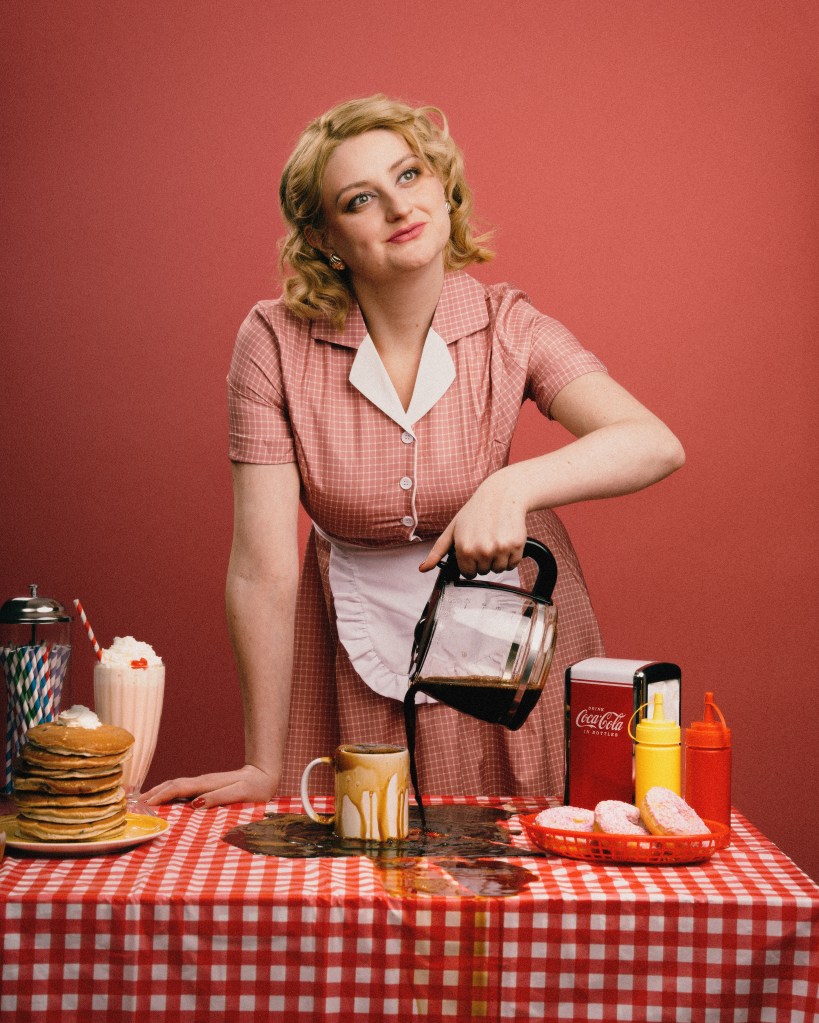
I had the pleasure of interviewing the award-winning actor Lorna Rose Treen about her popular show, 24 Hour Diner People now at Soho Theatre, London. In August 2025, it sold out all 30 shows at the Edinburgh Fringe Festival, coupled with many glowing reviews, it’s the successful stage show you don’t want to miss! Find out a bit about it below and then onto the interview. At the end of the interview, you can find out how you can get your hands on tickets so you can see the show yourselves and the awards won. *Please note, I am not affiliated to anyone or anything.
24 Hour Diner People offers up a full-fat collection of eccentric, escapist, and delightfully silly characters – all served with a side of proper jokes. Expect to meet a waitress who dreams of flying, a trucker with unusually long arms, a woman who’s kept her umbilical cord, a 1960s spy on a caffeine high, and a teenager giddy from her first kiss – all somehow coexisting in a strange, time-warped roadside diner.
1. You sold out at the Edinburgh Fringe Festival and had to add extra dates due to demand for your show 24 Hour Diner People. What did that feel like at the largest festival in the world and what are your hopes as your tour it to Soho theatre, London?
It felt like an administrative error! But no it was honestly so nice to see the tickets flying, especially because no one had seen the finished show yet so it was mostly selling because people wanted to spend time with me whatever it was I was gonna do. What a lovely compliment!
2. You have some eccentric characters in your show. Are there particular people or idiosyncrasies you’ve observed in human behaviour to create your characters?
I love watching documentaries and imitating the way we used to speak in the past. I am a nightmare to watch TV with because I parrot whatever is being said and try to copy the intonation. My grandma taught me this, we were a nightmare duo.
3. What inspired you to create characters that are seen as being “voiceless” and giving them a voice and in a comical way?
I like watching the background characters in films and TV, especially from years gone by. I love giving a 5 minute monologue to a character who is a background character for a reason. So often these are women, whilst the men get to be funny in the spotlight, so it’s fun to put the attention on the women and make them get the laughs.
4. The diner you’ve created sounds brilliant fun. You say it’s a fantasy Americana seen through your Midlander eyes. What was the pull for you to build this type dineras the premise for you show?
Fringe is long, and if your show has life after fringe – it’s even longer. I wanted to build an environment I wanted to lock in and spend a lot of time in. Americans who’ve seen the show have commented that I clearly love the mundanity of the day to day, but for me a diner in America is a most exciting place to be. Growing up there were diners in every sitcom, drama, musical and film. Even though they weren’t real, they hold a place of play and joy andescapism built entirely from fiction and dreams, that you just couldn’t get in Redditch’s (now defunct) Chicago Rock Cafe.
5. If you could meet anyone in a diner, who would it be and why?
I’d like to meet James Broom from sixthform because he still owes me £20.
6. You’re no stranger to comedy and have worked with Emily Atack on her show (ITV), Time of the Week (BBC R4), true crime mockumentary, Criminally Untrue and more… what was it like to work on such huge hits and people and how do you take those experiences forward into your expanding comedic career?
Time of the Week is my radio show I co-created with Jonathan Oldfield. We star in it alongside Sian Clifford, who is unbelievably funny. It’s such an honour to be stupid alongside her. She’s like, properly properly good. Series 2 is coming out later this year, and I can’t wait for everyone to hear the nonsense we have written and made Sian say. The writers room and cast are made up of people we not only find incredibly funny, but also people who we love working with. I think sometimes solo performing can feel a little lonely (not when you’re on stage connecting with an audience, but all the organising and writing process). So time of the week is a real beacon for me to connect with my fellow character colleagues like Ada Player and Alice Cockayne, Jodie Mitchell, and Jonathan. And touch base with some of the best new writers like Priya Hall. It’s a real delight to bounce your ideas off someone you think is the funniest person in the world. There’s a reason why American comedy is so successful and I think a big factor is the writer room culture. It really grows and nurtures talent.
7. Going back to 24 Hour Diner People, what do you hope people will take away from it.
I just want them to have had a stupid nice time. I don’t think my comedy will ever make you learn nothin.










 Bookmarks and Stages by Lou