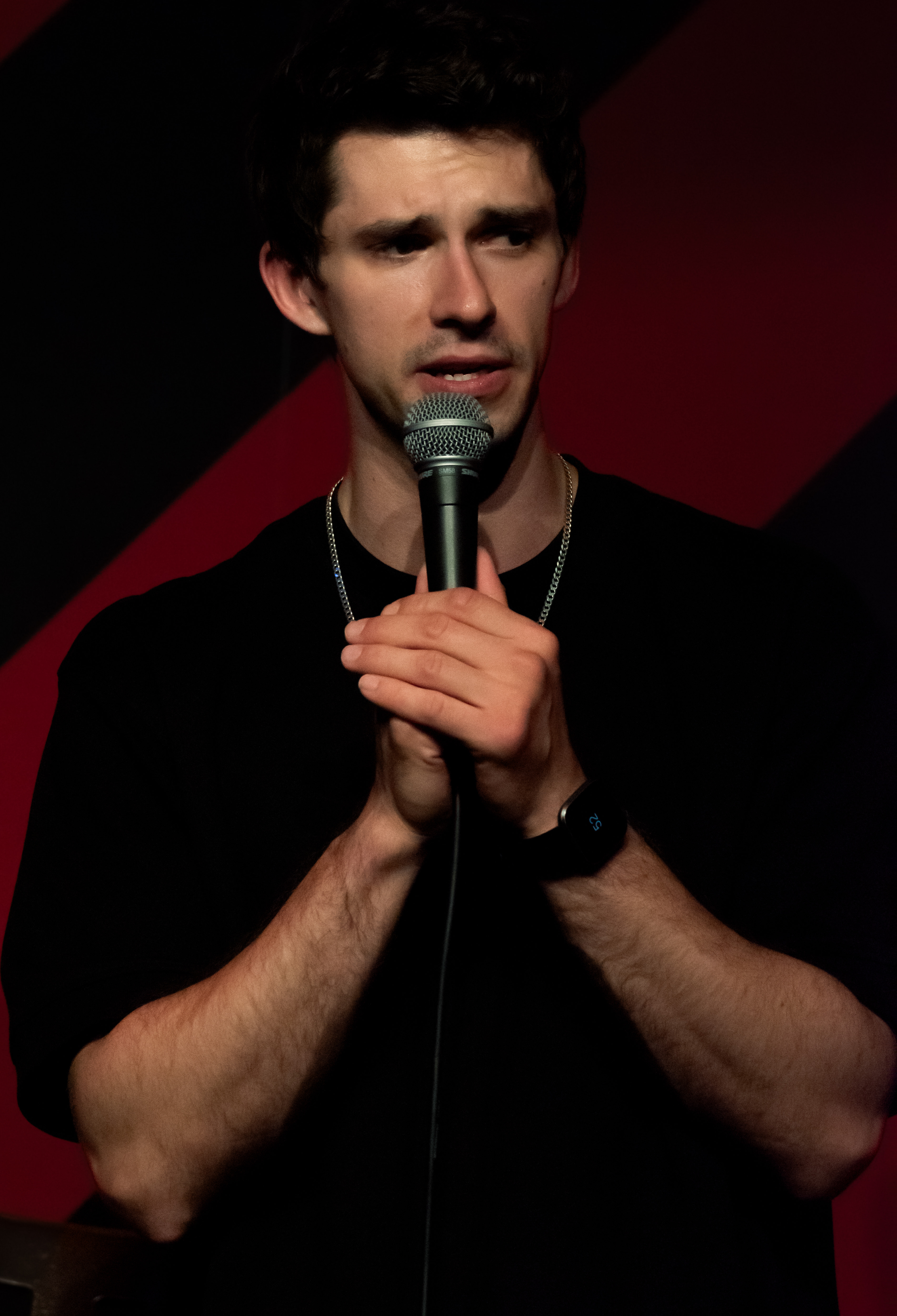
#Interview By Lou with Award Winning Actor, Author, Director, Comedian, Michael Obiora on new @ITV @ITVX drama, #OutThere and more… #TVDrama #Thriller #Comedy #Books #MichaelObiora @Tom_Brumpton_PR

Today I welcome the award winning actor, author, director and comedian, Michael Obiora to Bookmarks and Stages. In the interview as you scroll down, you’ll discover his latest role of being Scott Foley in upcoming 6 part ITV/ITVX drama, Out There, which also stars award winning actor, Martin Clunes. We also cover a new book, comedy and so much more in what is a fascinating, deeply insightful interview.
At the end you’ll also find some useful links, including the trailer to Out There and where you can pre-order his new book.

Michael Obiora started acting in Grange Hill. From there, he is now known for tv roles like Lloyd Asike in Casualty, Ben Trueman in Hotel Babylon as well as having parts in Midsomer Murders, Death in Paradise and more… His latest being Scott Foley in the upcoming ITV drama, Out There.
Thank you for joining me and my blog, Bookmarks and Stages to be interviewed.

1. You started your tv acting career when you were a child on favourite teen school programme Grange Hill, how did this give you grounding for building the successful acting career you have now as an adult and were there different or similar challenges you faced in transitioning from being a child actor to coming of an age of seeking out and auditioning for more adult roles?

Most of my appreciation of the foundation Grange Hill gave me as an actor has come from hindsight. Notwithstanding that, even at such a young age I was aware how lucky I was. The things I took in my stride were things like the jargon used on set to describe certain processes.
By the time I was twelve, set lingo like “turning over,’ “sound speed,” etc were second nature to me. In my early twenties I remember being on set with actors of a similar age – or even older – who had just graduated from drama school, and I could see how daunting some of them found the whole process.
There’s a fearlessness and naivety one has when they’re so young. So actually, working from such a young age was incredible for my confidence.

In terms of making the transition from child star to adult actor, again I was lucky. I worked solidly from the age of nine until about twenty-two. I had heard about how difficult it can be to make that transition, but it was not my experience at all. The hardest part for me was dealing with my first bout of unemployment as an actor. Again, that was something I’d always heard of; “ninety-nine percent of actors are out of work,” etc. But it happened the other way around for me – instead of going to drama school, then coming out and struggling to find work as most actors do, I had built up years of professional experience. Which ironically made it very difficult for me to process having no work lined up.

2. Very excitedly, you are about to star in new drama, “Out There” with the wonderful Martin Clunes, which tells the story of county lines, community, rural life, modern farming and grief & loss.

What attracted you to these themes and how important do you feel it is that this story is told?

I’d describe Out There as a UK version of Breaking Bad, and Ozark. I think Ozark is one of the greatest TV series ever made, so that was enough for me.
All good stories have universal themes – so that in itself is enough to make a particular story important.

3. You play Scott who is ex-army and embodies intellectual charming charisma, yet evasive when it comes to questions about himself. He seems quite complex in personality.

How did you get into character and did you do any research for this role?

Coincidentally, not long before filming there was a particular individual – who Scott reminded me of – that was causing myself and my family a lot of stress. I felt an enormous amount of anger towards this person. But the more I got into character, the less anger I felt. I still dislike that individual, but playing Scott made me feel a lot more empathy. Similar to that person, Scott finds himself in a desperate situation. People aren’t necessarily able to show the best side of themselves when they’re operating from a place of desperation. Being an actor has definitely made me a more empathetic person in general.

4. You’re a parent, has the themes had any impact on your parenting in any way and what does it make you think differently of the dangers some people encounter?

Being a parent has changed the way I think about almost everything.
Sometimes it gets to the point where I have to actively compartmentalise my sense of danger, or any anxieties I have.
I have very little judgement towards how people parent their children. It is incredibly difficult being a parent, and I genuinely believe most people are trying their best.

In Out There we see the road it appears Martin Clunes’ son is going down, and we also see that he is a good kid, with a good father. When a young boy or girl ends up in a particular situation one often comes to stereotypical conclusions – bad parenting, etc. But like many things in life, things aren’t always as black and white as that.

5. There are times when you aren’t acting, but writing novels, which happen to be critically acclaimed such as “Black Shoes” and “Vivian’s Couch”, what or who inspired you to write books?

Quite Simply; Necessity Is The Mother Of Invention.
Even though I have now written three books it was never my intention to become an author. I started writing because as my profile increased with Hotel Babylon, it became more and more apparent that I had a platform. I’ve always been aware how lucky I was to occupy any of the spaces I earned, so I just wanted to maximise it. I started by writing the parts I wanted to play.

6. You will have your first children’s book, published in March 2025 called “Zee Zee The Humble Bee”, teaching balancing celebrating her talents and being humble in a rhyming story, can you tell a bit more of the plot and what age group it’s aimed for?

Zee Zee The Humble Bee is about a confident young bee that is the fastest in her hive. From a young age I learned that often people don’t want to see other people happy, or win in any way. So I wanted to write a fun rhyming story about the joys of learning, teaching, and being humble. It’s aimed at kids up to age seven, maybe even older because I also consider it a book for adults.

7. When you were 11 and on Grange Hill, your teacher commented rather harshly about you smiling, telling you about how you weren’t on camera in the school corridor.

How did that make you feel and inform you of your choices now as a parent to encourage your children to follow their dreams?

Her comments to me completely informed this book. Zee Zee The Humble Bee is a love letter to my younger self, and more importantly a love letter to my daughter.

When my teacher made that comment I was devastated. I became an incredibly angry, and paranoid child after that. The idea of my daughter’s confidence or personality being altered in a similar way, at such a young age is unacceptable to me. I wish I had somebody to speak to about the way the teacher made me feel at the time. This book is me addressing that, and it’s also a book for adults who, whilst navigating the messiness of life may pick up bitterness. This is not a judgement call but rather me highlighting something that I think is somewhat inevitable.
Maybe life gets less fun as we get older, maybe we get more weighed down by our baggage. But children are so beautiful, and free, we can teach them humility – or anything else – in a loving way.

Our childhood years are our formative years, and adults have a responsibility to be mindful about the way we speak to children.

8. This January you are starring in your own written and directed stand-up
comedy “Joe Kerr: Laughter is Therapy.”

What inspired the title and how therapeutic do you feel it is for people to laugh

and what do you gain out of making audiences laugh?

I have a stack of scripts and stories I have written over the past few years.
When I sat down and read them they all left me with a feeling of sadness. It was a clear illustration of how my creative mind tends to work; dark/moody.
So Joe Kerr came out of me wanting to write something upbeat, funny, and positive. That still didn’t end up being the end product! So I now realise that the gift of it all is that performing is therapy for me. It doesn’t necessarily have to be funny, but expressing myself makes me feel better.
I’ve never had a problem showing my emotions – that’s what makes me a good actor. My emotions are so readily available. But I think it’s a gift and curse. It’s a pathology.

In Joe Kerr, the comic – Joe – performs his stand up routine on stage, despite the fact that hours before his set his father dies. This actually happened to me in real life. When I was sixteen years old I was the lead in a play at the Royal Court theatre. It was an enormous deal, and to this day remains one of my proudest moments. Hours after my dad died I went on stage despite the protestations of my fellow cast members, and the play’s director. But cancelling the show wasn’t an option for me. Being on stage felt like the safest place for me. I actually felt fortunate that it was an option. Obviously that experience will remain with me forever, and the more I ruminated over it, the more the Joe Kerr film took shape.

9. You joke about many stereotypes, the British accent, the way some language is used, how did you develop the punchlines to make it funny?

The jokes about the British accent came from the amount of time I’ve spent in America over the past fifteen or twenty years. Obviously race relations are famously polarising in America, it never seems to recede. But one thing that has always given me a feeling of safety is the way a lot of people react when I open my mouth over there. Who knows what goes through people’s heads but I’m sure on sight at the very least it’s “that’s an African American male.” And then when I speak, “Oh… he’s…British..? Black… British?” Suddenly people are less suspicious of me. They seem to perceive me as less of a threat. I think that’s funny.

10. Your comedy is topical and edgy about sexuality, how people view you when you’ve had a taste of fame.

What makes you choose what material to keep and how do you choose your boundaries as in how far you want to push the topic in the comedy?

Writer’s tend to advise, “write what you know,” and I think in general that’s good advice.
Most of the stories in Joe Kerr are anecdotal. I guess writing them through a character gives one more of a pass. So in terms of choosing topics I feel I can get away with more when speaking as a different person. But comedy is a lot of truth said in jest, therefore comedians have to be brave by virtue of what they do.

11. Humble is a theme in your children’s book and in your comedy in very different ways, how do you ensure you stay humble?

To be honest up until writing Zee Zee The Humble Bee I’ve never really liked the word humble. In my experience people use that term to put others down, or to disguise their jealousy.
I’m not particularly interested in humility because I think it’s hard to quantify. Somebody can literally call somebody humble because they like that person. Some people label others arrogant simply because they don’t like that person. And people have prejudices towards different people for all sorts of reasons. And once somebody has an idea in their head, they can easily find a way to justify that idea.

What I would say is that the older I get, the less competitive I am. And now that I’m a dad my life is easier than before. It’s harder in that there are more tangible pressures. But at the end of the day – and I mean literally when we’re putting our daughter to sleep – as long as her stomach is full, and she feels safe, I just don’t care about anything else. To care about somebody else’s wellbeing in every sense of the word, is humbling.

12. Does the different strands of your careers of actor, author, comedian aid each
other in any form and if so, in what way?

Absolutely! These all keep my creative juices flowing. And the more that
happens, the more chance I have of getting into the state of “Flow.” It’s a
difficult state to describe, but when I find myself in that space, I feel euphoric.

13. What’s next for you in your careers?

Alongside the film I’ll be putting out a comedy album version of Joe Kerr:
Laughter Is Therapy very soon. I’ve written another Joe Kerr comedy special.
I’ve written two more short films that I’ll act in and direct. I’ll be releasing a
book of poetry soon, and another children’s book. And I’ve completed two
other short films that I’ll be releasing over the next year.

Out There will air on ITV1/ITVX from Sunday 19th January, 9pm
Watch the Official Trailer here: Out There

Zee Zee The Humble Bee can be purchased from many bookshops, here are a few

Troubador Publishing      Waterstones   WH Smith     Coles Books     Amazon

#Interview By Lou with Successful #Comedian Kyle Lucey as we explore the comedy and the life of the man behind ahead of his #tour. #KyleLucey #AlisonGilmour #DirtyAfterDark #Comedy

Interview with Kyle Lucey
Conducted By Louise Cannon

Kyle 4Kyle Lucey is a successful comedian, who has been making his name over the past decade or so. He has performed to thousands of people at world famous venues, such as Massey Hall. Originally from Canada, he settled in Scotland and this year (2024), played a successful show – Dirty After Dark at the Edinburgh Fringe Festival this year.
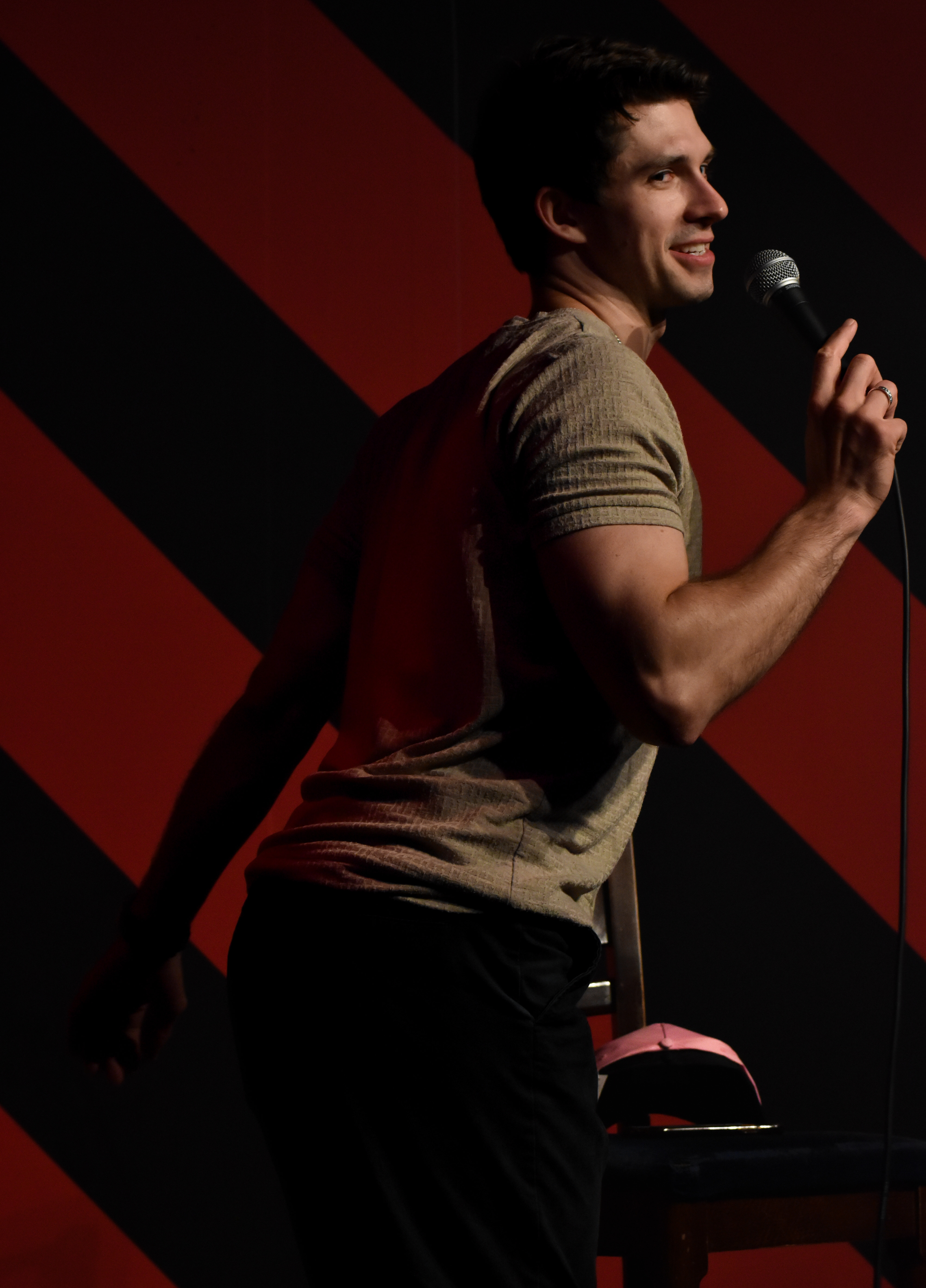
 I have had the pleasure of interviewing him recently to delve into the man behind the success as we delve deep into his new show and successes and what happened to him in his childhood/formative years with the deep trauma he endured, in a sensitive way.  What was returned via email was brave, sincere, candid and hopeful on many levels. There’s even a touch of humour added.
He had a successful show at the Edinburgh Fringe 2024 and is now embarking on big tour, more about that after the interview.

Please join me in welcoming Kyle Lucey to my blog – Bookmarks and Stages.

*Photos credited to Alison Gilmour

  1. What or who inspired you to be a comedian and what was your route

into this field of the arts?

My earliest inspiration was Jim Carrey. When I was 5 years old, I used to keep a diary called “My life as the young Jim Carrey” this was sort of my first joke book. I would write out funny scenarios to myself and make myself laugh. I had no idea that decades later it would be an actual career for me.

  1. You’ve played at world famous theatres such as Massey Hall and won
    The I Heart Jokes Award twice, how did that come about and feel?

Kyle 5Massey Hall was a big one. 3000 people on New Years Eve. This show is one of the highest honours in Canada. First you need to be signed to the biggest agency in the country, Yuk Yuks. From there you need to be one of Yuk Yuk’s top comedians to be selected for Massey Hall.

The Weeknd, Neil Young, Justin Bieber, Rush, Gordon Lightfoot they all played Massey Hall. And now me, some who grew up in a trailer park! Being considered cream of the crop out of the cream of the crop in my 20’s was so incredibly validating.

It’s such a different thing to perform for that many people since I am more used to playing comedy clubs. The adrenaline I felt that night I literally could not fall asleep and stayed up for two days. I was so honoured to be hand picked by Mark Breslin, the founder of Yuk Yuks. He took me aside one day and told me that I am on the shortlist. My jaw dropped. One of the most exciting moments of my career to date. 

  1. What can audiences expect about your show – Dirty After Dark?

My show is a stand-up show. It is funny and punchline heavy. It’s important that both myself and the audience are having fun or else I should take comedian out of my bio. The way I see it, the jokes in a comedians set are like breadcrumbs. You can take the audience anywhere as long as you properly lead them to that destination joke by joke. Each laugh I get from the audience is a step in the direction I want to take them. My subject matter might be heavy but my 13 years and over 10,000 shows of experience allow me to expertly take them to scary places in a way that is cartoonishly fun. “I can’t believe I laughed at that” is something I hear quite often.

  1. Dirty after Dark feels personal to you, so how do you deal with talking
    about the traumatic times and adding humour to them?

My therapist taught me the metaphor of a lotus flower several years ago. He would tell me, “Lotus flowers grow in mud”. Lotuses are beautiful flowers that grow in dirty swamps. He said that I am both flower and mud and that is what makes me beautiful. As someone who holds unbearable shame from childhood trauma, the lotus flower analogy made me feel less dirty. I became obsessed with taking the mud in my life and adding flowers to it.

My show is funny. It has to be. The subject matter is heavy. I have been abused in everyway one could possibly imagine by the very people who were supposed to love and care for me. This is my mud. To make the mud any less dirty would make the flower that less beautiful. The dirtier the mud, the more beautiful the flower. Horrible subject matter needs only a funnier joke.

  1. You say comedy is a tool for healing, in what way does comedy and laughter help people who have experienced trauma and how can people discover this in a safe, effective way?

My therapist tells me that when children are abused by a parent, they internalize the abuse. It’s easier for a child to understand, “I’m bad” or “I’m in trouble” than to admit, “the person responsible for my well being wants to hurt me”. People live their whole lives thinking they are bad people because they have internalized a traumatic experience. Parents are our first love objects so we need to stay connected to them as they are our life line as children. They are our shelter, our food, our survival. So, we misguide our anger. Your father abused you – you start to hate all men. Your mother abused you – you start to hate all women. I too had so much misguided anger until I spent 10 years in therapy and unpacked who my anger actually belonged to. By moving the internalized anger from inward to outward, we start the important process of metabolizing this natural human feeling. By talking about it on a regular basis we are effectively wringing out every drop of built-up emotion we have been suppressing thus starting our journey into eventual healing.

Making comedy out of my trauma is incredibly therapeutic. It reclaims my power in situations where I was once powerless. I have a joke about being sexually abused but every time I tell it I feel stronger afterwards because I am no longer keeping my abuser’s secret. In fact, I get to stand strong and point out that what they did was wrong. The laughter I get from the audience also tells me that they are in agreement that what happened was wrong – undoing years of gaslighting. I can’t describe how much this heals me because to this day my abuser tells me they were too drunk to remember what happened.

I have seen other comedians and audience members who have watched my show start opening up about their own childhood trauma, thus reducing the stigma around something that many people keep private for years.

  1. One of the aims of your show is to help with the feeling of being alone and break stigma surrounding being abused, specifically in childhood, how is your show projecting this to audiences and do you see it making a difference to people?

When people who have suffered early childhood trauma watch my show, they come up to me and say, “My mom did that to me too”, “My dad also hit me”, “My parents were also drunks”. What started out as me venting about my own trauma suddenly turned into others seeing me as a safe space to come forward about their own pain. I stay behind after shows and talk to people in the audience. Often times I refer them to “The Centre” which is an affordable service in Toronto that assigns people with a therapist right for them. 10 years ago, I walked into The Centre after contemplating suicide. I thought I was fundamentally evil after years of internalizing the abuse I received from my parents. My therapist heard my story and told me that I was “a good person”. Nobody every called me that before. I broke down and cried right there and have been seeing him every week for a decade. I want nothing more than to give the same healing to anybody I meet who has similarly suffered. We are alive only once. Horrible things happen to good people every second of every day. We have to make the best of things or live the rest of our existence with a lesser quality of life. Just because evil gets imprinted on good people does not mean they have to live their life with such a branding. If pain is an ocean, therapy on a consistent basis is like draining a little bit of water out at a time. Eventually people drowning in pain find themselves at shore. I am proud to get that conversation started through my comedy.

  1. You took your show to the Edinburgh Fringe Festival, the biggest of its kind in the world, what were the challenges and the positives and how does this now help you to move forwards to your tour around Europe?

Kyle 3I sold everything in my apartment in Toronto, Canada and bought a one-way ticket to Scotland. I am a dual-citizen with Ireland so my Irish passport allows me to work in every country in Europe. This was my first Edinburgh Fringe Festival and I was blown away by the experience. I was regularly performing 7 shows a day which is unheard of in Canada. Since it’s an international festival it was so cool meeting comedians from all over the world and seeing how funny people are from different countries. I met so many people who ended up employing me at clubs throughout Europe in the months to come. At first there were some challenges. People in the UK have different words for certain things and all my local Canadian references went right out the window. It took me a few days to adjust, but once I did, I was able to communicate my funny to a different culture. I feel like I grew not just as a comedian but as a person after doing the Edinburgh Fringe which I will always be grateful for.
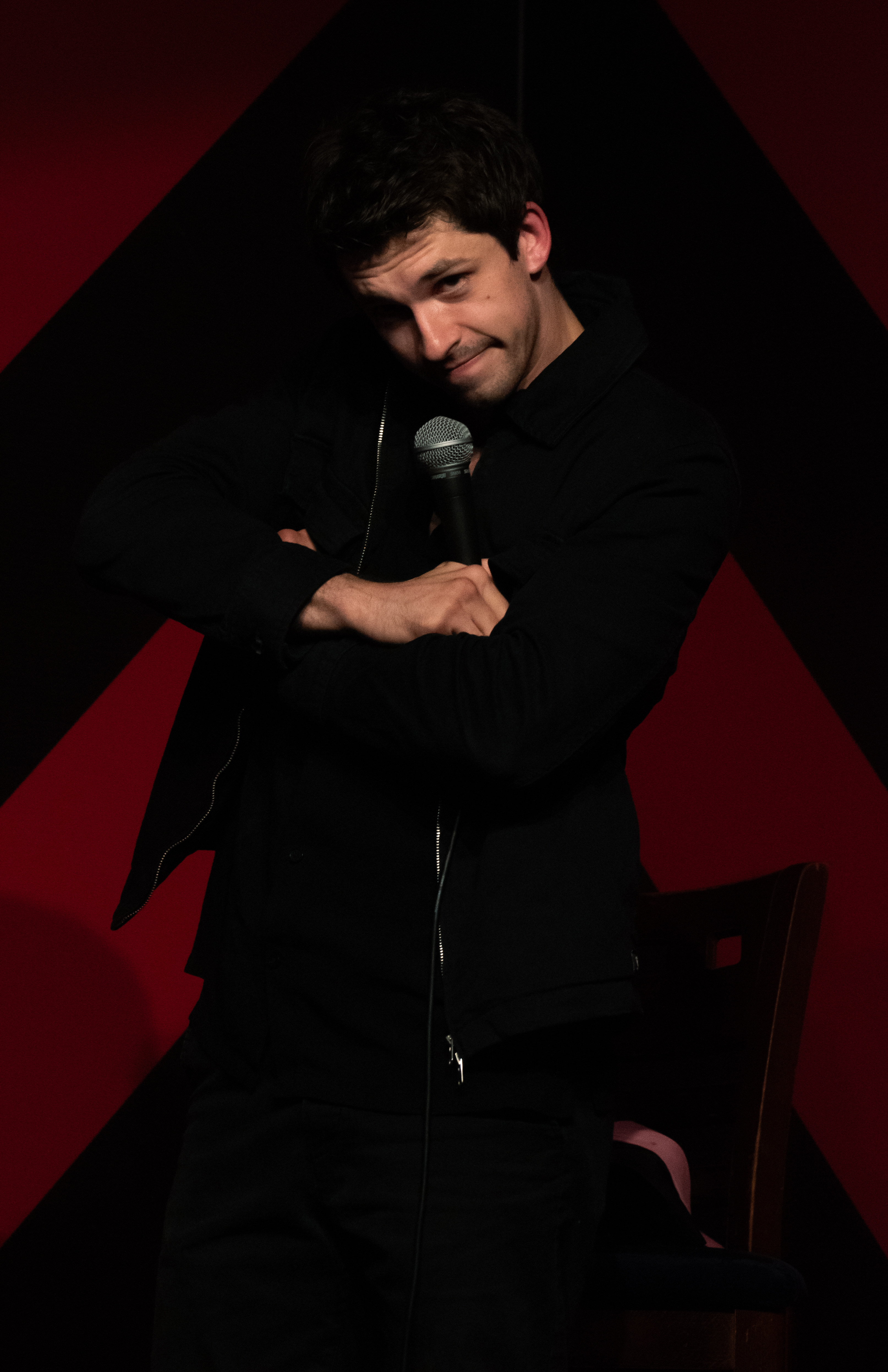
  1. Where can people catch your show?

Kyle 2

I have tour dates at comedy clubs all over England, Sweden, Demark, The Netherlands, Ireland and many more cities and countries to come. If anybody wants to follow me on my journey, they can catch my live dates on my
website kylelucey.com or my Instagram @kyleluceycomedy.

#Review By Lou of Sue Perkins – A Piece of Work In Progress @sueperkins #standupcomedy #comedy #EdFringe

Sue Perkins – A Piece of Work In Progress

Rating: 5 out of 5.

Sue Perkins

Sue Perkins was at the Edinburgh Fringe Festival trying out some stand-up comedy and turns out she’s brilliant at it. There’s no Mel Giedroyc, there’s just her and it was an excellent show.
This will, she assured the audience, turn into something bigger and a fuller show, so watch out for it in 2025.

Currently hosting BBC Radio 4’s Just a Minute, Sue has presented multiple travel shows for the BBC and Netflix. She is perhaps best known for presenting (alongside Mel Giedroyc) seven series of the BAFTA-winning The Great British Bake off. I myself reckon she’s very good at hosting Just A Minute and I enjoyed the documentaries and remember her from way back doing Light Lunch.

Sue Perkins opens the show by asking the audience to ponder what Sue they are going to get that day, whether it’s tv presenter or documentary maker etc Sue. It’s a great and unique opener that fast captures your attention.

This could have been a talk or an in conversation with… as she says, and it would’ve been okay, but Sue Perkins wisely chose stand-up comedy as she examines herself. She wants people to get to know her from her, instead of just from the internet and newspaper articles etc. She achieves this through fast-paced wit and poignancy as she tells jokes through stories of her life and what she’s done, with elements of gasping moments from the audience before the laugh comes again. It’s all very intelligently constructed and yet you learn quite a bit of her life from hosting tv shows, such as The Great British Bake Off as she adds in some of the type of humour that show has, so it cleverly matches that slight groan style after a while with quick-fire one-liners, before moving on with the wit in stories of her life that makes you genuinely laugh a lot. There’s the heartfelt poignancy about her mental breakdown and her benign brain tumour, her late diagnosis of ADHD as well as cute things like her dog. In all that’s poignant, she has also created very good humour with, out of every single situation.

It was refreshing, since I’ve no children, just work with them, about how she addressed certain attitudes to this. It was good listening to her talk about her charity work too.

Sue Perkins’ show is full of heartfelt warmth and fun. By the time you leave, you’re full of more warmth for Sue Perkins and with joy and hope in your heart that with so much going on in a person’s life, even a very famous person’s life, there’s still humour to be found in the dark spots.
This is a show I’d like to see more of when it is out of its work in progress stage.

#Interview By Lou with Piotr Mirowski about his AI and his family show – A.L.Ex and the ImpRobots: an AI Show for Kids #EdFringeReview #AI #DeepMind #EdFringe24 #WhatsonEdin #WhatsonEdinburgh Venue 24

A.L.Ex and the ImpRobots: an AI Show for Kids

Interview By Lou with Piotr Mirowski from Deep Mind

AI show

What an honour it is to interview Piotr Mirowski, a scientist who works with A.I. for Deep Mind, a scientific company that is becoming increasingly known. I had not expected that! Here, we talk about the show and also some of the more burning questions of the day about AI, such as when it comes to jobs etc. I feel the answers are fascinating and important.

wp-17244184332893901477097263917498

Let’s welcome to Bookmarks and Stages Piotr Mirowski

1. What can people expect from Artificial Intelligence Improvisation and from A.L.Ex and the ImpRobots: an AI Show for Kids?

wp-17244184106883250941648153611477Artificial Intelligence Improvisation and A.L.Ex and the ImpRobots! are two interactive live experiences featuring professional actors, cute real robots (an Aldebaran Nao), and various flavours of artificial intelligence on stage.

Artificial Intelligence Improvisation is our pioneering improv comedy show with AI: it is for a general audience and addresses conversations about human agency (some actors wear augmented reality glasses and are controlled by AI that sends them lines) or about deep fakes, and at the same it time showcases the ingenuity of human improvisers.

A.L.Ex and the Improbots! is a show for kids and the whole family where fellow young audience members learn fun facts about science and are invited on stage to co-create stories with robots.

In both our shows, Artificial Intelligence Improvisation, and A.L.Ex and the ImpRobots, language models give strange suggestions to human improvisers, giving them an opportunity to react, to incorporate the strange material and then to shine and to demonstrate their talents and sense of humour.

2. Why did you decide to cross science with comedy with an AI robot and what challenges did you have in setting this up?

Our primary aim is to leave audiences, and the younger generations, feeling empowered to critically engage with AI, and to directly explore for themselves through co-creation with the tool, rather than passively.

The show’s creators, Piotr Mirowski (that’s me!), Boyd Branch and Kory Mathewson are academics who are passionately engaged in communicating about science. We are also theatre actors who want to bridge disciplines. Their challenge is to explain, succinctly, the complexity of a fairly complex topic to the audiences, to give them back control over a key technology in their lives. When we started the shows, back in 2016, everything sounded new, from machine learning, to patterns, to biases in data. Today, most people have already tried experimenting with text and image generation via various apps.

The real challenges now, in a way, are to manage the very high expectations about what AI can do! In our very fast paced show, AI tries to react, live and in a fraction of a second, to the mayhem on the stage, and speech recognition and large language models really struggle to keep up!

3. How does it feel bringing a groundbreaking AI Improv show to the Edinburgh Fringe Festival?

wp-17244184222112291279999728947423Kory and I actually brought Artificial intelligence Improvisation to Edinburgh in 2017. Kory (at the time studying for a PhD in robotics at the University of Alberta) and I were doing a duet with a twelve-inch robot and performed for a week at Surgeons’ Hall. The show was very experimental and very rough around the edges, but our friend Colin Mochrie (from Whose Line Is It Anyway?) came to see our show and had some good words about us.

We came back to Edinburgh last year and this year, to perform in a larger space at the Gilded Balloon. We encountered extremely supportive production and tech that made our tech-heavy show a (relative) breeze to get in and get out each day.

As a personification of the AI, our new robot is a bit larger this year, but it is extremely cute and gets lots of enthusiastic reactions from audiences or even from crowds when we take it out to flyer with us.

We’ve also seen amazing productions in Edinburgh that involved robots and AI. Shows that really marked us were the production of Spillikin at the Pleasance in 2015, of Siri by Laurence Dauphinais at Summerhall in 2017, or Robo Bingo by Foxdog Studios last year at Underbelly.

4. How much of an influence do you think AI will have on humans in the future?

wp-17244183969633078057811719133794I see AI primarily as a tool for search and discovery. We have seen inspiring examples of AI tools that can make predictions about the structure of proteins, predictions which can then be verified experimentally by chemists and biologists. I have worked on using AI for making weather predictions, helping expert meteorologists refine weather forecasts, with weather agencies now evaluating how AI can help predict the trajectory of hurricanes. We know artists who have been experimenting with AI tools and exploring the glitch aesthetic of their input to integrate this strange instrument in their process and create unique art.

5. Since working in the field of epileptic seizure predictions, mapping on smartphones and more for the likes of Bing etc, what made you decide to now join Deep Mind to work with AI in the artistic field in co-creations on stages?

The work of co-creation with AI for live theatre performance is done in my spare time and through my theatre troupe, Improbotics.

In my current job, I have worked on navigation, and in recent years, on weather forecasting and applications to climate modelling. However, my exposure to the theatre world inspired me to also focus on the ethical concerns when using AI in the context of the arts, and to evaluate the usefulness of language models as a tool for creative writing. Two years ago (before large language models became so popular), I ran workshops with screenwriters and playwrights trying to write with AI tools: their contrasting reviews were published at a conference on human-computer interaction. At the previous Fringe Festival, I took advantage of my presence in Edinburgh to interview comedians who had been using AI, to understand if large language models are aligned with the cultural values of comedians, and published findings at an AI ethics conference (spoiler alert: the comedians were not impressed).

6. Perhaps the question everyone really wants to know, since everyone talks about it, is: Many people in most industries are worried about their jobs as AI advances ever forwards, how does that make you feel and do you ever worry about your own job in this context?

I believe in the need for empathy and dialogue between developers and the rest of the civil society, in order for us to realise AI’s potential as a tool that benefits everyone.

My personal belief is that we all tend to underestimate the complexity of human activities (in particular when we are talking about other people’s jobs…) and that we forget the need for human connection and for sharing our lived experiences – which simply cannot be automated. The latter point was apparent when we interviewed comedians who had tried using AI for comedy writing.

For these reasons, I do not see AI as a substitute for work or for the process of writing, thinking and creation. I know that there is more to writing than merely putting words on a page, and there is more to computer science and engineering than merely writing lines of code. I believe there are better uses of AI than for the “automation of mediocrity” and am confident we can build a future where AI tools are used to help, not replace human activity.

Tickets here via The Edinburgh Fringe website: https://tickets.edfringe.com/whats-on/a-l-ex-and-the-improbots-present-an-ai-show-for-kids

#Interview By Lou with Just The Tonic’s Darrell Martin – Time To Celebrate Just The Tonic 20 Years At The Edinburgh Fringe Festival @Justthetonic @EdFringe #UnleashYourFringe #EdFringe2024 #Fringe #Comedy #Theatre @aDarrellMartin

Please join me in celebrating 20 years of  Just The Tonic at the Edinburgh Fringe Festival.
I have had the absolute pleasure and privilege of interviewing the founder of Just the Tonic Comedy Club, Darrell Martin. The club started in 1994 in Nottingham and expanded its venues across the UK. What he has to say is fascinating and will take you places you perhaps don’t expect as he provides answers that are a real eye-opener, including tickets on sale now…
 
Just The Tonic Logo
 
1.         How does it feel celebrating 20 years at the Edinburgh Fringe?
 
It feels weary. I have aged way beyond my years. All this laughing at shows has taken it’s toll. My face aches, as does my belly. Especially this year, what with the addition of celebrating.
 
2.        Who were your early mentors and fave comedians
 
I had no mentors. I was a lonely promoter in the East Midlands. We were like an outback for comedy. Anyone I trusted as a mentor turned out to be yet another shark on the look out for young blood to devour. Trust no one. Favourite comedians have been Phil Kay, Johnny Vegas, Sean Lock, Ross Noble, Spencer Jones.
 
3.        You like giving new talent a platform – do you have any future plans to help young comedians?
 
Nothing concrete planned. We are discussing this as a group at the moment, but Edfringe has come along and swept away all time and energy.
 
4.      You are hosting Connor Burns this year who is doing really well.  Would you like to see more Scottish comedians on the JTT programme?  Is that important to you? Any plans to run more comedy nights in Edinburgh throughout the year?
 
Connor is ACE! A really fresh face for comedy,. A young comic that is able to appeal across the generations. Really great for club gigs and solo shows. We run a monthly gig in Edinburgh at the moment but are looking to expand on that. As I am now based in Edinburgh I am more aware of Scottish acts and we make it a policy to try and be booking Scottish acts into our Edinburgh shows, and then exporting them south. Our next gig is Susie McCabe on 5th October… tickets on sale NOW!
 
 
5.        How do you put your own curated / compilation JTT branded shows together – does that happen before the Fringe or do you go to see shows during the Fringe, or do people approach you?
 
The Big Value Comedy Show is a long process to programme. But Comedy in the Dark is sort of half done before the festival starts and then filled in on the hoof during the festival., Often when bumping into people and remembering you have gaps to fill!
 
6.        How do you programme Just The Tonic?  Do people apply, do you choose your own shows, or a mix?  What influences your final decision in overall programme.
 
We have a number of people that just keep coming back. That is growing each year., We have people that we actively seek out, and we also respond to applications. At present it is just myself doing it, but we are looking to bring someone new in for next year to help. What with my diminishing hearing, my poor vision and my failing sense of humour, my gout and lack of memory and foul odour, it is becoming increasingly difficult to keep abreast of the changing tide of the comedy and arts scene.
 
7.        What are the biggest challenges and what excites you running venues at the Fringe?  Any stories for this year in particular? 
 
This year has been a challenge because we have a new management team. But it has worked out so well. We have learnt a lot, but overall we have succeeded as a team. It is difficult to say what excites me about running venues because I am in the middle of it and it feels like a real slog. But it is calming down and we are now able to see shows. The exciting this is when we have shows on that the public love, and they show that by coming in  droves and then the performers are caught in a surprise bubble of success. It feels like a privilege to host things like this. I genuinely enjoy peoples success. No real stories this year., so far. Aren’t I dull.
 
8.      Mental health is a big issue at the Fringe.  How do you cope with the challenges and demands, and deal with the performers who might be going through a hard time? And what do you do yourself to stay calm?
 
The fringe can be really demanding, mentally. It is a long slog, and people are investing time and money into it. And often they are pinning a lot on it.  Yes… it is a rollercoaster.
 
I cope by not having the 1st drink.
 
For further reading about Just The Tonic to discover more, please check this link out here from an earlier blog post featuring the venues and a Just The Tonic link to what’s on in Edinburgh and one for around the UK.

https://bookmarksandstages.home.blog/2024/07/15/time-to-celebrate-just-the-tonic-20-years-at-the-edinburgh-fringe-festival-justthetonic-edfringe-unleashyourfringe-edfringe2024-comedy-theatre-adarrellmartin/
 
What’s on in Edinburgh at Just the Tonic
 
 
What’s on around the UK at Just the Tonic Venues
 

#Review of Jamie Finn: Nobody’s Talking About Jamie (Taylors Version) By Lou #FringeReview @edfringe #FringeEdin #WhatsonEdi #Edinburgh #Fringe #Edinburgh #Theatre Venue 61

Nobody’s Talking About Jamie

Underbelly, Iron belly, Cowgate   3:40pm   1hr   14 plus

Review by Louise Cannon

Rating: 4.5 out of 5.

Jamie Finn

Nobody’s talking about Jamie… but they soon will. Jamie Finn is making his mark on the world and reinventing himself. It opens with a big song number that makes you sit up and want to know more about Jamie.
Cordelia has broken up with him for someone at the gym and life gets rather messy, until he discovers Spin Classes at the gym. There’s another woman, Lily, the spin instructor who changes his life in a platonic friendship way.
Life has its ups and downs for Jamie and you can but hope he settles, but it’s hard when your friend has broken up with you too. It’s an interesting exploration of love, friendship and what can go on when its the good and the bad times.

There’s music mixed with engaging dialogue and that playlist at the spin class creates an energetic vibe.

Nobody’s Talking About Jamie… After seeing the show, you sure will. It made me want to Talk About Jamie Finn. It’s very funny but also moving at times as he tries to find out how to move ever forwards in life. He’s easy to empathise with, especially with certain unexpected twists in this tale of re-invention and discovering a new path of life. What’s true and what’s not, the audience is told to make up their own minds.
https://tickets.edfringe.com/whats-on/jamie-finn-nobody-s-talking-about-jamie-taylor-s-version#