#Interview by Lou with Writer and Actor Ollie Maddigan on his award winning play, The Olive Boy showing in January 2026 @O.maddigan @Theoliveboyshow @swkplay #RonnieAncona #TheOliveBoy #Theatre #Play #WhatsOnTheatre #OllieMaddigan

Interview with Ollie Maddigan on theatre play,
The Olive Boy

Interview by Louise Cannon

Showing at Southwark Playhouse Borough in January 2026, Olive Boy is award winning (Offie Award) and has previously had successful runs at both Camden and Edinburgh Fringe Festivals. I have had the great opportunity to interview Ollie Maddigan about his play, Olive Boy, performed and written about him, with timely voiceovers performed by impressionist/comedian/actress, Ronnie Ancona. We delve into losing his mum at 15, counselling, making sense of the world and more… I thank Ollie for his courage, willingness and honesty in answering my questions on such a sensitive topic as I recognise it’s one thing to perform it, but quite another to be interviewed about it.
Here’s a bit about the play and then there’s the interview and details of how you can see the play.

“When Ollie was fifteen, his mum died, and he was the one who found her. The Olive Boy explores his attempt to make sense of life at a time when everything was falling apart, yet he was expected to carry on as normal. It looks at what it means to grow up with that kind of loss, especially as a teenage boy navigating school, friends, first relationships and the pressure to keep quiet about how you’re actually feeling. 

A therapist’s recorded voice, played by Ronni Ancona, runs through the piece, reflecting the distance he felt in counselling at the time and the wider silence around boys expressing grief and all the emotions that come with it.”

Firstly, congratulations on having The Olive Boy transfer from Camden Fringe to the Edinburgh Fringe Festival, where it sold out and winning an Offie Award to having a dedicated London season. What does that feel like and how does this inspire you to keep going?

Simply put, it feels great. You never imagine, when you’re first creating a show, that it could grow to this level, so I feel completely privileged. Watching The Olive Boy move from a tiny Camden Fringe run to Edinburgh, to a national tour, to an Offie Award, and now to a London season has genuinely been one of the highlights of my career. It’s been overwhelming in the best way. In terms of what inspires me to keep going, I think you know instinctively when something has reached its end and when it hasn’t. For a long time, I felt there was still more to do with this show and more people it could reach. That said, the run at Southwark might be the final chapter for The Olive Boy and if it is, it feels like the right place to end it.


  1. Secondly, sorry to hear about the loss of your mum at such a tender age.

The Olive Boy is about exploring a 15-year-old Ollie finding mum dead and trying to make sense of the world. What impact did that have on you at 15 years old and the adult you now?


Losing my mum at 15 changed everything. At that age you don’t really have the emotional language to understand something so sudden, so you just try to keep moving and hope you’ll catch up with yourself later. It forced me to grow up quickly, but it also left a lot of confusion that I didn’t unpack until adulthood. As an adult, I can see how much that moment shaped my humour, my outlook, and the way I connect with people. The show has been a way of finally giving that younger version of myself some space to be heard, and in doing so, it has allowed me to understand the adult I became.


  1. What did it feel like looking back to when you were 15 years old and what did you gain from this as that younger you tried to make sense of a world without mum physically in it anymore?


Looking back at myself at 15, I mostly feel a mixture of compassion and frustration. I can see how hard I was trying to make sense of something that didn’t make any sense. When you lose a parent that young, you’re suddenly pushed into a world that feels far too adult, but you’re still very much a child trying to keep up. What I gained from revisiting that younger version of me was perspective. I realised how much he was carrying without the tools to process it, and how he used humour and distraction to survive it. Writing the show allowed me to acknowledge that, rather than judge it. In a way, it gave that younger me the space and understanding he never had at the time.


  1. Therapy is still a bit taboo for some people, but it was more so for boys at a certain time, and a bit for even girls at a certain time too, but what was it like for you to attend counselling? You talk about reflecting the distance you felt, what effect did that have and would you ever consider counselling or recommend it to people now therapy is slowly opening up to wider ranges of people?


Counselling was a complicated experience for me at that age. It wasn’t something boys really talked about, and I remember feeling quite distanced from it, almost like I was watching myself go through the motions rather than actually opening up. I didn’t have the vocabulary to express what I was feeling, so it felt easier to stay on the surface.

That distance definitely stayed with me for a long time. It meant a lot of emotions got stored rather than processed, and I’m only now, as an adult, realising how much that shaped me.

Would I consider counselling now or recommend it? Absolutely. I think the stigma is slowly shifting, and people are starting to see therapy for what it really is: a space to understand yourself better. I wish I’d had the tools back then to make the most of it, but I can recognise now how valuable it can be, especially for young people who are trying to navigate grief or upheaval.


  1. After your mum died, there was a pressure felt to keep quiet about your emotions. What was living up to that pressure like?


There was definitely a pressure to keep quiet about what I was feeling after my mum died, and living up to that was exhausting in ways I didn’t understand at the time. When you’re young, you think staying silent is the same as staying strong, so you push everything down and hope it will sort itself out.

Looking back, that pressure created a kind of emotional numbness. I became very good at performing “being fine,” even when I wasn’t. It took years to recognise how much energy went into holding everything in, and how isolating that can be. The show has helped me confront that silence and acknowledge the cost of it.


  1. When trying to make sense of this world you were living in without your mum, what conclusions did you come to between then and now?


When I was 15, I didn’t come to many real conclusions at all. I think that’s the point: you try to make sense of a world that suddenly doesn’t make sense anymore, and most of what you land on is survival rather than understanding. At the time, my conclusion was simply to keep going, keep my head down, and hope things would eventually feel normal again.

Looking back now, the adult version of me can see that there is no neat conclusion to losing someone so central. What you find instead is acceptance. You learn that grief doesn’t disappear; it just changes shape as you grow. You learn that you can carry loss and still build a life around it. And you realise that the world without my mum physically in it is still a world she shaped through the memories, the humour, the resilience, and the perspective she left behind.


  1. Ronnie Ancona plays your counsellor in a recording. What was that like to have her on-board and be on stage yourself, knowing it was just her voice that carried through?


I mean, come on — it’s Ronni Ancona. Who better to play a character called “The Voice” than someone famous for her vocal impressions?

For me as a performer, it was a strange but exciting dynamic. You’re on stage responding to someone who isn’t physically there, but because it’s Ronnie, the performance feels alive. Her delivery is so precise and nuanced that it gives you something real to play off. It elevated the scenes and added a layer to the show that audiences always respond to.


  1. How did you inject humour into what feels heartfelt and such a personal play?


Teenage boys are funny. No matter what they’re going through, they’re crude, ridiculous, and absolutely convinced they know everything. I wanted to show that when you’re grieving as a teenager, you don’t suddenly stop being a teenager. You can be dealing with the biggest loss of your life and still be just as focused on trying to get past the child-blocker on the computer.

That contrast felt important to capture – the messy, contradictory reality of being fifteen and grieving, but still undeniably a teenage boy.


  1. What do you get personally from telling your story on stage in-front of a live audience?


There’s something grounding about standing in front of a room full of people and saying, “This happened, and it shaped me,” and feeling them meet you with empathy rather than judgement. It’s not about reliving the past; it’s about making sense of it in real time. When audiences laugh at the stupid teenage moments or fall silent during the heavier ones, it reminds me that grief is universal, and that there’s value in being open about it.


  1. What do you hope the audience will get out of your show, Olive Boy?

What I hope audiences take away from The Olive Boy is a sense of recognition. Whether they’ve experienced grief themselves or not, I want them to connect with the idea that growing up is messy, complicated, and never as straightforward as you expect it to be. If people leave feeling seen, or feeling like their own story makes a bit more sense, then the show has done its job. Above all, I want people to feel that, even in difficult chapters, there can still be humour, connection, and a way forward.

  1. Where can people follow you/your play?


O.maddigan on Instagram for me and Theoliveboyshow on Instagram for the show!

The Olive Boy will be performing at Southwark Playhouse from 14 January to 31 January 2026. Tickets and information: https://southwarkplayhouse.co.uk/productions/the-olive-boy/

#Review of book tour talk of Somewhere, A Boy and a Bear: A Biography of A.A. Milne and Winnie the Pooh by Gyles Brandreth @GylesB1 @MichaelJBooks #Biography #AAMilne #WinniethePooh

Rating: 5 out of 5.

Somewhere, a Boy and A Bear
Talk and book by Gyles Brandreth

review by Louise Cannon

Gyles Brandreth has a new book out now and I caught up with him, whilst he was on the Edinburgh leg of his book tour talking about Somewhere, a Boy and a Bear, so wrote a review of the talk. See some photo fun below too.
The biography coincides with the centenary of that lovable bear, Winnie the Pooh. The book delves into the complexities of A.A. Milne and family relationships with each other and with the period of fame and fortune as well as life beyond the bear and One Hundred Acre Wood.
The talk was engaging with fascinating insights and discoveries as well as plenty of humorous anecdotes.

Gyles Brandreth is known for his many jumpers, (you may have seen them on This Morning or Gogglebox or in events), so of course he was sporting a Winnie the Pooh and Piglet jumper.

After reciting some relevant Shakespeare with gusto in his opening. Gyles Brandreth reveals a lot of the, perhaps, lesser known facts about A.A. Milne. There’s more to him than Winnie the Pooh, such as a murder mystery book, plays and more… and there’s more revealed about Gyles Brandreth than perhaps people know too.

Nostalgically, the poetry of A.A Milne from When We Were Very Young and Now We Are Six, gets a mention too as he pleasingly quoted from Alice and the Changing of the Guard at Buckingham Palace. I still have those books and I’m sure many others do too.

What links Gyles Brandreth and Christopher Robin?
Yes, that Christopher Robin who was son to A.A. Milne and Daphne. Gyles Brandreth once had the opportunity to meet the largely quiet Christopher Robin and at his bookshop in Devon, where he was also introduced to his daughter, who had cerebral palsy. Now, this is where some heartwarming magic happened. This is where Gyles wonderfully learnt about the prism that if you see someone with a disability, you just see the disability, but if you look past that and see a person, you see the personality and what the person can do.

What connects Devon, Jamaica, New York and Texas to Gyles Brandreth and A.A. Milne’s family?

These are the places where Gyles and his wife, Michèle ended up travelling to whilst researching for the book. It turns out there are all manner of items relating to the family for various reasons and it isn’t just the cuddly stuffed toys from One Hundred Acre Wood. One place was the source of the rather special end papers you’ll find in the book. You’ll need to discover the book as to why they’re incredibly unique and special.

Gyles concluded with the most powerful conclusions of any talk I’ve ever heard. Even writing this makes me feel all fuzzy and warm. He wanted the audience to think about their childhood and (I paraphrase), good or bad and to know that there is always a place to escape to, in this instance, a Winnie the Pooh book.

One thing is for sure, you’ll come away from a talk by Gyles Brandreth feeling more informed and utterly entertained after spending some time in his charismatic, engaging company.

The book is available to buy now at various bookshops, including Toppings and Co (the hosts), Waterstones and more… you can also check out his website here: https://www.gylesbrandreth.net/

Some fun with Gyles Brandreth… how will you read your copy of the book?
Which Gyles pic would you be like?

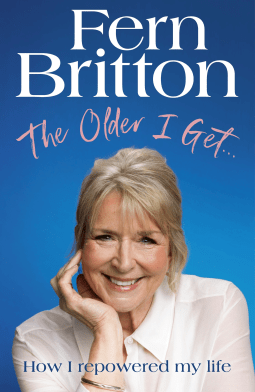
#Review By Lou of The Older I Get – How I Repowered My Life by Fern Britton @Fern_Britton @EburyPublishing @penguinrandom #Memoir #SelfHelp #TheOlderIGet #Repowering

The Older I Get
How I Repowered My Life
By Fern Britton

Rating: 5 out of 5.

Review written by Louise Cannon (Lou)

We all age, for most people it’s a fact of life. Fern Britton, known for presenting Ready Steady Cook, This Morning, reboot of Watercolour Challenge, My Cornwall, writing novels and more… has lived through a lot of life’s ups and downs and survived. Now, she’s written a non-fiction book that’s not quite a traditional self-help book, more a gentle, wise, guide to the changing phase in life, with lived experiences that has a very human, relatable touch. She is in a stage of repowering her life and shows that anyone can do this in their lives too.


Blurb

Fern had recently entered her 60s when a series of life-altering events threw her into the eye of the storm. Both her parents passed away, her 20-year marriage ended, and the pandemic was looming.

Faced with an uncertain future, Fern decided that if she wanted to start over, now was the time. She moved to Cornwall, where she reconnected with her true self and instead of fearing getting older, she chose to create a glorious new life full of friendship, fun and adventure.

Fern explores the joy and challenges of aging with warmth and humour. She reflects back on all she has learnt, from enduring tough times to embracing new opportunities and learning how to be kinder to herself. This wasn’t a moment of empowerment, for that would suggest she never had any power to begin with. As women, we often put our needs aside, and she feels strongly that it’s time for us to repower and rediscover our happiness.

In The Older I Get, join Fern as she candidly shares her experiences of grief and loss, rebuilding confidence and exploring new passions, as well as the importance of finding friends you can put the world to rights with over a couple of Cosmos.

Review

We all just keep getting older and life changes for everyone, whether you’ve had children or not. Stuff happens! As Fern Britton says, in an aptly named chapter, When the Sh*t Hits the Fan”. She’s been through bereavement, divorce, kids flying the nest, moving house, forging a different part of life. It seems to me like she’s been there and lived it all. We all go through a lot, as she acknowledges, but she shows not everything has to be doom and gloom. She has chosen to repower her life, embrace new and old friendships and has a new place to live.

I like that term, repower. I’ve never heard of it before. Just that word is inspiring, re-energising. I’ve a lot of “get up and go”, but this gives me even more energy in my heart and soul to keep going, no matter what. Keep trying things out, doing things, meeting people, some I know lots about, some I don’t know so well. That word, repower spurs me onwards, some how, even though I am tired as I write this review, after a long, challenging week.

This book harnesses so much honesty and realistic positivity about growing older. Fern Britton doesn’t hide behind a facade, and I love it! What Fern Britton and this book embodies is how she is truly living life and is blooming all over again with her repowering of her positive energies. She explains clearly, in down to earth terms what this actually means, and the perks getting older brings.

The book feels like Fern Britton has taken your hand and said that one way or another, through all the ups and downs of life, ultimately, you’ll be okay.
She bravely writes about mistakes, imposter syndrome and confidence. What she writes is relatable and human. She doesn’t hide behind a facade.
She talks about taking care of yourself (I’ll admit to being a must get better at that part in life). Here she uses another new term, “selfist”, which is an interesting concept and one I hadn’t heard of before. Maybe it’ll make people feel a bit better when they’re taking time out for themselves. I may try thinking about it like that. I like bits about lists. I’ve had lists since I was a teen of places to visit and people I’d like to meet or meet again, some way or another. I’m not in for manifesting, but some of the more seemingly impossible things have happened, like the people I’ve met and now I’m hoping that will somehow happen again.
There are sections about making new friends and living in new places and discovering something different about yourself and your surroundings and the people you meet. 

It’s an easy book to read, digest and follow in that it isn’t full of jargon. It feels like it comes from the heart with everything flowing out in a way that makes sense.
Helpfully, there are bullet points at the end of chapters that summarise what has just been read.

I am possibly not the exact target audience for this book, but in a way, being in my 40’s and also been through a lot, perhaps I am. It’s that next stage in life that isn’t too far into the distant future. There are many concepts that can be used for all of life, whether you’re a person at a similar age and stage of life as Fern’s or not. I felt the book is relatable to anyone, some parts naturally more so than others, but it’s nonetheless fascinating, practical and positive.

If you’re contemplating in reading any book in this genre, this is a brilliant one to get into. I can see that word “Repowering” becoming a bit of a trend. It has energy and heart and spirit lifting properties. As we look closer to a new year, this may be the book which helps to gradually change things for the better.


wp-17321018728017041820539549532268


Discover retailers who stock in this Link: Penguin

#Review by Lou of Narcoball, Love, Death and Football in Escobar’s Colombia By David Arrowsmith @mrwriterman79 @Octopus_Books #Narcoball #NonFiction #Football #TrueCrime

Narcoball
Love, Death and Football in Escobar’s Colombia
By David Arrowsmith

Rating: 5 out of 5.

Nacroball Graphic1

Lots of us have heard of the infamous, Pablo Escobar, the Columbian drug lord, but who knew he had an obsession of football? I certainly did not. Narcoball is a fascinating book that encompasses this and more as it shows a different side of his life and influence… You don’t need to be into football to be into this book.
Check out the blurb below and then my review as I kick off the Random T. Tours blog tour.

Narcoball

Blurb

Nacroball Graphic2

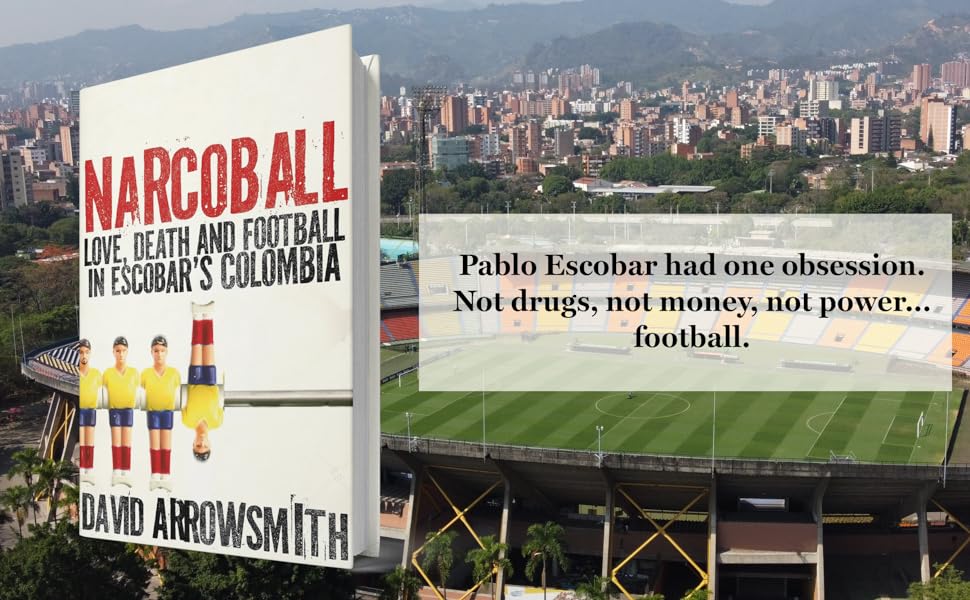
Pablo Escobar had one obsession. Not drugs, not money, not power… football.
Narcoball uncovers the incredible story of Colombian football during the early 1990s – shaped by drug lords, rivalries, and ambition. With untold insights from the players and politicians, it uncovers a football empire backed by cartels – where victory was a currency of its own, and defeat, a matter of life and death.

This is a different story of Pablo Escobar and his rival. A tale of clandestine deals that reshaped Medellin’s football clubs, where fortunes were won and lost. It unveils the extraordinary bonds that Escobar forged with football’s luminaries and why his influence reached unprecedented heights, leading to the astonishing 5-0 victory over Argentina in Buenos Aires, the murder of referees, and the ruthless coercion of officials culminating in the killing of Andres Escobar – the Colombian defender who paid the ultimate price for an own goal in the 1994 World Cup. It is also an examination of a people’s relationship with both the sport and the nefarious leaders that brought both pride and terror to their communities.
Set against the U.S War on Drugs, international threats, and government clampdowns, this is a gripping exploration of Colombian club football under Escobar’s rise and fall.

Review

Narcoball, I feel is fascinating, whether you’re a football fan or not, just for the mere fact that, if like me, you’ve heard of Pablo Escobar and realise that this is something different being told about him or if you’re interested in nefarious behaviours within communities and political leadership. Arrowsmith has tackled such wide-ranging subjects very well, without losing sight of the sport and Escobar. He’s created a gripping, knowledgeable read.

There’s a lot of money and deals to be had in both drugs and football. Narcoball, illustrates that fact. Not all football is equal, it would seem. Players take it all very seriously as they kick to score, to get their team on top. In Escobar’s time, it truly was a matter of life or death, in very real terms, and not just the innocent way the phrase is often used. There were real deaths!

When I was reading this, I got the feeling of darkness and fear, over-hanging. It is written in a way that holds your attention from start to finish. It makes you look differently at sport, and in this case, football and how it can, in the likes of Columbia’s case, intermingle in politics, in a way I hadn’t realised, nor thought of before, when we all see politicians today, gleefully saying how they cheer on “their team”.

The author has, intelligently put Escobar’s nefarious activities into context, so you can get a sense of what else is going on within Columbia, what sort of place it was in the 90’s and what the nearby US was doing. It gives you a sense of the politics and how it seemingly worked and what the awareness was of how far drug lords and cartels were doing and how much greater and wider their activities were than just getting people hooked on drugs.

I felt I learnt a lot reading this book and just how far-reaching Pablo Escobar’s influence went and more about his rise, how he rose to the heady heights of infamy, as he did and to his ultimate downfall.

I highly recommend this very eye-opening book.

Nacroball Graphic3

#Review By Lou of D-Day – The Oral History By Garrett M. Graff @vermontgmg @Octopus_Books @RandomTTours #DDay #OralHistory #DDay80 #NonFiction

D-Day – The Oral History
By Garrett M. Graff 

Rating: 5 out of 5.

DDAY GRAPHIC1

This isn’t just another book about the second world war. This is different from any other book. This is a moving book that commemorates 80 years on from D-Day.  D-Day, An oral history is poignant and a time we should never forget. We should never forget those who fought for our freedom. We should never forget those who died nor those who are still alive today. We may not know or have known them, personally, but we can still remember them and this book allows us to do that. Check out the blurb and my review below as today I am honoured to be on the Random T. Tours/Octopus Books blog tour, with pride in my heart for the men and families involved in all of the war and in-particular on D-Day.

DDAy Quote 1

Blurb

D Day An Oral History jacket imageEighty years on, D-Day The Oral History is a fresh and significant new history of arguably the most important day of the 20th Century.
On 6th June 1944, the Allied invasion began. For hours, wave after wave of soldiers, sailors, and airmen crossed the channel and stormed the Normandy coast, fighting to gain a foothold in Nazi-occupied Northwest Europe.
It was the largest combined air and seaborne invasion ever, involving over 150,000 Allied troops on the ground, and its eventual success became a critical turning point in the
war, spelling the beginning of the end for the Third Reich.
As the events of that day fade from living memory, it’s more important than ever to
understand what it felt like to be there and to live through it, on both sides. In this
definitive work, Garrett M. Graff, the bestselling author of The Only Plane in the Sky: The Oral History of 9/11, compiles hundreds of US, Canadian, UK, French and
German voices to tell the full story of exactly how that historic day unfolded, in
visceral detail. From paratroopers to fighter pilots to nurses, generals, French
villagers, German Defenders to Winston Churchill and Franklin Roosevelt, this is the most intimate re-telling of D-Day published to date.

DDAY GRAPHIC3

Review

Garrett M. Graff has created a moving and poignant book for the 80th anniversary of D-Day. I don’t know how long the research took, but it looks thorough and like a lot of care has been taken over this, that I felt marks D-Day as well as any written word could do it justice and show compassion and understanding. Many readers, I am sure, will come away with more knowledge than they had before first entering the book.

‘A World at War’, ‘The Landing’ and ‘The End of D-Day’ is how the book is separated, telling all about D-Day in letters and interviews, which are highly moving and intimate. It is set out well and is easy to dip in and out of or read in one go.
As less and less people who fought in the war are alive or can make it to any commemoration ceremonies, you can’t help but feel that it is important for others to know about D-Day and the sacrifices made and the pride that it evokes of those who wanted to defend their country and halt a war that could’ve had a very different outcome.
The interviews, diaries, speeches, letters all really bring it to life for people who did not live through those times and are able to live how we do now, in relative peace, without there being a world war. We may not all know who the people in the book are/were, but still, it gives this generation and future generations an insightful, real opportunity to learn and to remember them.

DDAY GRAPHIC4

D Day BT Poster

#Review by Lou of Narcoball, Love, Death and Football in Escobar’s Colombia By David Arrowsmith @mrwriterman79 @Octopus_Books #Narcoball #NonFiction #Football #TrueCrime

Narcoball
Love, Death and Football in Escobar’s Colombia
By David Arrowsmith

Rating: 5 out of 5.

Nacroball Graphic1

Lots of us have heard of the infamous, Pablo Escobar, the Columbian drug lord, but who knew he had an obsession of football? I certainly did not. Narcoball is a fascinating book that encompasses this and more as it shows a different side of his life and influence… You don’t need to be into football to be into this book.
Check out the blurb below and then my review as I kick off the Random T. Tours blog tour.

Narcoball

Blurb

Nacroball Graphic2

Pablo Escobar had one obsession. Not drugs, not money, not power… football.
Narcoball uncovers the incredible story of Colombian football during the early 1990s – shaped by drug lords, rivalries, and ambition. With untold insights from the players and politicians, it uncovers a football empire backed by cartels – where victory was a currency of its own, and defeat, a matter of life and death.

This is a different story of Pablo Escobar and his rival. A tale of clandestine deals that reshaped Medellin’s football clubs, where fortunes were won and lost. It unveils the extraordinary bonds that Escobar forged with football’s luminaries and why his influence reached unprecedented heights, leading to the astonishing 5-0 victory over Argentina in Buenos Aires, the murder of referees, and the ruthless coercion of officials culminating in the killing of Andres Escobar – the Colombian defender who paid the ultimate price for an own goal in the 1994 World Cup. It is also an examination of a people’s relationship with both the sport and the nefarious leaders that brought both pride and terror to their communities.
Set against the U.S War on Drugs, international threats, and government clampdowns, this is a gripping exploration of Colombian club football under Escobar’s rise and fall.

Review

Narcoball, I feel is fascinating, whether you’re a football fan or not, just for the mere fact that, if like me, you’ve heard of Pablo Escobar and realise that this is something different being told about him or if you’re interested in nefarious behaviours within communities and political leadership. Arrowsmith has tackled such wide-ranging subjects very well, without losing sight of the sport and Escobar. He’s created a gripping, knowledgeable read.

There’s a lot of money and deals to be had in both drugs and football. Narcoball, illustrates that fact. Not all football is equal, it would seem. Players take it all very seriously as they kick to score, to get their team on top. In Escobar’s time, it truly was a matter of life or death, in very real terms, and not just the innocent way the phrase is often used. There were real deaths!

When I was reading this, I got the feeling of darkness and fear, over-hanging. It is written in a way that holds your attention from start to finish. It makes you look differently at sport, and in this case, football and how it can, in the likes of Columbia’s case, intermingle in politics, in a way I hadn’t realised, nor thought of before, when we all see politicians today, gleefully saying how they cheer on “their team”.

The author has, intelligently put Escobar’s nefarious activities into context, so you can get a sense of what else is going on within Columbia, what sort of place it was in the 90’s and what the nearby US was doing. It gives you a sense of the politics and how it seemingly worked and what the awareness was of how far drug lords and cartels were doing and how much greater and wider their activities were than just getting people hooked on drugs.

I felt I learnt a lot reading this book and just how far-reaching Pablo Escobar’s influence went and more about his rise, how he rose to the heady heights of infamy, as he did and to his ultimate downfall.

I highly recommend this very eye-opening book.

Nacroball Graphic3