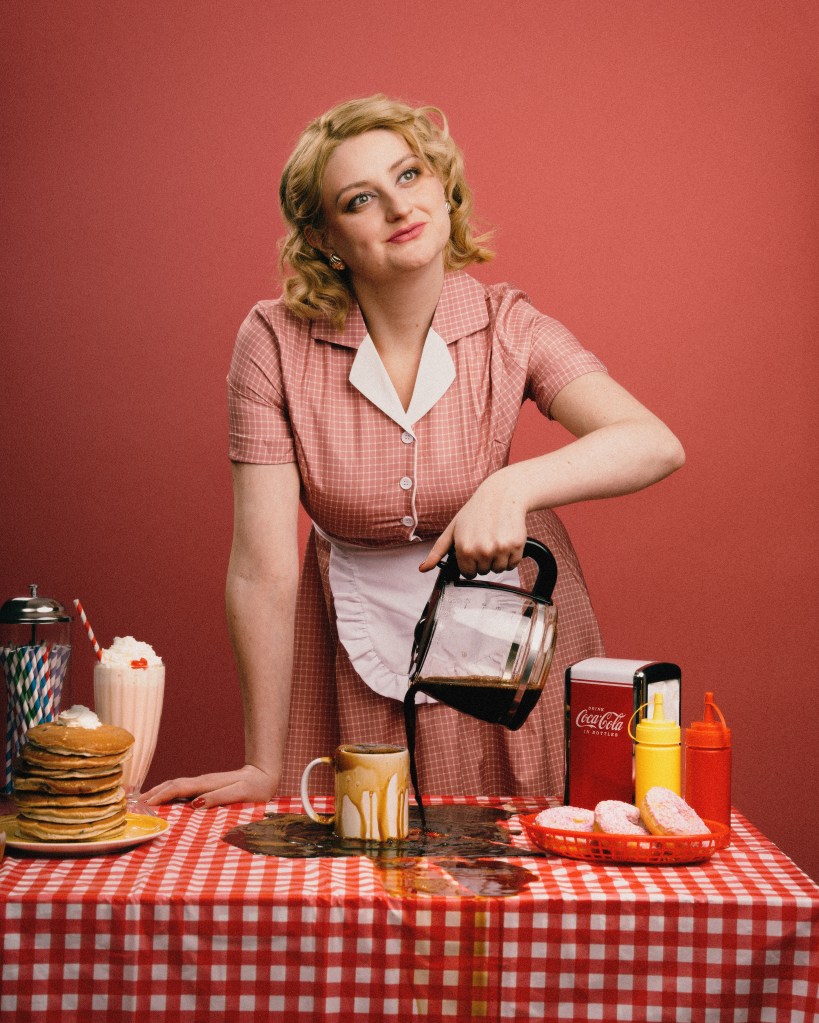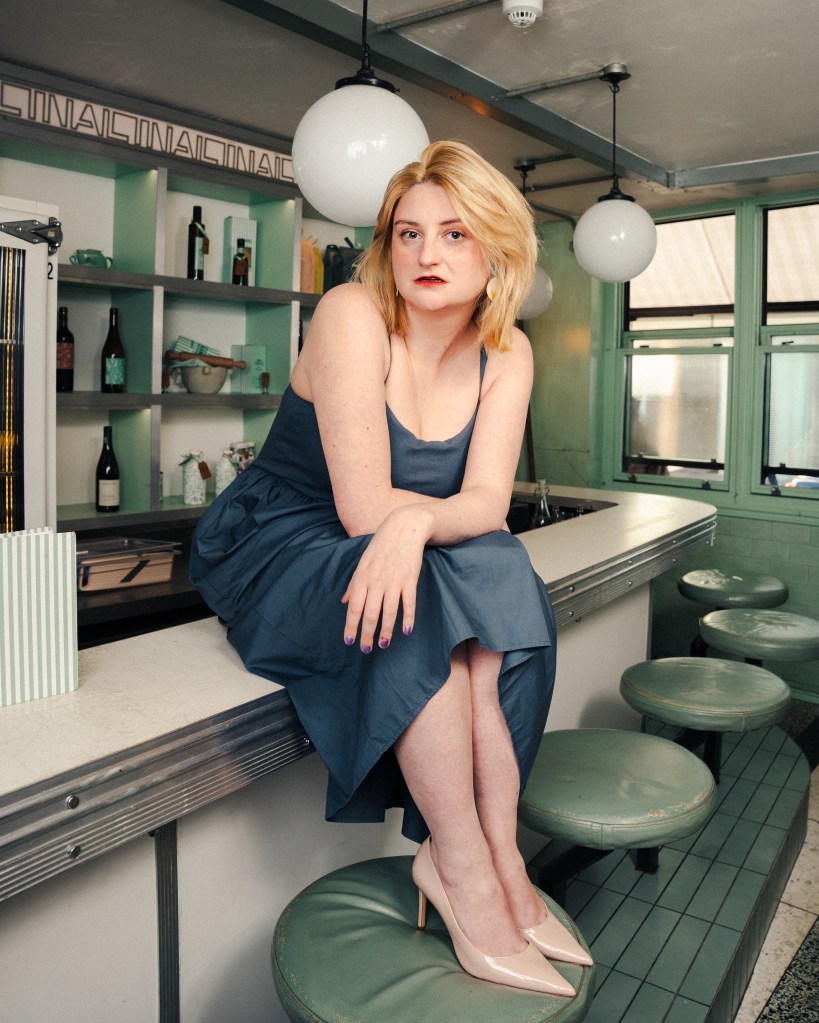
#Interview By Lou with the Tony Award Winning Actor, Laura Benanti on new show Nobody Cares @laurabenanti #NobodyCares #comedy in #Soho #London at #Underbelly on 2nd Sept #Theatre

Interview with Laura Benanti
on Nobody Cares

Interview by Louise Cannon
Welcome, Laura Benanti, to Bookmarks and Stages and thank you for the opportunity to interview you.
I am absolutely delighted to interview Laura Benanti about her new show, Nobody Cares, which had a hugely successful run at the Edinburgh Fringe Festival. It has now directly transferred to:
 Underbelly Boulevard Soho, London on 2 September for two performances only.
See after the interview for ticket details.
 
Laura is best known for her show-stealing performance as Louise in Gypsy alongside Patti LuPone on Broadway. For this role, Laura won a prestigious Tony Award.
She is also known for her recurring role impersonating Melania Trump on The Late Show with Stephen Colbert, alongside other major Broadway such as Eliza Doolittle in my Fair Lady and more. She has also appeared in tv shows, such as Nashville, Gossip Girl, The Gilded Age and more…
 
Here’s a little about Nobody Cares before we talk about it interview, finding humour in being a former people pleaser and in the perimenopause, Melania Trump and why she impersonates her, connecting with audiences and more…  The answers are fascinating and insightful.
 
Nobody Cares, is a hilarious, heartfelt, and sometimes brutally honest autobiographical hit charting Benanti’s journey from an 18-year-old ingenue to a recovering people pleaser with all of the missteps and marriages (three!) along the way. Her comedic take on everything from motherhood to perimenopause is yet another star turn.
 
Your show, Nobody Cares had a successful run at the Edinburgh Fringe Festival, you’ve stepped onto the glitzy stages of Broadway, huge tv series and won a Tony. What inspired you to choose the Edinburgh Fringe Festival to showcase Nobody Cares and what did you like most about your time there?
 
I’ve always wanted to perform at the Fringe! Being at a festival full of theatre nerds was a dream come true!
 
2.You bring Nobody Cares to intimate stages, what do you enjoy most about this and are there any challenges, compared to big Broadway stages?
 
I enjoy connecting with the audience in a completely different way. I can communicate with them. It’s a much more relaxed vibe. 
 
3. You bring comedy, ranging from parenthood to perimenopause, they can be inherently funny subjects, but what do you feel is important that we find the humour, even in the most challenging of times of being a women?
 
I endeavor to see the world through the lense of a sense of humor. For me, it’s the only way through. Humor eradicates shame.  
 
4. You tackle being a former “people pleaser”, how did you overcome people pleasing?
 
I’m still working on it! I actively work on it during the show! There are definitely people who come to the show thinking I’m going to sing Broadway music and instead I deliver original comedy and songs that has very adult themes and language. I find myself wanting to apologize to them for that, or wondering what they’re thinking. I have to tell myself to let it go and be present. 
 
5. What’s one of the funniest moments of the peri-menopause? Frankly, I ask as I am one of those women hurtling ever closer to that age and stage of life.
 
I think embracing that you will, at some point, look for your phone and it will be in your hand. Brain fog is real!
 
6. After London, what’s next for you in your illustrious career?

The day after I land I film a few days on a very sweet movie called “the Ditch” and then we take our show to Berkeley, California. 
 
7. On a side note, us in the UK often have an eye on US politics. You’re known for impersonating Melania Trump on the Late Show with Stephen Colbert, which is incredibly funny, even from a single pose. What inspires you to do impersonations and kick ass out of politicians? We also have many comedians doing this, it’s often clever.
 
First of all, I want to apologize on behalf of America that some of us voted for our current POTUS (pervert of the United States. Doing this impression is an act of rebellion and a way to keep people laughing during what is a very serious time. 
 
You can catch Laura Benanti in Nobody Cares by finding out more details and booking here: https://underbellyboulevard.com/tickets/laura-benanti-nobody-cares/


#Interview By Lou with author Laura McHale Holland about Shinbone Lane ‪@lauramchh.bsky.social‬ #books #ShinboneLane @HenryRoiPr

Interview with Laura McHale Holland
On Shinbone Lane

Conducted by Louise Cannon

Laura McHale, welcome to Bookmarks and Stages. Thank you for allowing me to interview you about your fascinating book, Shinbone Lane. Thanks to Henry Roi PR for the opportunity and putting us in touch to do this author interview.
What Laura has to say, is truly interesting and she even imparts a poem as part of one of her answers. We talk about inspiration, world building, secrets, healing, including her own healing space, transformation of lives, the 1970’s,  her characters, one of whom is a dancer and one whom is Maddy who both have quite a story to tell and more…

Laura McHale Holland is an independent author whose works of fiction and non-fiction have been recognized by the Next Generation Indie, Readers Favorite, INDIES and Indie Excellence book awards. She lives north of San Francisco and enjoys her grandchildren, film noir and a strong pot of black tea.

Firstly, here is a little about the book, before the interview…

For reasons they can’t quite explain, the lost always find themselves on Shinbone Lane…

San Francisco, 1974. Sixteen-year-old runaway Maddy is escaping the blame for a crime she didn’t commit. Miles from home, she is taken under the wing of the elderly Clara and her neighbor Ted, and soon finds a place among the kaleidoscope of personalities on the oddly named Shinbone Lane.

Ted’s three-story Italianate Victorian house overflows with travelers, free spirits, and artists. His backyard is a haven for all who are willing to see its magic. But burdened dancer Eloise Watkins condemns the transient “riffraff” in her neighborhood. Their frivolity flies in the face of her grief over friendship lost and a daughter who’s missing. And nobody — nobody— understands.

But like all who tread on it, Shinbone Lane has secrets of its own. And like all secrets, they lie uneasily in the dark, until the truth emerges to lay the past to rest.

  1. Who or what inspired you to write?

When I was seventeen and in my last year of high school, one of my uncles rescued me from a chaotic home situation and sent me to a Catholic girls’ boarding school in a tiny country town. It was 99 miles from an abusive stepparent and far from my wild friends in the Chicago area. The environment at school was controlled but also very loving. I didn’t know how unsafe I’d felt until I was cared for by a team of nuns who had dedicated their lives to helping teenage girls at risk. It was a respite. I had quiet time. A bombardment of conflicting thoughts and feelings inside of me eased, and I had the urge to express myself. I wrote poems that I sent in letters to friends back home. I knew five or six chords on the guitar and wrote a few songs, too.

I remember one of the poems I wrote at boarding school. I was thinking about my father, who had passed away when I was eleven, and a boyfriend who’d recently left the country to follow a guru around the world:

to ponder again

what’s been

what was now

not knowing how

or even why

love’s vital beating

ever fleeting

left to stay

left me this way

to ponder again

what’s been

After graduation, I didn’t keep writing. I was enrolled in college but didn’t show up, afraid I’d make a mess of it. I went through a dark period, which I began to come out of in my early twenties. At that point, with conflicting thoughts and emotions wreaking havoc within, I began keeping a journal, thinking it might help me sort out what I really thought about things. Then I attended Columbia College, a creative arts school in Chicago. Every student was required to take writing workshops, and I was bitten by the writing bug, particularly by a workshop led the novelist Larry Heinemann, who said, “Laura, you are a writer. All you have to do is do it.” It sounds so easy, doesn’t it? Ha!

2. Shinbone Lane is an intriguing name. How did you come up with this street name?

I’d begun brainstorming about a name for the lane, but wasn’t happy with any ideas I’d had. I happened to tell my husband, Jim, I was trying to come up with a name, and he threw out, as more of a joke than a serious proposal, Shinbone Lane. The idea jolted me. It seemed more suited for a Western genre story. But as I thought about it, I realized it offered possibilities for creating a story about the name within the larger story of the novel. The story I wove into the novel was inspired by folklore, and this meshed with my love of magical realism, where a story is rooted in the everyday world, but inexplicable, extraordinary things happen as a matter of course.

  1. What’s your process when world building a lane that really comes to life with many personalities and a bit of magic?

Memory played a big part in this, because the fictional lane is located just up San Francisco’s 29th Street hill from where Jim and I raised our family. So when I envision the environment, I picture it very much as it was in real life. The lane itself has more of a golden glow about it, and things happen there that don’t ordinarily happen. It’s the world slightly tilted, but it’s still our world. It doesn’t involve people casting spells and using magic potions. It’s not epic fantasy where you create entirely imagined worlds. It’s more like forces are at work in the natural world that we don’t fully understand. As for the people, they aren’t based on specific individuals I knew, but they were inspired by the many people who passed through my life in the 1970s. The characters came to me and took shape as I was writing. I didn’t think them up ahead of time.

  1. What attracted you to the fully loaded themes of secrets, healing, transforming lives?

The themes stem from my life experiences but they have universal resonance. Who doesn’t have a secret or two? Who hasn’t been harmed or hurt in life? Who hasn’t wished for healing at some point? And as for transformation, we are all transformed as we move through life. Sometimes it’s dramatic, and we notice. Sometimes it’s a gradual transformation that sneaks up on us. Sometimes we seek transformation and get what we want; sometimes we seek transformation and get something else entirely. Sometimes we don’t want transformation, but we get it anyway. In writing fiction, I love for characters to be grappling with big things, some things that others don’t know about and wouldn’t guess, some that are obvious, some things that can never be healed, and others that can. And I love to create communities where, as in real life, terrible things can happen, but where an underlying love helps everyone pull through, maybe different than they were but ready for a new day.

  1. What’s your healing place or space and why?

My healing place has always been the outdoors, walking in particular—from the Midwest prairies to the crowded streets of Chicago’s north side, to San Francisco’s magnificent hills and valleys, to Sonoma County’s many trails and byways. Walking has always calmed me while at the same time woken me up, and made my troubles seem a little bit lighter, at least for a time. It’s odd, but I didn’t realize until answering this question how important walking has been for me. I walk our dog every morning, but I’ve been so pressed for time in recent years that I walk for only about half an hour. I’m going to have to work in some longer walks regularly, walks without my dog, too, who’s a little on the goofy side and easily spooked, so he’s not a relaxing companion.

  1. There’s a bit of magic on Shinbone Lane and reasons why, at least consciously, the characters don’t all quite know why they are there. How do you believe that magic in the real world plays out for people and how did you go about weaving it into your book?

Some characters have lived on the lane their whole lives; others are newcomers. They’re all there because they want to be, because life on the lane appeals to them. They’d have difficulty explaining why, which is not all that unusual. I’ve never given much thought to why I wear certain clothes, for example, or why I’m drawn to some foods and not others. And like the folks who populate Shinbone Lane, I can’t easily explain some of my choices; they happen so quickly on a gut level.

Similarly, weaving magic into the real world as I write is an intuitive process. Some of the magic expresses a longing I have for the real world to have more magic manifest in our days, for things not to always follow the natural laws we’ve come to understand, for inexplicable things to be more common and not relegated to streaming TV series. Also, there is a lot about the universe that we don’t know. I keep that in mind when writing fiction, and it helps me push boundaries between the real and the imagined.

  1. One of your characters is 16 year old, Maddy, who is escaping the blame for a crime she didn’t commit. She gets taken in by Clara, a significantly older woman and her neighbour, Ted. What significance do they play in her life and how important do you think it is that young and old come together in society?

Clara and Ted are hugely important to Maddy. They have given her a foundation of love she never had. They are like many people in the world who are rock solid good, through and through, and are unsung. It wouldn’t occur to them to look for recognition for doing the right thing. Their goodness helps to attract magic, though they don’t do anything consciously to bring it about. And a world without elders would be bleak indeed, especially for children, who would never know people who have lived through times that for younger generations are known only through books and documentaries. Plus, those of us who were lucky enough to have at least one loving grandparent know the love they give is profound and unique.

  1. Travelers, free spirits and artists feature in Shinbone Lane, who are willing to see the magic. How did you find writing about such, practically bohemian characters in-contrast to the grittiness of Mattie escaping a crime?

Despite her unfortunate home, where the crime occurred due to a family member’s mental illness, Maddy is very much a part of her generation, which is breaking free of rigid cultural norms and expectations. Also, in the 1970s, large numbers of young people were on the move, largely because it was before real estate prices soared to heights almost beyond comprehension. It was easy for someone to take off with a little bit of money in their pocket and travel, sometimes staying on the move, sometimes settling down in a new place, where people could explore and maybe bring out different sides of themselves. Having lived through that time, it was a natural process for me to write about it.

  1. There’s Eloise who is a burdened dancer who wants rid of anyone who she feels is “riff-raff”, has lost her daughter and has decided there’s much no one understands. Did you feel the powerful emotions of your character here and how did you convey them onto the page and out to the audience so they can also experience her life?

People on the lane thought they knew Eloise. She’d lived there all her life, after all. But it turns out they barely knew her at all. Writing her was a lot of fun, as well as surprising. I didn’t know when I first envisioned her what turns her life would take, and I had compassion for her in the end. I felt what I imagined she was going through, as well as other characters’ reactions to her actions. When writing fiction, you have to put yourself through an emotional wringer at certain points in the narrative. If you don’t do that, readers are unlikely to be moved by the stories you tell. I’ve found that as long as I show up emotionally while writing, I don’t need to worry about conveying emotions on the page. The emotions flow with the words.

  1. Shinbone Lane is set in 70’s San Francisco, a bit like the time when you went for a visit and stayed. What compelled you to stay, how did it influence your writing and what changes have you seen in the city?

Initially I stayed in San Francisco because I had the feeling after a few weeks that I wanted more, that I hadn’t experienced what I wanted to experience in the city. I decided to remain for a few months. I bought a Fast Pass for $11, which was good for a month. With that I could take a bus, streetcar, or cable car anywhere and ride as far and as long as I wanted within the city.  And the rides, even just to run errands or visit a friend across town, were extraordinary with incredible vistas, largely because of the hills, the ocean on one side and the bay on the other. Even some of the backyards you’d pass on the J-Church were stunning, and riding the 10-Monterey bus was breathtaking.

I quickly found temporary office work in San Francisco and a room in a Victorian flat with two amicable roommates for only $79 per month. I enjoyed exploring the city’s distinct neighborhoods and microclimates, all the artist collectives, dance and theater troupes, cultural organizations, street fairs, free events in Golden Gate Park, and so many people my age who were trying new things. I decided I wanted to take piano lessons. To do that, I needed a piano, so I bought an old Kohler upright on time, $17 per month for three years, and said, well, I guess I’m staying for three years. I wound up staying for almost thirty years, and now live only an hour away.

San Francisco influences my writing the same way any place I’ve come to know well and love does. The streets, the parks, the restaurants, the main events of the time are part of me. The experiences I had, the highs and lows, are wedded to where they took place. A huge difference in the city between the 1970s and now is that it is so much more expensive to live there. There are bound to be exceptions to this, but generally, artists and people not earning Silicon Valley type incomes can’t afford to live there anymore unless their homes have been in the family a long time. People of limited means have to leave. And that changes the culture of a place.

  1. What do you hope readers get from your book?

Knowing a place where they’d like to linger for a while. Characters they’d like to meet in real life. A story written in a way that delights and absorbs them. A sense that tough things can happen, but the support you need is usually nearby, and healing can and does happen. And a reminder that what we present to each other day to day is only a part of what we are. It’s not like we’re purposely hiding things from others or from ourselves, but many things are hidden. In the end there’s a longing to give and receive love, even in the worst of us, and that is powerful.

  1. How did you celebrate publication day?

I didn’t do much on publication day itself, other than watch for reviews from people who’d read advance copies. That was pretty exciting, especially since my daughter had helped find early readers, and we were phoning and texting each other as reviews appeared. The following weekend I participated in a joint book launch party with members of Redwood Writers, the Sonoma County branch of the California Writers Club. The writing itself is a solitary activity, and it’s great fun to share milestones with other writers. The sense of camaraderie is uplifting.

  1. How can people follow you and your work?

Thank you, Louise, for asking me such thought-provoking questions and spotlighting Shinbone Lane. Here’s my Linktree listing with links to my website, Facebook, Instagram, Substack and Bluesky pages: https://linktr.ee/lauramchh

#Interview by Lou with Max Fulham about his show Full of Ham at #EdFringe @ThePleasance @maxfulhamcomedy #Comedy

Interview with Max Fulham about Full of Ham

conducted by Bookmarks and Stages – Louise Cannon

It gives me great pleasure to welcome Max Fulham to Bookmarks and Stages for a Q&A session on his comedy act, playfully named, Full of Ham.

Max Fulham likes to make people laugh through ventriloquism (vent). It’s perhaps not quite all as you’d expect. He has put his own twist on this art-form. He’s worked with some of the biggest stars in show-biz like Craig-Revel Horwood and Mel Giedroyc. He started out in Linlithgow, which is not too far from Edinburgh

Without further ado, let’s find out more through the interview.

You’re known for modernising and bringing new audiences to ventriloquism, but who or what inspired you to take up this artform and create stage shows with it?

How did you train to do ventriloquism?

I taught myself as a child and there was a little worn patch of carpet in front of the mirror in my bedroom where I used to stand and practice. My first puppet was a little pink hand puppet and it was the first of many over the years I asked for for subsequent birthdays and Christmases. It probably took me a few years before I was even half decent and I am grateful I was still a child because being a bit rubbish can be sort of endearing then!

I took up ventriloquism (or vent if you’re really cool) after my parents bought me a puppet for Christmas when I was nine. I have been hooked on it since then! Having done it for a good few years now, one of the things I realised is that a lot of audiences had never seen ventriloquism live before and also had a few preconceptions about it being a bit old and naff. I suppose that is the main inspiration for trying to take it in some new directions or simply to use it to create the funniest things I can. I have been inspired by many of the greats over the years like Ray Alan and Terri Rogers and I think looking back has what has gone before can be a great jumping off point when wanting to take things in a different direction.

Your style is very different from having a dummy on your knee. You’ve decided to create an inner monologue, use inanimate objects and expressions.

What inspired you to do it this way and what themes do you tend to lean towards in this show and why?

It’s fun to play with what people expect from a ventriloquist and twist it into something slightly different. There may be a puppet as you’d expect at one moment but it becomes something unexpected. I have also really enjoyed exploring stuff that doesn’t use a puppet, what happens if there are multiple characters onstage but I’m the only person there? In terms of themes I feel that the show really goes from the everyday to the absurd, from supermarket checkouts to a box full of intrusive thoughts.

You started life in Linlithgow and then headed to clubs and cruise ships, now home to the Edinburgh Fringe Festival. How has your travels influenced what you bring to your shows?

My travels have enabled me to perform for such a wide variety of audiences which is invaluable experience for any performer. What will sometimes work in one scenario will not work in another and I hope that I am slightly better at working that out now after performing all over the place. The vibe I always want to create in my shows is a sense of unity that we are all there in a room and I have some fun things to show you.

Rowan Atkinson, Mel Giedroyc, Craig Revel Horwood and Terry Fator famously highly rate you, which is fantastic. How did that come about and how does this add to shaping your career as you progress ever forwards?

I have been lucky enough to work with or meet some phenomenal people and some true comedy heroes. I worked with Craig Revel Horwood in pantomime last year, he was the Hook to my Smee and we had a great time! I worked with Mel Giedroyc on her show Unforgivable and she has been encouraging me to do the Fringe since then! Getting to meet and work with these wonderful people is often a nice reassurance that I’m getting at least something right… it also looks good on the poster and I’m very grateful for their kind words!

You’re billed to be appearing in Panto with Alexandra Burke and Dr. Ranj, how are you preparing for that and are you able to share what it will be and where?

Yes! I’m off to Neverland this Christmas (read: Southampton). It is shaping up to be a fantastic show from what I have heard in the meetings I have had so far. One of the amazing things about panto though is that it comes together so quickly and we only start rehearsals a week and a half before the show opens so preparations come a lot later in the year!

What’s next for your solo ventriloquism shows?

I would just quite like to continue doing my nonsense and making people laugh. I am excited to see where the characters and ideas from this Fringe show go, I have a feeling a few of them may have life beyond this show!

Where can people follow you on social media?

You can follow me on Instagram @MaxFulham and on TikTok and Facebook @maxfulhamcomedy.

Max Fulham has brought his show ‘Full of Ham’ to the Edinburgh Fringe the August, every night at 6.40pm in the Pleasance Courtyard. For tickets and more information, visit:: https://www.pleasance.co.uk/event/max-fulham-full-ham

#Interview by Lou with Nathan Scott-Dunn and Stirling Sands of 1902 by Saltire Sky to mark Hibernian F.C’s 150th Anniversary. From Football to Social Issues, Class and more… @SaltireSkyTC @saltireskytheatre #EdFringe

Interview of 1902 with Saltire Sky’s

Nathan Scott-Dunn and Stirling Sands
about Hibernian FC and much more…

interview by Louise Cannon – Bookmarks and Stages

There’s more to the Off Westend Award Winning play, 1902, than football, as I discovered whilst asking the questions. As much as it is celebrating 150 years of the club, Hibernian FC, we also talked about other themes, such as toxic masculinity, using music in such a play, reflecting working class.

  1. What makes Hibernian FC, Hibs so special that you chose to create a play with this particular football club at its centre?

    Hibernian FC is deeply woven into the identity of Leith and its people. It’s not just a team, it’s family, tradition, and home. For generations, supporting Hibs has been passed down like a birthright. That sense of loyalty, of clinging to hope in the face of disappointment, was what really drew us in.
    The 2016 Scottish Cup win, after 114 years, was a moment that felt like something more than football. It was a collective emotional release, a victory for everyone who had ever believed through all the heartbreak. 1902 uses that moment as a backdrop, not to tell a story about football, but to explore the lives and relationships of the people who live for it. It’s about community, resilience, identity, and how something as simple as a match can carry so much emotional weight for working-class people who don’t always feel represented in mainstream narratives.
  2. How do you feel toxic masculinity can change and how do you deal with this to make an impact in your play?

    Toxic masculinity changes when we make space for vulnerability and when we show that there are other ways to be a man than the one-dimensional, emotionally repressed version we’ve been sold. In 1902, we look at masculinity in a very real, grounded way. These characters argue, lash out, make mistakes but they also cry, admit fear, and support each other in quiet, powerful ways.
    The play doesn’t lecture, it reflects. We see how bottled-up emotions, shame, and societal pressure affect working-class men who’ve grown up being told that showing weakness isn’t an option. Through their interactions, especially in moments of conflict and intimacy, we show that emotional honesty can exist within these tough exteriors.
    The goal isn’t to preach, it’s to represent, and in doing so, invite empathy and change. We’re trying to open up a conversation about how men can still be strong while being emotionally present and accountable.
  3. What genre(s) of music do you use in your show and how did you choose what to put in it?

    The music in 1902 is deeply rooted in identity and place. At the centre of it is the music of The Proclaimers, which we use to underscore the entire show. Their songs aren’t just a soundtrack, they’re the emotional heartbeat of the piece. Being from Leith themselves, The Proclaimers’ music captures the spirit, struggle, humour, and heart of working-class Scotland in a way that’s unmatched. Their lyrics speak directly to themes of home, belonging, loyalty, and love, all of which are central to 1902.
    Their songs allow us to move fluidly between moments of tension, reflection, and celebration. They help us create atmosphere, elevate emotion, and at times give the audience space to breathe or reflect. The music is woven into the fabric of the show, not tacked on, but lived in by the characters.
    Alongside that, we also use authentic Hibs football chants throughout the play. These are the songs you hear in the stands, in the pub, on the streets, full of energy, defiance, and unity. The chants bring the community to life on stage and act as a powerful form of collective expression. For the characters, they’re a release; for the audience, they’re instantly recognisable and deeply nostalgic.
    Together, The Proclaimers’ music and the Hibs chants create a soundscape that’s unmistakably local, emotionally charged, and completely immersive. It’s not just about setting the scene, it’s about capturing the soul of a community.
  4. What research, if any, did you do so the working class in Scotland is portrayed accurately and so everyone can recognise it.

    A lot of the work came from lived experience and working closely with people from the communities we’re representing. This wasn’t about imposing a narrative, it was about reflecting one.
    The script was developed through workshops, conversations, and a lot of listening. We made sure the dialogue was honest, not softened for a wider audience, but kept true to how people actually speak in working-class communities. That includes the humour, the swearing, the silences, and the things that are said without being said.
    We also paid close attention to the cultural references, the emotional rhythms, and the socioeconomic pressures that shape daily life, from debt and employment struggles to family responsibilities and unspoken expectations. Every detail was considered so the people who live this reality can watch the show and feel recognised, not stereotyped.
  5. How important do you feel that the working class is represented in theatre and the Edinburgh Fringe Festival in particular?

    It’s absolutely essential. The working class has historically been underrepresented or misrepresented in theatre. When they do appear, it’s often through a middle-class lens, which tends to flatten the complexity and dignity of working-class life.
    At the Fringe, which can sometimes feel dominated by shows that are inaccessible either financially or culturally, it’s even more important to create space for stories that reflect real people’s experiences. Representation isn’t just about visibility, it’s about ownership. It’s about giving working-class artists the opportunity to tell their own stories on their own terms.
    1902 is part of that effort. It’s theatre rooted in lived experience, told in a language and setting that working-class audiences can connect to. It’s also about making theatre feel like a place where everyone belongs, not just those who can afford a £20 ticket and a glass of wine at the interval. Our ticket prices have remained the same since our inception in 2017 ensuring everyone can access our shows at an affordable price.
  6. Where can people follow you?

    You can follow Saltire Sky Theatre on:

    📸 Instagram: @saltireskytheatre
    🐦 Twitter/X: @SaltireSkyTC
    📘 Facebook: Saltire Sky Theatre
    🌍 Website: saltireskytheatre.com
    Tickets: 1902 | Edinburgh Festival Fringe

We post regular updates, behind-the-scenes content, and info about upcoming shows, and we always love hearing from audiences who’ve connected with the work.

#Interview By Lou with Alex Prescot about comedy show, Cosy @alexpcomedy #EdFringe #Underbelly @followthecow #Cosy

Interview with Alex Prescot
By Louise Cannon – Bookmarks and Stages

Welcome Alex Prescot to Bookmarks and Stages to talk about your new comedy show at the Edinburgh Fringe Festival: Alex Prescot: Cosy, which runs until 25th Aug at 11:45am to 12:45pm.

Alex Prescot has created a “tailor-made show for each audience.” He also says you can “expect a warm and fuzzy blend of joyful musical comedy and quick-witted improvisation.

Here we talk about becoming a comedian, the show, Cosy, improvisational comedy and more…
Some people may know Alex Prescot around the Fringe already from the sell-out show, A Jaffa Cake Musical.

Who or what inspired you to become a comedian?

When I was younger, I wanted to be an actor since doing loads of youth theatre and school plays (classic). Then I went to university and decided I wanted to be not just an actor, but a director and writer too (having studied…French and Spanish). After uni, I moved to London and started to do double act comedy with my mate Nick (another wannabe actor, big ick) until we broke up cause he moved to Australia, I had to go solo and write a debut musical comedy hour about…my double act partner leaving me for Australia.


Improv is, like all comedy, a skill. What attracted you to improvisation in-particular and how did you learn to do this and hone your craft enough to be shortlisted and finalist in comedy awards?

I started doing improvised musicals at uni because all the kids I thought were cool from the musical theatre society were doing it (spoiler: they were not “cool” as the word is widely understood).

After graduating, I co-founded ‘The Bean Spillers’, a small cast improvised musical inspired by audience gossip, but occasionally started cheating on that show with solo musical improv.

As for learning to do it, I really believe it’s hours on the treadmill and watching/listening to your performances back to try and get better. There are also general things I believe makes better crowd work improv: being genuinely interested in the audience, making them the heroes (unless they’re proper twats), and recognising when something is ‘shiny’ and grabbing onto it immediately.

There’s a lot of improv at the Edinburgh Fringe Festival. What sets your show, COSY, apart from the rest?


There’s a fair bit of improv in my show but it also tells the story of my double act break-up and so I’d like to hope it has real heart at its core (something I’ve worked on extensively with my director, the brilliant Ben Target). So hopefully it is different from purely skill-based improv shows (which are great!) and offers something a bit more personal too.

But if you’re an improv nerd and looking for an improv-focused answer, what sets it apart is I am both improvising piano and singing at the same time.

What is the cosiest part of your show?


The cushions! I have like 20 as part of the set and I give them out to audience members throughout as rewards for good behaviour.

Why did you choose the Edinburgh Fringe Festival for your show and what happens next?


I am also in ‘A Jaffa Cake Musical’ which had a really great sell-out run last year so has returned this year (and, miraculously, is selling out again!). As I knew this show was coming back, for me it was a no-brainer to debut this year, as the support of a successful musical and my fantastic cast mates from that show has made my Fringe immeasurably better.

As for what’s next, I would love to do a UK tour of this show and maybe also take it further afield too…watch this space!  

Where can people follow you on social media?

I’m on everything @alexpcomedy and regularly post clips of the best audience interactions – come along and join the fun!

Here’s the Edinburgh Fringe link so you can be cosily entertained: https://www.edfringe.com/tickets/whats-on/alex-prescot-cosy

#EdFringe #Interview By Lou with Julie Lake and Annie MacLeod about their show #ForgetMeNot #wildflowershow @julie__lake @anniemacleod @GreensideVenue

Interview By Lou with Julie Lake and Annie MacLeod
of Forget Me Not

Welcome to Bookmarks and Stages to talk about your fascinating show, Forget Me Not, which you’re performing at the Edinburgh Fringe Festival.

If you’ve ever watched Orange Is The New Black, then Julie Lake would be a familiar name. Since then she’s been more a creator of work on-screen and in music.
Annie MacLeod is and award-winning music and songwriter. 
Together, they talk about their show Forget Me Not, motherhood, being in their 40’s and re-inventing themselves and more…
Here’s the synopsis of Forget Me Not. You can find the Edinburgh Fringe link to their show at the end of the interview.

Synopsis

Orange is the New Black’s Julie Lake and songwriter Annie Macleod join forces in Forget-Me-Not, a true story of motherhood, lost love and hauntings set to original music and heart-exploding harmonies. Two estranged childhood best friends reconnect in midlife – both mothers, stifled by traditional roles and longing for more creative freedom, adventure, sexual liberation and a deeper sense of self. Through storytelling and song, they rediscover the power of their bond, finding the healing and freedom they’ve been searching for all along. A moving, magical celebration of motherhood, creativity, resilience and the transformative power of female friendship.


Now, let’s check out he interesting answers they gave about their show and more…

  1. Julie Lake: Who or what inspired you to act and how have you seen your career progress from being in the successful, Orange is the New Black?

I caught the acting bug at five—I wanted to be wild and expressive, but also connect with people in a way I couldn’t offstage. I was shy, secretive, and terrified of revealing too much. Writing used to scare me—I thought it might expose me as crazy or stupid. But since Orange is the New Black, I’ve shifted into creating my own work: pilots, screenplays, music—and now a live play. Turns out, sharing my inner world isn’t fatal. Just… occasionally awkward.

  1. Annie MacLeod: You’re an award-winning music and songwriter. What or whom inspired you to take this career path?

I’ve loved music and theater since high school – Julie and I performed together as teenagers, and I always dreamed of being on Broadway or performing as a musician. But I took a different path, became a nurse practitioner, and poured myself into caregiving and motherhood. For years, I made music in the cracks of my life, stealing moments when I could. But once my kids were out of the baby phase, I had this wake-up call—like, what happened to my dreams? I knew I needed to reclaim them. Our play tells the story of that transformation.


  1. Julie Lake: The play explores motherhood and the complex privilege and joy surrounding this. How would you describe the complications and what is it about this that makes it important to highlight?

When I became a mom, I slipped into a role that didn’t feel like me. I’d been a lifelong artist—filming a pilot at eight months pregnant that got into SXSW. But after my son was born (and then Covid hit), I disappeared into nonstop caregiving. I cried if I left him for an hour. I was secretly writing music, but had lost the courage to share it. I thought it was all over. Annie helped me find myself again. She saw me when I couldn’t. My song “Oldest Friend” says it best: “Be my witness when the fog becomes too thick, when I can’t see beyond these lines. Tell me something, that you see in these dry bones, when my worn heart has lost its shine.”


  1. Annie MacLeod: How did you come up with lyrics and music to convey the complexities of motherhood, so the story really penetrates into you audiences? There’s a song in the show called The Sacrifice that poured out of me during a time I was reckoning with how my own mother’s pain shaped my experience of motherhood. My dad left when I was a baby, and my mom—who struggled with depression—sacrificed everything to raise me. But in the process, she gave up her own desires, her light. I grew up thinking I had to shine bright enough for the both of us. That sadness, that ghost of unfulfilled womanhood, made its way into how I mothered. Writing Sacrifice was the only way I could process it—through poetry and music. The song helped me turn something generational and heavy into something healing.
    “I am your lifeline, but I’m not drowning too. You say, I come from you. Oh, I come from you.”
    That’s what I want to offer my kids—and maybe the audience too.
  1. Julie Lake: What is your acting process to convey the theme of grief of futures so the audience can feel something of what you feel and get the point across about this?

Honestly, I just hope I can get through the show without crying too much. I want the audience to really hear the story and feel their own feelings—not mine. So while I’m performing, I’m often trying to hold back. The truth is, there’s no way to fully explain in words or tears the depth or duration of what Annie and I went through. All we can do is tell the truth of what happened and trust the audience to connect it to their own experiences. And the songs do a lot of the emotional work for us, too –  they’re really the emotional landscape of this show.

6 .  Julie and Annie Re-invention is a big and fully loaded theme running through the musical. How complicated do you think it is to re-invent yourself in your 40’s, what are the positives and the challenges?

Both of us made big shifts in midlife—Annie left her career as a nurse practitioner to pursue music full-time, and Julie leaned into song-writing and performing her own music for the first time at 40. Doing this as mothers was especially hard. Our culture treats anything outside caretaking or earning money as selfish—but it’s not. Reclaiming your wholeness, your voice, your creativity, is one of the best gifts you can give your kids. It’s modelling. We want our children to see what it looks like to live in alignment, not abandon yourself. That’s not selfish—it’s brave, and it’s deeply loving.


  1. Julie and Annie: What do you hope the audience will gain from watching your show?

We hope audiences—especially mothers—leave our show feeling seen, inspired, and reminded of their creative spark. Forget-Me-Not is a love letter to the parts of ourselves that get buried in caregiving, shame, and self-doubt. We want women to feel less alone in their struggles and more empowered to reclaim their voices and dreams.

We’re also launching workshops and women’s circles specifically for Artist Mothers—to keep this conversation going beyond the stage. It’s about building a community where creativity and motherhood can coexist.

Are you an Artist Mother too? Start here to join the tribe: https://annie-wtb3mkl5.scoreapp.com/


  1. Julie and Annie: What inspired you to take your musical to the Edinburgh Fringe Festival and what are you excited most about?

Julie: I’d always wanted to go to the Edinburgh Fringe Festival, but I thought that ship had sailed, that I was too old. But when we started to conceive of this show, it just came to me again, that we could apply at least? And then when we got in I flipped out, I’d have to leave my babies to do it, face so many fears, play my music for people for the first time, but I knew in my gut it was the right next step for us. And I know we would have never made this show without the looming deadline of the fringe. It was too hard, too much work, too emotionally taxing, I mean we did 30 drafts, composed 6 songs, staged the play in NYC with our magnificent director, Peter Cook (Never Sleep Alone). I’m so proud of this show that we’ve created, and whatever else happens at the Fringe is just gravy at this point.

Forget-Me-Not runs August 1–9 at Greenside @ George Street 11:40AM.

Tickets to the show: https://www.edfringe.com/tickets/whats-on/forget-me-not

  1. Where can people follow you on social

Artist Mother Quiz/ Join the tribe!: https://annie-wtb3mkl5.scoreapp.com/

Wildflowers Website: https://wildflowersshow.com/

Julie Lake Instagram: https://www.instagram.com/julie__lake?igsh=ZTVocWF1NHpzZDVm&utm_source=qr

Annie Macleod Instagram: https://www.instagram.com/anniemacleod?igsh=MWp2ZmpwN29zOTZrMw%3D%3D

Wildflowers Instagram:

https://www.instagram.com/thewildflowershow/?igsh=bWo0MXlzZXJmazB5&utm_source=qr#

Julie Lake TikTok: https://www.tiktok.com/@julie__lake?_t=ZT-8yNvJCdWAiD&_r=1