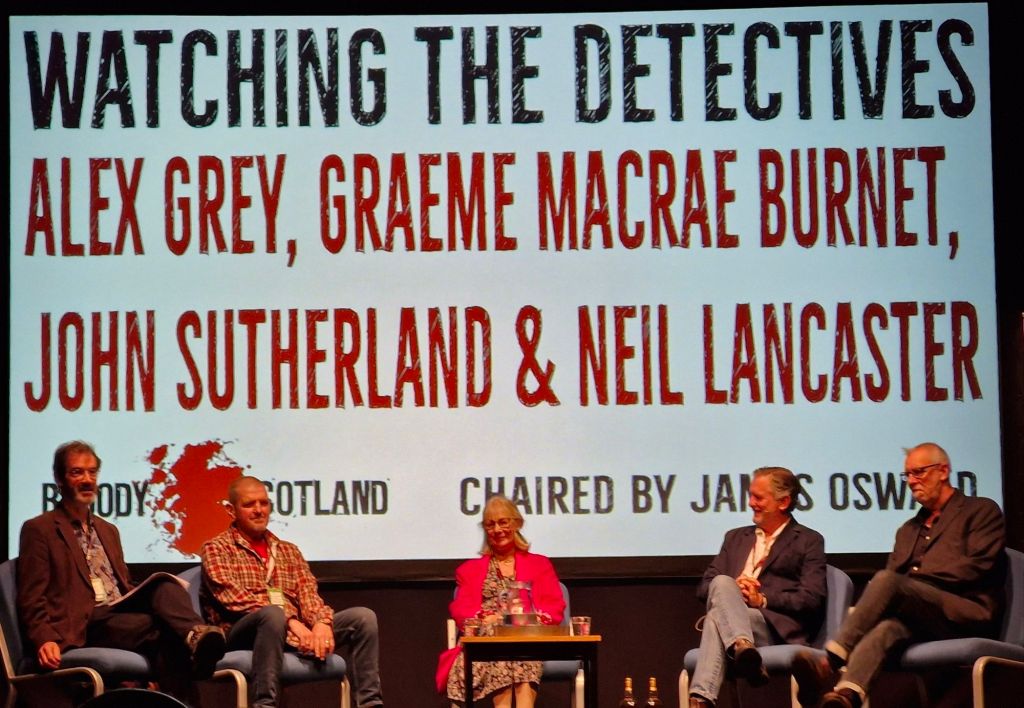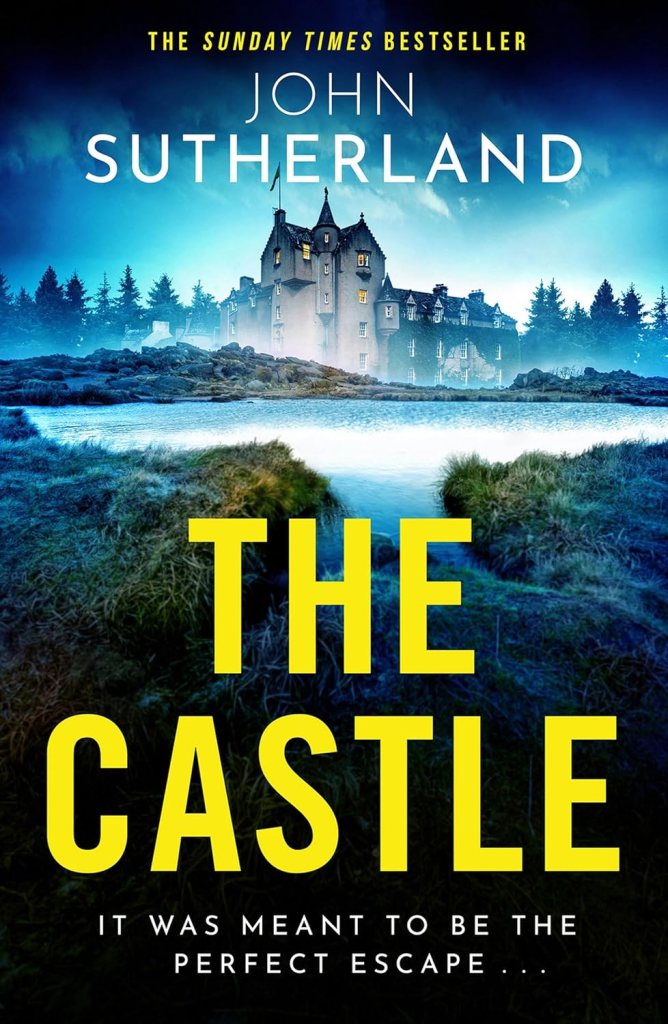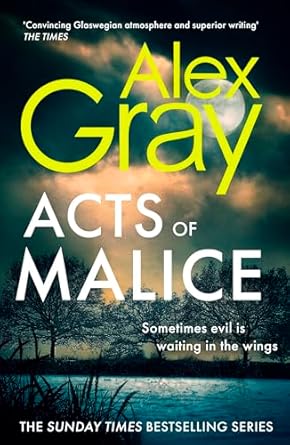
#BloodyScotland News – Finalists Revealed For the McIlVanney Prize 2025 @BloodyScotland #CrimeFiction #BookFestival

FINALISTS REVEALED FOR THE McILVANNEY PRIZE

sponsored by the Glencairn Glass
Winner to be presented on Friday 12 September 2025
 

This year the McIlvanney Prize is being judged by BBC Radio Scotland presenter, Nicola Meighan; arts journalist Arusa Qureshi and crime reviewer and regular contributor to the Bloody Scotland podcast, Gordon Mcghie. Today we can reveal the books they have selected for the shortlist and why:

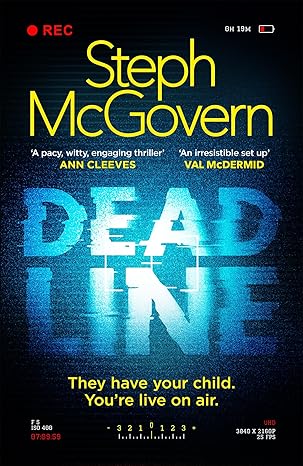
THE MIDNIGHT KING by Tariq Ashkanani (Viper)
‘When we speak about thrillers being page turners (this) should be used an example of how it should be done’

THE GOOD FATHER by Liam McIlvanney (Bonnier)
A captivating story…McIlvanney’s slow pacing keeps you hooked’

PAPERBOY by Callum McSorley (Pushkin Press)
‘A novel dripping with wicked black humour and a real sense of place.


THE GOOD LIAR by Denise Mina (Vintage)
‘Packs a punch with its prologue. A fascinating study of a flawed protagonist & insights into the science of blood spatter’

MIDNIGHT AND BLUE by Ian Rankin (Orion)
‘With an established series it takes something special to make one title stand out – Midnight & Blue shone’

Alongside one of the biggest names in Scottish crime fiction (Sir Ian Rankin) the list features three previous winners (Denise Mina, Liam McIlvanney and Callum McSorley) and a relative newcomer to the scene, the winner of the 2022 Bloody Scotland Debut Prize (Tariq Ashkanani).

It’s also a David & Goliath moment in terms of publishers.  Tariq Ashkanani, Callum McSorley and Liam McIlvanney are published by indies Pushkin Press, Viper (Profile) and Bonnier whereas the others are published by PRH and Hachette.

Kirsty Nicholson, Design and Marketing Manager at the awards sponsor Glencairn Crystal, said:

‘Now in our sixth year of sponsoring these prestigious awards with the Glencairn Glass, the world’s official whisky glass, we continue to be incredibly impressed by the outstanding calibre of authors who take part. The remarkable creativity and talent showcased in the McIlvanney Award never fails to inspire us – congratulations and good luck to all the finalists.’

The presentation of both prizes will take place in the ballroom of The Golden Lion at 6pm on Friday 12 September before the new ‘Day of the Deid’ procession to Ian Rankin’s event at The Albert Halls.

#Review by Lou of All Wrapped Up by Heidi Swain @Heidi_Swain @TeamBATC #TeamBATC #AllWrappedUp #WynbridgeSeries

All Wrapped Up
By Heidi Swain

Review by Louise Cannon

Rating: 5 out of 5.

Lets all cosy up and head to Wynbridge for autumn. Heidi Swain’s latest book tempts you back to this small village where new and familiar people are met each time she sets a book here. As the trees display their leaves with their autumnal colours, they are also doing so in Wynbridge. It’s quite different from Heidi Swain’s usual summer or Christmas offerings.
Thanks to Books and The City, Simon & Schuster, I am on the blog tour with a review, which can be found after the blurb. All opinions are my own.


Blurb

In Wynbridge, the scent of autumn is on the breeze and love is in the air…

Clemmie Bennett has been renovating beautiful Rowan Cottage on the outskirts of the small town of Wynbridge, for eighteen months following a very public heartbreak back in her childhood hometown. The popular Instagram influencer, lost her husband, sold their home, and has been cosied up the Fens and living a very private life, but now she feels it’s time for a change.

A chance encounter with co-owner of The Cherry Tree Café, the bubbly Lizzie Dixon, pulls her into organizing Wynbridge’s first-ever Autumn Festival, and her once quiet life is soon a distant memory. With the whole town rallying behind the event, she discovers a new sense of purpose.

 And when local vet Ash falls hard for Clemmie, she begins to wonder if she’s ready to move even further on from her past and fall in love again…

This autumn, cosy up with Heidi and this perfect seasonal romance.

Review

Heidi Swain has a knack of looking at life circumstances and putting a different slant on it, for example, her main character, Clemmie is a widow before she is 30, readers are informed in the opening pages. She brings with it a raft of emotions and circumstances, including loneliness. She brings some originality to this part of life in the writing of it and yet, of course for some readers, sadly a relatable reality, for other readers, perhaps a fostering of  empathy.

There’s a vibrant picture painted in the mind’s eye of autumn, with the trees and pumpkins, as well as a sense of cosiness and comfort in cakes and other nice things to give a sense of warmth. Warmth also comes in the shape of friendship and a blossoming romance and a sense of hope too as the book goes on.

The sense of community is as strong as ever and as for Clemmie, who has her struggles in life and wants nothing more than to hide away, but she does re-enter the outside world, which is sure to give hope to anyone else feeling how she does.

All Wrapped Up has all the cosy feels and is a triumph of a book as we enter cool, crisp mornings.

#Review By Lou of Slow Burn By Oti Mabuse #OtiMabusi @TeamBATC #RomanticFiction #SlowBurn

Slow Burn
By Oti Mabusi

Review by Louise Cannon

Rating: 5 out of 5.

As it nears that time of year when Strictly hits our tv screens again, Slow Burn by Oti Mabusi is timely and compelling. Oti Mabuse is no stranger to writing books, but this is her debut novel for adults and it’s stunning!
Thanks to Books and The City – Simon & Schuster for sending me a copy of Slow Burn, I am on the blog tour. 
Check out my review after the blurb below. Please note, all opinions are my own.


Blurb

Filled with scenes of sizzling passion, plot beats of swoon-worthy romance, and a cast of Black female characters that you’ll fall in love with, the unputdownable debut novel from Oti Mabuse brims with heat and heart. Perfect for fans of Talia Hibbert, Laura Jane Williams, Tia Williams, Farrah Rochon, Hannah Grace and Bolu Babalola.

For dancer Lira, Latin Ballroom is everything. Whilst her dreams of fame were cut short aged 19, she’s never forgotten the connection she felt dancing with a stranger at the Paris World Championship afterparty 13 years ago.
 
Now, with her younger sisters pursuing their own successful dancing careers, and the responsibility of running the family dance studio falling to her, Lira’s ambitious flame is about to flicker out. Until a chance encounter sees her secretly auditioning for Slow Burn, a new dance show about to embark on a 6-week European tour, and coming face to face with a blast from her past that sends her reeling.
 
Gabriele is the quintessential bad boy of the Latin Ballroom scene. Slim of hip, with long, lean muscles that pop, a chiselled jaw, dark eyes, obscenely long lashes, and a mouth that just won’t give, it’s no surprise when he lands the principal male lead role on Slow Burn. But, with just a few weeks to go till the tour starts, he still hasn’t found his female co-star. All it takes is one audition to set his world on fire… 
 
On the dance floor they’re smouldering, off it, they’re on fire.

Review

When opening Slow Burn and noticing the name, Lira, I couldn’t help but smile and wonder if it was a nice nod to her friend, Janette Manrara’s daughter, Lira, in at least by choosing her name to feature in the book. Nice if it is and if it isn’t, well, it’s still a pretty name.

Back to considering the plot.
It’s time to swoon as smouldering romance occurs, Slow Burn has got everything that you could wish for on this dance floor in a beautifully written plot that you just sink into and forget the cares of the day for a while.

Slow Burn is a beautiful, well-crafted character driven story, which feels at times a bit nicely artistically done, in the way that there’s one character who is at the end of the dance career and another just on the cusp of having the opportunity to dazzle. This plot and character development as everything builds up for the dance show, Slow Burn is compelling to read and you can feel the passion for dance and the expertise and experience of Oti Mabuse shine through.

As well as the dance world, there’s also home-life to contend with and not everyone is well, which adds an extra layer and a bit more complexity as it portrays life isn’t all glitz and sparkly sequins all of the time. It doesn’t get too complex, but none-the-less, adds another depth to the plot.

As you read, the connection between characters is palpable and the emotions become truly heartfelt and at times, catches you with quite an intensity, as you dance through the pages of the dancers lives. In this respect, it’s quite a surprisingly powerful read and it carries very well throughout, pulling you in further and deeper.

This is Oti Mabuse’s debut novel and I feel that if she has a desire to continue writing, she should have a bright author career future ahead of her. I would certainly read more, so hoping she keeps them coming!

#Review by Lou of From Crime Scenes to Cruise Ships – Navigating life’s troubled waters with resilience and hope by Dr. Rhona Morrison @rhonamorrisonauthor @RandomTTours #BlogTour #NonFiction #Memoir

From Crime Scenes to Cruise Ships

Navigating life’s troubled waters with resilience and hope
By Dr. Rhona Morrison

Review written by:
Louise Cannon – Bookmarks and Stages

Rating: 5 out of 5.

Dr Rhona Morrison was a respected Forensic Psychiatrist and is also known for the bestselling book, I Don’t Talk To Dead Bodies. In this new book, she talks in a warm, hopeful manner about being at the crossroads of life that instantly draws you in.
Thanks to Right Book Press and Random T. Tours for a gifted copy of the book, I have the pleasure to share the blurb and my review with you, which you can find below.
All opinions are my own.


Blurb

What if your biggest challenge became your greatest adventure?

One day, Dr Rhona Morrison was a respected forensic psychiatrist planning for retirement. The next, on her birthday, she became a widow, stepping into an uncertain and unplanned future alone. But as Rhona soon discovered, an ending can also be a beginning – if you grasp the opportunities life presents.

In this warm, witty, and inspiring memoir, Rhona shares how she navigated the twists and turns of her loss and subsequent reinvention, transforming her grief into opportunity. From launching an art business and writing her first book, I Don’t Talk to Dead Bodies, to becoming a cruise ship lecturer and embarking on global adventures, she tackled each step with an open heart. Along the way, she discovered unexpected joys, new passions, and a renewed sense of purpose.

From Crime Scenes to Cruise Ships is an uplifting story of resilience, reinvention and embracing the unknown. Whether you’re facing loss, retirement, or a major life shift, Rhona’s journey is a reminder that even when life feels uncertain, you still have the power to shape your future. It may not look like you once imagined, but it can still be rich with meaning, adventure and possibility.

Your story isn’t over; the next chapter is waiting. So, let’s turn the page and step into what comes next – together.

Review

Dr. Rhona Morrison shows that life doesn’t stand still, not even after you’ve lost the love of your life, your life partner. She lost her husband and one day found herself on a very different, perhaps unexpected path in her life as she ends on a cruise ship.
It’s a rather wisely written memoir, that really touches your heart and soul. On the page, anyway, she has this clever ability to draw you in closer to her, to her life story and care about it. It isn’t just merely the content of her life story that does this, and some of it is indeed heart-rendering, it’s the way it’s written and presented too, including the way she frames her life and work, through the good and the more challenging times.

The book is frank and from the prologue, made me want to sit in on one of her talks, it truly sounds fascinating as she explains a bit about her profession and also her inner-self. From the start, I warmed to her. She then rewinds time a bit to her husband, the empty chair and more… I smiled about the 32 Edinburgh Fringe shows. That is impressive and more than me in my limited time. I have to add here, that I like that later in the book, she mentions seeing Kevin Quantum, a fabulous magician, whom I too have had the pleasure to review, interview and meet.

She talks frankly about the stages of grief and how they were for her, whilst smartly acknowledging that it can be different for other people. Still, there’s a lot that people can gain from her opening up like this. Throughout the book, she tells quite a bit about herself in terms of personality, struggles, the ‘human condition’ side really, amongst some of the really positive, cool human life stuff of lecturing/giving talks where lots of people listen to her, seeing some people who are also making their name out there. 

 There’s a lot of heart-warming content written too, when it comes to friendships and the activities they do. The adventures sound immense!

Dr. Rhona Morrison is inspirational in how she navigates life, even when huge changes occur and cross-roads are presented, she shows there is a way forward.

Crime Scenes to Cruise Ships is fascinating, entertaining and gives bags of hope in a very well articulated book. Whether you’re on the verge of retirement or not, perhaps at a cross-road in life or wanting something new to read, this book caters for it all.


#Interview By Lou with the Tony Award Winning Actor, Laura Benanti on new show Nobody Cares @laurabenanti #NobodyCares #comedy in #Soho #London at #Underbelly on 2nd Sept #Theatre

Interview with Laura Benanti
on Nobody Cares

Interview by Louise Cannon
Welcome, Laura Benanti, to Bookmarks and Stages and thank you for the opportunity to interview you.
I am absolutely delighted to interview Laura Benanti about her new show, Nobody Cares, which had a hugely successful run at the Edinburgh Fringe Festival. It has now directly transferred to:
 Underbelly Boulevard Soho, London on 2 September for two performances only.
See after the interview for ticket details.
 
Laura is best known for her show-stealing performance as Louise in Gypsy alongside Patti LuPone on Broadway. For this role, Laura won a prestigious Tony Award.
She is also known for her recurring role impersonating Melania Trump on The Late Show with Stephen Colbert, alongside other major Broadway such as Eliza Doolittle in my Fair Lady and more. She has also appeared in tv shows, such as Nashville, Gossip Girl, The Gilded Age and more…
 
Here’s a little about Nobody Cares before we talk about it interview, finding humour in being a former people pleaser and in the perimenopause, Melania Trump and why she impersonates her, connecting with audiences and more…  The answers are fascinating and insightful.
 
Nobody Cares, is a hilarious, heartfelt, and sometimes brutally honest autobiographical hit charting Benanti’s journey from an 18-year-old ingenue to a recovering people pleaser with all of the missteps and marriages (three!) along the way. Her comedic take on everything from motherhood to perimenopause is yet another star turn.
 
Your show, Nobody Cares had a successful run at the Edinburgh Fringe Festival, you’ve stepped onto the glitzy stages of Broadway, huge tv series and won a Tony. What inspired you to choose the Edinburgh Fringe Festival to showcase Nobody Cares and what did you like most about your time there?
 
I’ve always wanted to perform at the Fringe! Being at a festival full of theatre nerds was a dream come true!
 
2.You bring Nobody Cares to intimate stages, what do you enjoy most about this and are there any challenges, compared to big Broadway stages?
 
I enjoy connecting with the audience in a completely different way. I can communicate with them. It’s a much more relaxed vibe. 
 
3. You bring comedy, ranging from parenthood to perimenopause, they can be inherently funny subjects, but what do you feel is important that we find the humour, even in the most challenging of times of being a women?
 
I endeavor to see the world through the lense of a sense of humor. For me, it’s the only way through. Humor eradicates shame.  
 
4. You tackle being a former “people pleaser”, how did you overcome people pleasing?
 
I’m still working on it! I actively work on it during the show! There are definitely people who come to the show thinking I’m going to sing Broadway music and instead I deliver original comedy and songs that has very adult themes and language. I find myself wanting to apologize to them for that, or wondering what they’re thinking. I have to tell myself to let it go and be present. 
 
5. What’s one of the funniest moments of the peri-menopause? Frankly, I ask as I am one of those women hurtling ever closer to that age and stage of life.
 
I think embracing that you will, at some point, look for your phone and it will be in your hand. Brain fog is real!
 
6. After London, what’s next for you in your illustrious career?

The day after I land I film a few days on a very sweet movie called “the Ditch” and then we take our show to Berkeley, California. 
 
7. On a side note, us in the UK often have an eye on US politics. You’re known for impersonating Melania Trump on the Late Show with Stephen Colbert, which is incredibly funny, even from a single pose. What inspires you to do impersonations and kick ass out of politicians? We also have many comedians doing this, it’s often clever.
 
First of all, I want to apologize on behalf of America that some of us voted for our current POTUS (pervert of the United States. Doing this impression is an act of rebellion and a way to keep people laughing during what is a very serious time. 
 
You can catch Laura Benanti in Nobody Cares by finding out more details and booking here: https://underbellyboulevard.com/tickets/laura-benanti-nobody-cares/


#Interview By Lou with author Laura McHale Holland about Shinbone Lane ‪@lauramchh.bsky.social‬ #books #ShinboneLane @HenryRoiPr

Interview with Laura McHale Holland
On Shinbone Lane

Conducted by Louise Cannon

Laura McHale, welcome to Bookmarks and Stages. Thank you for allowing me to interview you about your fascinating book, Shinbone Lane. Thanks to Henry Roi PR for the opportunity and putting us in touch to do this author interview.
What Laura has to say, is truly interesting and she even imparts a poem as part of one of her answers. We talk about inspiration, world building, secrets, healing, including her own healing space, transformation of lives, the 1970’s,  her characters, one of whom is a dancer and one whom is Maddy who both have quite a story to tell and more…

Laura McHale Holland is an independent author whose works of fiction and non-fiction have been recognized by the Next Generation Indie, Readers Favorite, INDIES and Indie Excellence book awards. She lives north of San Francisco and enjoys her grandchildren, film noir and a strong pot of black tea.

Firstly, here is a little about the book, before the interview…

For reasons they can’t quite explain, the lost always find themselves on Shinbone Lane…

San Francisco, 1974. Sixteen-year-old runaway Maddy is escaping the blame for a crime she didn’t commit. Miles from home, she is taken under the wing of the elderly Clara and her neighbor Ted, and soon finds a place among the kaleidoscope of personalities on the oddly named Shinbone Lane.

Ted’s three-story Italianate Victorian house overflows with travelers, free spirits, and artists. His backyard is a haven for all who are willing to see its magic. But burdened dancer Eloise Watkins condemns the transient “riffraff” in her neighborhood. Their frivolity flies in the face of her grief over friendship lost and a daughter who’s missing. And nobody — nobody— understands.

But like all who tread on it, Shinbone Lane has secrets of its own. And like all secrets, they lie uneasily in the dark, until the truth emerges to lay the past to rest.

  1. Who or what inspired you to write?

When I was seventeen and in my last year of high school, one of my uncles rescued me from a chaotic home situation and sent me to a Catholic girls’ boarding school in a tiny country town. It was 99 miles from an abusive stepparent and far from my wild friends in the Chicago area. The environment at school was controlled but also very loving. I didn’t know how unsafe I’d felt until I was cared for by a team of nuns who had dedicated their lives to helping teenage girls at risk. It was a respite. I had quiet time. A bombardment of conflicting thoughts and feelings inside of me eased, and I had the urge to express myself. I wrote poems that I sent in letters to friends back home. I knew five or six chords on the guitar and wrote a few songs, too.

I remember one of the poems I wrote at boarding school. I was thinking about my father, who had passed away when I was eleven, and a boyfriend who’d recently left the country to follow a guru around the world:

to ponder again

what’s been

what was now

not knowing how

or even why

love’s vital beating

ever fleeting

left to stay

left me this way

to ponder again

what’s been

After graduation, I didn’t keep writing. I was enrolled in college but didn’t show up, afraid I’d make a mess of it. I went through a dark period, which I began to come out of in my early twenties. At that point, with conflicting thoughts and emotions wreaking havoc within, I began keeping a journal, thinking it might help me sort out what I really thought about things. Then I attended Columbia College, a creative arts school in Chicago. Every student was required to take writing workshops, and I was bitten by the writing bug, particularly by a workshop led the novelist Larry Heinemann, who said, “Laura, you are a writer. All you have to do is do it.” It sounds so easy, doesn’t it? Ha!

2. Shinbone Lane is an intriguing name. How did you come up with this street name?

I’d begun brainstorming about a name for the lane, but wasn’t happy with any ideas I’d had. I happened to tell my husband, Jim, I was trying to come up with a name, and he threw out, as more of a joke than a serious proposal, Shinbone Lane. The idea jolted me. It seemed more suited for a Western genre story. But as I thought about it, I realized it offered possibilities for creating a story about the name within the larger story of the novel. The story I wove into the novel was inspired by folklore, and this meshed with my love of magical realism, where a story is rooted in the everyday world, but inexplicable, extraordinary things happen as a matter of course.

  1. What’s your process when world building a lane that really comes to life with many personalities and a bit of magic?

Memory played a big part in this, because the fictional lane is located just up San Francisco’s 29th Street hill from where Jim and I raised our family. So when I envision the environment, I picture it very much as it was in real life. The lane itself has more of a golden glow about it, and things happen there that don’t ordinarily happen. It’s the world slightly tilted, but it’s still our world. It doesn’t involve people casting spells and using magic potions. It’s not epic fantasy where you create entirely imagined worlds. It’s more like forces are at work in the natural world that we don’t fully understand. As for the people, they aren’t based on specific individuals I knew, but they were inspired by the many people who passed through my life in the 1970s. The characters came to me and took shape as I was writing. I didn’t think them up ahead of time.

  1. What attracted you to the fully loaded themes of secrets, healing, transforming lives?

The themes stem from my life experiences but they have universal resonance. Who doesn’t have a secret or two? Who hasn’t been harmed or hurt in life? Who hasn’t wished for healing at some point? And as for transformation, we are all transformed as we move through life. Sometimes it’s dramatic, and we notice. Sometimes it’s a gradual transformation that sneaks up on us. Sometimes we seek transformation and get what we want; sometimes we seek transformation and get something else entirely. Sometimes we don’t want transformation, but we get it anyway. In writing fiction, I love for characters to be grappling with big things, some things that others don’t know about and wouldn’t guess, some that are obvious, some things that can never be healed, and others that can. And I love to create communities where, as in real life, terrible things can happen, but where an underlying love helps everyone pull through, maybe different than they were but ready for a new day.

  1. What’s your healing place or space and why?

My healing place has always been the outdoors, walking in particular—from the Midwest prairies to the crowded streets of Chicago’s north side, to San Francisco’s magnificent hills and valleys, to Sonoma County’s many trails and byways. Walking has always calmed me while at the same time woken me up, and made my troubles seem a little bit lighter, at least for a time. It’s odd, but I didn’t realize until answering this question how important walking has been for me. I walk our dog every morning, but I’ve been so pressed for time in recent years that I walk for only about half an hour. I’m going to have to work in some longer walks regularly, walks without my dog, too, who’s a little on the goofy side and easily spooked, so he’s not a relaxing companion.

  1. There’s a bit of magic on Shinbone Lane and reasons why, at least consciously, the characters don’t all quite know why they are there. How do you believe that magic in the real world plays out for people and how did you go about weaving it into your book?

Some characters have lived on the lane their whole lives; others are newcomers. They’re all there because they want to be, because life on the lane appeals to them. They’d have difficulty explaining why, which is not all that unusual. I’ve never given much thought to why I wear certain clothes, for example, or why I’m drawn to some foods and not others. And like the folks who populate Shinbone Lane, I can’t easily explain some of my choices; they happen so quickly on a gut level.

Similarly, weaving magic into the real world as I write is an intuitive process. Some of the magic expresses a longing I have for the real world to have more magic manifest in our days, for things not to always follow the natural laws we’ve come to understand, for inexplicable things to be more common and not relegated to streaming TV series. Also, there is a lot about the universe that we don’t know. I keep that in mind when writing fiction, and it helps me push boundaries between the real and the imagined.

  1. One of your characters is 16 year old, Maddy, who is escaping the blame for a crime she didn’t commit. She gets taken in by Clara, a significantly older woman and her neighbour, Ted. What significance do they play in her life and how important do you think it is that young and old come together in society?

Clara and Ted are hugely important to Maddy. They have given her a foundation of love she never had. They are like many people in the world who are rock solid good, through and through, and are unsung. It wouldn’t occur to them to look for recognition for doing the right thing. Their goodness helps to attract magic, though they don’t do anything consciously to bring it about. And a world without elders would be bleak indeed, especially for children, who would never know people who have lived through times that for younger generations are known only through books and documentaries. Plus, those of us who were lucky enough to have at least one loving grandparent know the love they give is profound and unique.

  1. Travelers, free spirits and artists feature in Shinbone Lane, who are willing to see the magic. How did you find writing about such, practically bohemian characters in-contrast to the grittiness of Mattie escaping a crime?

Despite her unfortunate home, where the crime occurred due to a family member’s mental illness, Maddy is very much a part of her generation, which is breaking free of rigid cultural norms and expectations. Also, in the 1970s, large numbers of young people were on the move, largely because it was before real estate prices soared to heights almost beyond comprehension. It was easy for someone to take off with a little bit of money in their pocket and travel, sometimes staying on the move, sometimes settling down in a new place, where people could explore and maybe bring out different sides of themselves. Having lived through that time, it was a natural process for me to write about it.

  1. There’s Eloise who is a burdened dancer who wants rid of anyone who she feels is “riff-raff”, has lost her daughter and has decided there’s much no one understands. Did you feel the powerful emotions of your character here and how did you convey them onto the page and out to the audience so they can also experience her life?

People on the lane thought they knew Eloise. She’d lived there all her life, after all. But it turns out they barely knew her at all. Writing her was a lot of fun, as well as surprising. I didn’t know when I first envisioned her what turns her life would take, and I had compassion for her in the end. I felt what I imagined she was going through, as well as other characters’ reactions to her actions. When writing fiction, you have to put yourself through an emotional wringer at certain points in the narrative. If you don’t do that, readers are unlikely to be moved by the stories you tell. I’ve found that as long as I show up emotionally while writing, I don’t need to worry about conveying emotions on the page. The emotions flow with the words.

  1. Shinbone Lane is set in 70’s San Francisco, a bit like the time when you went for a visit and stayed. What compelled you to stay, how did it influence your writing and what changes have you seen in the city?

Initially I stayed in San Francisco because I had the feeling after a few weeks that I wanted more, that I hadn’t experienced what I wanted to experience in the city. I decided to remain for a few months. I bought a Fast Pass for $11, which was good for a month. With that I could take a bus, streetcar, or cable car anywhere and ride as far and as long as I wanted within the city.  And the rides, even just to run errands or visit a friend across town, were extraordinary with incredible vistas, largely because of the hills, the ocean on one side and the bay on the other. Even some of the backyards you’d pass on the J-Church were stunning, and riding the 10-Monterey bus was breathtaking.

I quickly found temporary office work in San Francisco and a room in a Victorian flat with two amicable roommates for only $79 per month. I enjoyed exploring the city’s distinct neighborhoods and microclimates, all the artist collectives, dance and theater troupes, cultural organizations, street fairs, free events in Golden Gate Park, and so many people my age who were trying new things. I decided I wanted to take piano lessons. To do that, I needed a piano, so I bought an old Kohler upright on time, $17 per month for three years, and said, well, I guess I’m staying for three years. I wound up staying for almost thirty years, and now live only an hour away.

San Francisco influences my writing the same way any place I’ve come to know well and love does. The streets, the parks, the restaurants, the main events of the time are part of me. The experiences I had, the highs and lows, are wedded to where they took place. A huge difference in the city between the 1970s and now is that it is so much more expensive to live there. There are bound to be exceptions to this, but generally, artists and people not earning Silicon Valley type incomes can’t afford to live there anymore unless their homes have been in the family a long time. People of limited means have to leave. And that changes the culture of a place.

  1. What do you hope readers get from your book?

Knowing a place where they’d like to linger for a while. Characters they’d like to meet in real life. A story written in a way that delights and absorbs them. A sense that tough things can happen, but the support you need is usually nearby, and healing can and does happen. And a reminder that what we present to each other day to day is only a part of what we are. It’s not like we’re purposely hiding things from others or from ourselves, but many things are hidden. In the end there’s a longing to give and receive love, even in the worst of us, and that is powerful.

  1. How did you celebrate publication day?

I didn’t do much on publication day itself, other than watch for reviews from people who’d read advance copies. That was pretty exciting, especially since my daughter had helped find early readers, and we were phoning and texting each other as reviews appeared. The following weekend I participated in a joint book launch party with members of Redwood Writers, the Sonoma County branch of the California Writers Club. The writing itself is a solitary activity, and it’s great fun to share milestones with other writers. The sense of camaraderie is uplifting.

  1. How can people follow you and your work?

Thank you, Louise, for asking me such thought-provoking questions and spotlighting Shinbone Lane. Here’s my Linktree listing with links to my website, Facebook, Instagram, Substack and Bluesky pages: https://linktr.ee/lauramchh