#Interview by Lou of White Eye of the Needle author/Poet – Chris Campbell @Citizen_Chris @Choir_Press @kenyon_isabelle #Poetry #ContemporaryPoet

Today I am very excited to present to you an interview with Chris Campbell, who, in contemporary poetry, explores human connections, both passing and intimate. The collection was put together in Nottingham and also includes pieces from the former journalist’s time in Bristol, London, Swansea, Glasgow and Gloucestershire, plus visits abroad including a honeymoon in Madagascar and trips to Tignes, France.
In his interview he talks about music, inspiration for writing, wildlife, his former career and more…
With greatest thanks to Chris Campbell for his time and to Isabelle Kenyon for presenting me with the opportunity to interview.

Front Cover White Eye of the Needle

  1. What and/or who inspired you to write poetry?

I wrote one of my first poems as a child in a hotel room. I suddenly thought it was Mother’s Day and that my younger brother and I had forgotten to get anything, so I wrote a poem to my mum on hotel paper. It turned out Mother’s Day wasn’t until the week after. But she still has it framed on her bedside table! I continued to write through my teens and contributed to various anthologies. I enjoyed the process of writing and editing, the downtime and being able to formulate my thoughts and reflect. This also helped me through university, when faced with a lot of life changes. I used to carry around Bob Dylan’s ‘Chronicles: Volume One’, my dad’s ‘The Essential Spike Milligan’ and enjoyed Leonard Cohen’s work. My dad also encouraged me to study the back of record sleeves – lyrics from musicians like Frank Zappa and Eric Clapton. As I got older, I enjoyed the works of Dylan Thomas, ee cummings, WH Auden, and DH Lawrence – who inspired me a lot in my latest collection.

  1. Your title – ‘White Eye of the Needle’ is intriguing, what inspired this title?

The ‘Eye of the Needle’ is a rock formation in Tignes, France. My wife and I met on a ski trip to Tignes and almost had our first kiss inside the landmark; which has a hole through the centre and we had climbed up to. It will always mean a lot to us and we went back a few years later to take more photos and, this time, have a kiss! White refers to the snow – fortunately there was a lot of it that year!

  1. Your poems focus on the natural world intertwined with human emotions, what inspired you to use these as your topics and together and was this a very conscious decision, or was it more organic than that?

Having started as a journalist in my early 20s, I’ve always enjoyed writing about people. I also find nature a wonderful thing to write about, that feeds into a lot of our feelings and actions. The poems in White Eye of the Needle cover a six-year period, and a few different locations during that time, both in terms of where I’ve lived and visited. It has been an organic process, but I often write what I see around me, and this intertwining was perhaps enhanced by lockdown. Whether it’s a walk along the canal by our home, in poem ‘Chimney snorkels’; cardboard sheets being blown across our garden, in ‘Hurdles’; or describing a garden party, in ‘Catch light’, which I wrote while I was enjoying a break in the garden. In the absence of seeing people it can be easier to attribute human emotion to nature, of which I’m lucky to have lots around me despite living in a city centre.

  1. How important is it to you that humans connect with the natural world, since the two meet quite powerfully in your poems?
Countryside
photo by Lou

One thing I noticed during lockdown is how nature seemed to be reclaiming our garden and other outdoor spaces. I’ve been appreciating the wildlife here while spending more time at home. We’ve been in Nottingham for a few years, and before lockdown I spent a lot of time commuting. I grew up near and in the countryside, so have always valued it. As well as writing about my current surroundings, White Eye of the Needle includes poems I wrote when living in other parts of the country, including Bristol, Swansea, London and Gloucestershire, as well as trips abroad. They capture certain moments, whether skiing, away for long weekends, on honeymoon, or in the garden. While I’m not an advocate for needless travel, I do feel it’s important to enjoy new experiences, forming and deepening connections with people and landscapes, whether ones you see every day or for the first time.

  1. When and how did you decide to concentrate your time to writing poetry as opposed to your journalistic career?

pen and paper picI left a national newspaper to move to Bristol with my now wife and to work as a freelance journalist, writing news stories and features mainly covering politics, business and property. I then went into PR a few years ago and still work full-time in the industry. Thanks to less commuting and more hours at home, I felt I was able to dedicate more time to my writing, including editing and putting poems together to form this collection. I was always hoping to release a second collection, but lockdown helped speed up the process. Journalism tended to involve very long hours and it could be difficult to switch off from it. I released my first collection, Bread Rolls and Dresden, in 2013, while a section editor at the Gloucestershire Echo and Gloucester Citizen. PR still involves long hours, but I am now working more of a Monday to Friday job, and I’m able to write first-thing in the morning, in the evening and most weekends.

  1. In a few words, how would you describe your poetry style and your latest book?

Front Cover White Eye of the Needle

White Eye of the Needle is written in free verse and captures moments over a six-year period, both everyday and intimate. It touches on romance, marriage, the birth of a# nephew, passing of a grandad, and recent experiences through lockdown and restrictions, as it seeks to find meaning in places, at a time when we’ve all been forced to slow down and reflect.

  1. If you could pick 3 poems that you would say were your ‘must reads’, what would they be?

I’m particularly interested in Imagism and regularly read the work of DH Lawrence, who has been a big source of inspiration. But I also enjoy a range of styles and admire Dylan Thomas, ee cummings and WH Auden. Lawrence’s ‘Green’ and ‘Snake’ are among my favourite poems, I love his personal and nature pieces. Also, cummings’ ‘now is a ship’, Thomas’ ‘In My Craft or Sullen Art’ and ‘Clown in the Moon’, as well as Auden’s ‘If I Could Tell You’.

  1. Can readers expect further works from you? If so, can you tell us a bit more about this?

I’ve continued to write during lockdown and have started to focus on sonnets. I will be aiming to release a third collection in the future.

Cover White Eye of the Needle

Buy Link: Waterstones 

#Interview by Lou with Backstories Author – Simon Van Der Velde @SimonVdVwriter #ShortStories #Backstories #Charities

Interview with Simon Van Der Velde
Author of Backstories

Today I welcome Bestselling author – Simon Van Der Velde, whose new book, is Backstories for a Q&A session. It is already becoming a success story in itself for this debut short-story teller with his book rapidly reaching Amazon no 1 bestseller – for lit shorts new releases. The book is available now.
What a priveledge to be able to interview him.

Backstories
is a highly original collection of 14 intimate short stories about famous and infamous people who you may know. These tell their stories, fictionalised, but with enough fact so you, the reader, can guess who the narrator is. I rated it 5 stars and was hooked into each story from beginning to end.

You can find out more  Here First, check out what he has to say in his interview/Q&A session with me as we talk about Backstories, Writing, Desert Island Books and Music and Emerging From Lockdown. You can also find buy and social media links and the charities this book supports at the end.

Backstories

What or who inspired you to write short stories and do you have a particular routine to your writing day?

There were always books in our house, so I guess writing is an ambition that goes right back to childhood.  I do love novels too, but sometimes I feel there’s greater power and truth in the shorter form.

Backstories (2)The best ideas come in that fuzzy place between wake and sleep.  Ideally, I roll out of bed and start writing – often in my ‘office kimono’, with those ideas still fresh in my mind.

You are clearly fascinated in the human soul and bearing all, what inspired you to delve into the deeper and sometimes darker corners of life to create your characters?

I’m not much use at parties.  I find the superficial boring. Give me the truth every time.

You have a particular writing style and don’t let on too easily who the narrator is of each of the stories. Was there a particular reason or inspiration for this?

The longer I write, the more I see that a story is a collaboration between reader and writer.  Readers aren’t interested in writers showing off how clever they are, readers want to be engaged – to be an active part of the process, and in Backstories they absolutely are.  Let’s call it an interactive reading experience.

What was your favourite short story in this collection to write and why?

I love the Guitar which was the inspiration for the collection – and Past Time and Jive Talkin – but in the end I think All Over Now is my favourite, probably because it was hell to write and rewrite and throw away and start again over and over and over, but in the end I really feel I did the character justice – and at is what I aim to do – to do justice to these great men and women – and give a human insight into the bad guys too.

In couple of sentences, how would you describe your book?

Let’s call it an interactive reading experience – or as someone said – the thinking person’s masked singer.  Certainly, I’d say it’s the most original book of the year.

Music notesWhat are your top 3 Desert Island books and music?

Waiting for the Barbarians, The Heart of The Matter –
and for music – Springsteen’s Thunder Road
                                 gets me every time

What is your next writing venture?

Backstories II, Backstories Musicians, Backstories Leaders.pen and paper pic

And last question, because let’s face it, it’s hard to avoid…. What is the main thing you are looking forward to getting back to, when it is safe to do so?

A few glasses of decent whisky with friends

Thank you very much to Simon Van Der Velde for giving me the opportunity to interview. It was a pleasure having you on my blog.

Buy and Social Media Links

This book is dedicated to the victims of violent crime, the struggle against discrimination in all its forms and making the world a better place for our children. That is why 30% of all profits will be shared between Stop Hate UK, The North East Autism Society and Friends of the Earth.

Amazon – Backstories              Audible

Goodreads-Backstories   

BookBub-Backstories

http://www.simonvandervelde.com/

The Deal by Jonathan Whitelaw @urbanebooks @JDWhitelaw13 @HoneyandStag @lovebooksgroup #lovebookstours

The Deal
By Jonathan Whitelaw

Blog Blitz

The Deal Poster 2

Today I am so very pleased to share with you – The Deal by Jonathan Whitelaw, a book perfect for Halloween, thanks to an invitation by Kelly Lacey at Love Books Group for this 1 special day. This isn’t just any ordinary book. This book is for a charitable cause – The Samaritans, which I think is amazing and lovely. What is incredibly exciting is the interview links into one he did for Honey and Stag Literary Events on You Tube.
The book is a short, entertaining read and the cause is fabulous, plus you get time to relax a little and enter someone else’s world and get to the end as it is a novella and help such a worthy charity.
The interview lasts just 30 mins. It is so fascinating to find out about the book and why The Samaritans will benefit.

Please don’t find yourself alone. Samaritans are there to help 24/7 all year round. You can call them for free on 116123  The website is http://www.samaritans.org and you can find them across all social media too.

Now onto the book. Please enjoy a moment to yourself to discover about the author, the blurb and finally, the terrific interview, the buy link.

About The Author

The Deal authorJonathan Whitelaw is an author, journalist and broadcaster.

After working on the frontline of Scottish politics, he moved into journalism. Subjects he has covered have varied from breaking news, the arts, culture and sport to fashion, music and even radioactive waste – with everything in between.

He’s also a regular reviewer and talking head on shows for the BBC and STV.

HellCorp, from Urbane Publications, is his second novel following his debut, Morbid Relations.

The Deal pic

Blurb

Following the sinful shenanigans of Hellcorp and The Man in the Dark, the hellishly handsome Devil turns his attention to the most frightening of all holidays … Halloween.

onathan Whitelaw has written a unique, one-off special tale starring Ol’ Nick himself – and set in the wild Wild West. After lending a hand to a down-on-his-luck prospector, The Devil returns thirty years later to collect his debt – but as ever when The Devil is involved, nothing ever goes to plan.

A prequel to the bestselling HellCorp, this enthralling and very funny tale is the perfect read for Halloween and fans of Ben Aaronovitch, Christopher Fowler and Benedict Jacka.

All proceeds from every sale of The Deal will be donated to Samaritans.

Interview with Jonathan Whitelaw

https://youtu.be/Zgeeu6CM1rM

Buy Link 

https://www.amazon.co.uk/dp/B08KGGY6KF/?ref=exp_kellysloveofbooks_dp_vv_d

The Deal poster


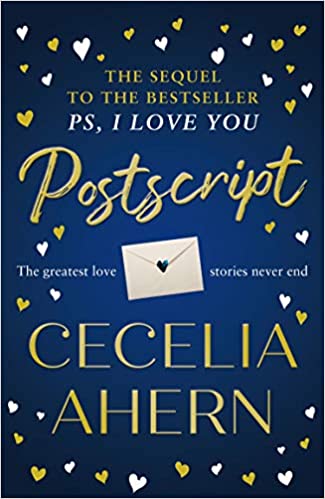
Write Up by Lou of Q&A with Cecelia Ahern @Cecelia_Ahern @BeccaKBryant @LizDawsonPR #Postscript

Q&A with Cecelia Ahern
Ahead of the paperback publication of Postscript
the sequel to PS. I Love You!

I have been given a great honour of joining a small group of book bloggers to collaboratively interview PS. I Love You author Cecelia Ahern. She has now published the sequel – Postscript, in which the hardback is available now. The paperback is available 1st October 2020.

First – the blurb of Postscript and a short review, with a more full on review to follow at a later date. Do follow the blurb, the short review and then onto the Q&A where you can find out some really exciting information about Postscript, what she is writing next and much more…

The PS, I Love You Club.

These are the six words written on a card handed to Holly Kennedy. They’re words that are engraved on her heart – because PS, I Love You is how her husband, Gerry, signed his last letters to her, letters that mark a year she will never forget.

Now, the mysterious club wants something from her. And if Holly can find the courage meet them, she’ll learn what it really means to live life to the full.

Because every love story has one last thing to say…

Postscript pic

Short review

Postscript is just amazing as it tackles so many themes from health issues to grieving. It’s a beautifully written book that has so much emotion within it. The health issues have clearly been researched, but don’t dominate. There is plenty of positivity in this book. It is, even after all these years, is at least as good as PS I Love You, if not a bit better in how it is written. Nothing is lost and there’s everything to gain when reading this, including feeling that it is a really emotional journey, but one taken with passion and feels heartfelt. It’s a great book to get reacquainted with Holly and other characters and meet some new ones too.

Cecelia Ahern pic    Postscript pic  
Q&A

How did you spend Lockdown?

Building Hogwarts Lego. That took about 4 weeks and worked on it for about an hour every evening.
She danced and cooked and walked a lot and got excited when the Irish government also increased the distance of travel from 2km to 5km and could go to a coffee shop to buy a coffee.

Cecelia also has 3 children of the ages of a nearly 1 year old, an 8 and a 10 year old. She hopes never to do homeschooling again.

Do you think as a writer lockdown suited you well?

She reckoned it doesn’t suit everybody, perhaps not extroverts who get their energy from being around other people. She is comfortable about not socialising all the time. She did however miss her family.
She was on maternity leave until May. She then started to edit her new novel (more about that later).#

What sort of research she went into for health issues within the book, such as Cancer and MS?

She wanted to not get into Hollie’s appointments too much to get a balance. There were many drafts and some were more involved than others. There were 4 people who were ill. She wanted more of an introduction to each illness. MS she was fairly familiar with beacause she takes part in the MS Readathon in every year in Ireland.
She wanted to introduce a brain tumour so Hollie was watching a young man going through the same thing.
She thoughtfully pointed out that everyone doesn’t experience the same thing in every illness. She didn’t want to be vague or wishy-washy, but also not too caught up in it. She wanted to concentrate on some of the hope.
She also talked candidly about emphasemia, which is in the book too, as her grandmother had it and had smoked all her life. She talked how there was still humour, even though she was going round with an oxygen tank near the end of her life and wanted some of the humour to come through, which she does well.

From Writing PS I Love You and so many years later, Postcript. How was it for you to write the sequel?

She was never going to write Postcript as she was perfectly happy with how it ended and PS. I Love You was a huge success. PS. I Love You made her and she didn’t want a sequel to break her. She also likes writing different books year on year.
In 2012 she thought about the things that you do for people you’re going to leave behind, so got inspired to write a story from the opposite perspective of PS. I Love You and also then from the perspective of people about to say goodbye and the preparations. She really wanted to put Hollie in it and look at it from Gerry’s perspective. She then had to find the seeds she planted in PS I Love You, like sunflower seeds within that book.
She talked about how it was really challenging to write. In Postcript she has to look at the letters again and looking at the positives and not so and wanted to address how there was conflict between them.
She started to write before she told her publishers to see if she could and felt emotional enough about it, which she did.

Who did you write the book for?

She wrote it for her and those who really love PS I Love You and had it in mind that so many people loved that book. She also looked at the tone of the book and also show the writer she was then and the writer she is now, but without taking too many wild leaps, like in her short story collection, and went back to the humour and sweet tone of PS I Love You.

How did you feel when Postcript went out to readers?

She said that a lot of people have read it before-hand and tries not to get hung up on that, but hopes it is better than the first novel.

The members of the PS I Love You Club. How did you decide which problems to bring into the club and are there any you thought of and discounted?

I wanted to have different illnesses. She knew from the beginning she wanted a mother and the Will idea. Geneka is her favourite. She wanted a mother and a Will and having her want to learn to write letters for her child.

Film

Postcript will be made into a film. Hillary Swank emailed Cecelia wanting to read Postcript. She will be in the film because she said of all the films she has made, PS I Love You is mentioned the most and everyone involved in that film say the same thing. The same production team and writer will be involved again in the film. She has a lot to juggle from the book and the PS. I Love You film.

What author inpires you in your work most of all?

She reads fiction and loves crime fiction, especially Karen Slaughter and Lee Child and Jane Casey. She loves One World Publications because they publish and translate from all over the world. She also loves poetry, such as those from Sarah Cross. She also reads YA novels.
If she ever wrote a crime novel, she would write golden-age crime novel, not the forensic side.

Her next novel is called Freckles, due in autumn 2021. It’s works around the theme that comes from a phrase “You are the average of the five people you spend the most time with.”
It’s about a character who is very logical and straightforward parking-warden. She hears this expression and starts to look at the people around her and wonders if she wants to be the average of those five people and if she could curate her life in who she wants to be. So, she reaches out to certain people to see if she can be the average of those.
There is also a lot going on in her life that makes her want to do this.’

Postcript is published in paperback on 1st October.

Postscript pic

Interview #Interview @CamillaDowns

Lots of authors keep a blog. I was recently interviewed by author and poet – Camilla Downs on her blog, known for Words of Alchemy and more…
I know…me… being asked some questions about me and my little blog! Never did I think that would happen 🙂

She is doing a series where she is interviewing authors and bloggers. I was delighted to have the opportunity. It was all conducted over a series of emails. I must say it was all a very surprising and very pleasant experience and one I am so pleased to have taken part in.

Click Here for the Interview


My First Q&A Interview with Writer and Actor Laura Loane about Books, Reading, Writing, Acting and Disability @dudgeon_neil @Robert Daws @LouiseVisAble @samrenke @ITV #MidsomerMurders

About the Actor/Writer

Laura Loane is an actor and writer with an absolute whole-hearted passion for books. She has very kindly allowed me to interview her on books, acting, writing and her disability. She is represented by VisABLE People, of whom she is very proud of to be on their books of.

For those who don’t know. VisABLE People is the world’s first to supply disabled actors, presenters and models to the advertising industry, television and film companies, radio and theatre. The agency has been involved in several major dramas. They represent highly motivated artists with disabilities of all ages but above all, abilities, including acting, modelling and presenting. They also represent award-winning sportspeople, including World Champions and Paralympic medallists.

Laura Loane photo

The Interview

1. When we first connected, your love of books was very apparent. What genres do you enjoy? What is your favourite book as an adult and what was your favourite book as a child and why?

I am deeply in love with books in any format (my Kindle is the most precious thing I own), and I’ll read anything I can get my hands on. I was one of those children – y’know, the wee geek that read the back of the cereal packet! I am a fan of historical (Philippa Gregory writes beautifully about the Tudors and their courts), crime (the Inspector Morse books by Colin Dexter are amazing in many ways), and the Cherringham series, written by Matt Costello and Neil Richards, are also very engaging and well done. I’m also reading A Classical Education: The Stuff You Wish You’d Been Taught” by Caroline Taggart. It is the most riveting, hilarious thing. And it teaches me things I didn’t know, always a bonus! Terry Pratchett was and still is a literary hero of mine. The style of writing is glorious, not to mention the footnotes.

I bought everything I could find in Polish when I lived in Poland for a year as a student; it helped my knowledge of the language a lot. Death is female in Polish. Yep. Another small step for the ladies; we can channel Death if we so wish! (I also really like Ayn Rand’s Atlas Shrugged, Anthem, and We The Living. I don’t agree with Rand’s politics or outlook, I never did, but these books are wonderfully written. Please, readers, don’t come for me!) And of course, a honourary mention to the stunning Clive Cussler, who introduced me to the underwater world of the National Underwater and Marine Agency and its hero, Dirk Pitt. Atlantis and Raise The Titanic are still two of the best books I’ve ever read; the sheer level of detail is astounding, and the majority of it true.

I need to give a mention to audiobooks here, in particular the Morse books narrated by Kevin Whately, and Cherringham, narrated by Neil Dudgeon (he of Midsomer Murders fame). The wonderful narration and skilful deploy of accents really adds to the writing!

My favourite book as an adult… god, there’s so many. How much space and time d’you have, because I really could go on til the end of time here! Well, I’ll tell you my favourite at the moment, and it’s Francesca Martinez’s “What The F*** Is Normal?” She has cerebral palsy, like me, and if anyone should wish to understand how people with cerebral palsy feel about the disability and all it brings, the humour and the anger and the determination to do what you were always told you couldn’t, read that one. It’s a brilliant book, and it’ll stay close to my heart because it lays all bare.

My favourite book as a child? There was a massive anthology I had of Roald Dahl stories, a big white thing, and a slightly smaller anthology of Enid Blyton stories I had too. I don’t remember the name of the Blyton anthology, but god, I read those two books over and over; I loved them to bits.

2. Who inspired you most to read books and from what age did you start to really enjoy books?

Um. That’s a really good question, and one I can’t answer, really, because I don’t know! Books have always been my escape, really, and I’d read anything anywhere, so from whenever I actually learned to read – boom, that was it, the switch was on and then ripped off! I have never stopped.

3. What are you reading just now?

Right now, I am reading Bruce Dickinson’s What Does This Button Do? A candid, funny insight into one of the greatest men in metal, and how he ended up in one of the greatest bands in the world (lots of shennanigans happened). He’s lovely too, I met him last year at a book signing in a Waterstones in London. One of the best nights of my life.

4. You have said you are into heavy metal? Who is your favourite heavy metal band and are there other music genres you enjoy too? I read on the Internet you did some radio presenting. Did you have some freedom to squeeze in some of your favourite music genres/songs?

Oh, man, there’s LOADS! Iron Maiden are at the top of the list, they are great people and wonderful musicians. Nicko McBrain is what happens if Michael Flatley was behind a drumkit! Nightwish (with Tarja Turunen, and now Floor Jansen) are producing some really good stuff. … let’s not talk about the Anette period. Less said about that, the better… Aside from metal, Rush are also heroes of mine. There is no one that can write a song like Neil Peart, or drum like him. My apologies to another drum hero of mine, Mr Stewart Copeland, but it’s true! Sometimes there’s nothing like grooving to the beat of The Police’s So Lonely, or yelling about Roxanne. I also enjoy music in foreign languages; I discovered Ewa Farna, the band Perfect when I was out in Poland and I’ve been in love with their music ever since; not sure what genre they are, though. They do a brilliant version of Every Breath You Take in Polish; I’d love to see Sting tackle that one! Ewa is pop, and she’s brilliant at it. When I was on radio (shout out to VIBE FM, now defunct), it depended on the time of day and the song itself, but after eleven at night you could play whatever you wanted. I was a pro at playing the uncensored version of Social Distortion’s Don’t Take Me For Granted, and silencing it exactly as the curse came in. No one ever caught on! When the station closed and I did my final show, I played all sorts – Tarja Turunen’s “Oasis” (a Finnish language song), KINO (Russian punk) are the two I can remember. My short-lived stint on radio in Belfast was the same, but it was not a nice place, so we said hell with the rules and played anything we could think of. The station manager hated Eiffel 65’s Blue, so I played that to annoy him. It worked. I got away with most songs I loved, even if they were long. There’s nothing like a bit of Rush in the morning!

5. Music references get used in fiction books, what do you make of that and have you found any that have your favoured style of heavy metal referenced?

Kevin J. Anderson’s and Neil Peart’s “Clockwork Angels”, based on the album!

6. You’ve done some acting. What inspired you to act and how did you get into it?

I acted when I was younger, around 11, and then quit for a while, then got back into it, then quit… I don’t remember what propelled me into it when I was younger, but now? Now, it is a means of escape. I can be whoever the script asks me to be. Of course, I’m always going to be disabled, I’m always going to have my rollator walker with me in some capacity, but when I am acting, for a time, my body is not a complete mess that doesn’t do as it’s told most days. It’s just a complete mess in front of other people, in the guise of someone else! *laughs*

I was watching Lewis one night, and in nine series, there have been three or four disabled characters… and NONE of them are disabled. I checked. None. I love the show to bits but this information made me so angry. Morse is and was different; so is Endeavour, the prequel, in the 60s. Set in the 80s, there is one disabled character in Morse and she’s in a wheelchair. She gets to utter the immortal line, “Cripples aren’t allowed to have bad days, Mr Morse.”, and that’s sort of true. But I looked at what I was seeing and went, “Where am I?” Where are the disabled men and women doing Hamlet, Macbeth, etc? Where are we in something like Doctor Who, Strangers (ITV), Midsomer Murders? I do not want to be a “token”, but representation really is important. I don’t fault Shaun Evans (Endeavour), Neil Dudgeon (Midsomer), or Jodie Whittaker (Dr Who), it is not their decision who’s cast for what, but disabled people need to be on primetime TV too; we have as much right as anyone else, and casting directors should try to change their thinking. We’re not just “the victim”, we can be lawyers, mothers, friends, lovers too. Course, the argument about disabled actors not being allowed to tell their own story (see whatshisname from Stranger Things being cast to play the Elephant Man, Joseph Merrick, when he isn’t disabled whatsoever) is a current one, and will be until disabled actors are allowed to do just that. Adam Pearson can tell you more; he has a disability similar to that of Merrick.

7. Are there any tv dramas you would like to be in?

I would murder to be in Midsomer Murders, pun completely and wholeheartedly intended! I’m sure the show is great craic to work on; Fiona Dolman for one is hilarious, and Mr Dudgeon the same. I had the honour of meeting him one night in July outside the Royal Court, and actually said to him, “See this? This four-wheeled thing here? It’d make a great murder weapon!” I’m still mortified that I did such a thing, mind, but death by wheels would be cool. As long as it wasn’t me doing the dying.

8. From what age have you been acting from?

I started when I was 11, then quit for a while, back into when I was 15, quit for my exams and that turned into a decade, and now been back in it since 29.

9. You have a disability. To inform readers of my blog, can you describe what sort of disability and do you think attitudes in (a) the street and (b) in acting are changing for the better?

My disability is spastic diplegic cerebral palsy, which just means my muscles get tight and it affects my legs. It also affects the cerebellum in the brain, hence the name, and while we don’t know the full extent of what and where and just how it affects me, I do know it affects my balance, fine motor control (my handwriting looks like a drunk spider took drugs, crawled through ink and danced on the page), my hand eye co-ordination, and the processing of information in my brain. Signals from brain to legs do get there – they just disappear somewhere along the line for a second or two. In easier terms, I can pick up the phone at work and find out who it is and what they need, and then a microsecond after putting the caller on hold, I go, “hang on… who was that?” No one knows where the information goes. Other things, ridiculous things like song lyrics and quotes and whatnot, they’re still there! I can quote Meatloaf’s Bat Out Of Hell at the drop of a hat. And the fact that the guy who wrote for him started out in theatre, he never intended to be a producer at all. Your readers at this stage no doubt think I’m utterly mad. I probably am, a bit. RE attitudes. (a) it depends where you are. My energy output is four times more than someone able-bodied; the energy I use to do simple things is like walking up stairs all the time. Every second of every day, it’s sore. I’m tired. I am perpetually exhausted, even when I’m not doing anything. Even existing is tiring, and it drives me insane that people don’t understand, or don’t WANT to understand. I’m not sure which is worse. I can work and live a normal life, but just have to do it a little differently than most. My version of different involves coffee and Red Bull! I am a normal, tax paying, working member of society but sometimes it is difficult. Rationing your energy for travelling, for example, is hard. When you have to work long hours to make money for a trip you’re taking, but you know that IF you work those hours, you may not physically be able to rise from bed the next morning, or you might even be sleeping so deep you do not hear the alarm, what can you do? How can you do it? You just do what you can, really, and if anyone should ask or complain, tell them the truth. When I was in NYC, the guys I interned for (we were not paid), a company called Hara Partners in Manhattan, didn’t care a jot. When I tried to explain to my boss, Mai, about the effects and what I might need to do the work properly, he interrupted me and moved onto something else. subsequent attempts to speak about it went unheeded. I was operating in 30c temperature and I was exhausted all the time. I eventually quit and went to see sites and do the things I’d wanted to do. I didn’t go to NYC to be worked so hard and my needs ignored that it left me unable to function at the weekends. So leaving was the best thing for my health, although they weren’t pleased. Had they listened to what I asked for, I may not have left until my time was up. If employers can listen, it makes a world of difference. I can do in four or five hours of work what others would do in twelve, if they are able bodied – and that’s the difference. This said, I know that acting jobs may not work like that – if you’re in for a 12 hour stint, maybe you need to stay til it’s done. But the fact that many disabled people, including myself, exist on muscle relaxers like Baclofen and Botox, and we need a lot of sleep to function properly… well, that needs talked about. Just because I might need a few accommodations for something doesn’t mean I cannot do it. Disability and its effects – whatever disability it might be, and there are a lot of them – needs to be front and centre; it needs acknowledged.

(b) they’re making an effort, but no, they have a long, long way to go before disabled actors, disabled anyone is on an equal footing with the rest of society.

10. It says on your Twitter account you also write. What sort of things do you write and are you writing anything just now?

Yes, I am writing at the moment; I’m going to participate in National Novel Writing Month in November. I am writing a book about a bunch of journalists in the Bosnian and Kosovo wars of the 90s; the fictional bits are wound around the actual events, like the Siege of Sarajevo (5/4/92-29/2/96) and NATO’s bombing in 1998. I’ve been knee-deep in research for a while!

11. Where can people find your pieces of writing and how long have you been writing for and what inspired you to write?

A few bits of my writing were on a site that is now defunct, the things I did in the early days of journalism college. it’s not collated, there are bits everywhere, but is where most writing things I do can be found. I’ve been writing since I could hold a pen, probably, but really since I was about 13.

I don’t really know what inspired me to write; I guess I just had it in me somewhere. And now I can’t put it back!

12. Is there anything you would like to add about yourself?

I speak too many languages for my own good.

*yells* BOOKS. I mentioned books, didn’t I? *grin*

Thank you very much to Laura Loane, who has given wonderfully detailed, interesting and informative answers to all of my questions and for supplying the photograph.
It has been a pleasure interviewing you for, what is my first interview blog post.