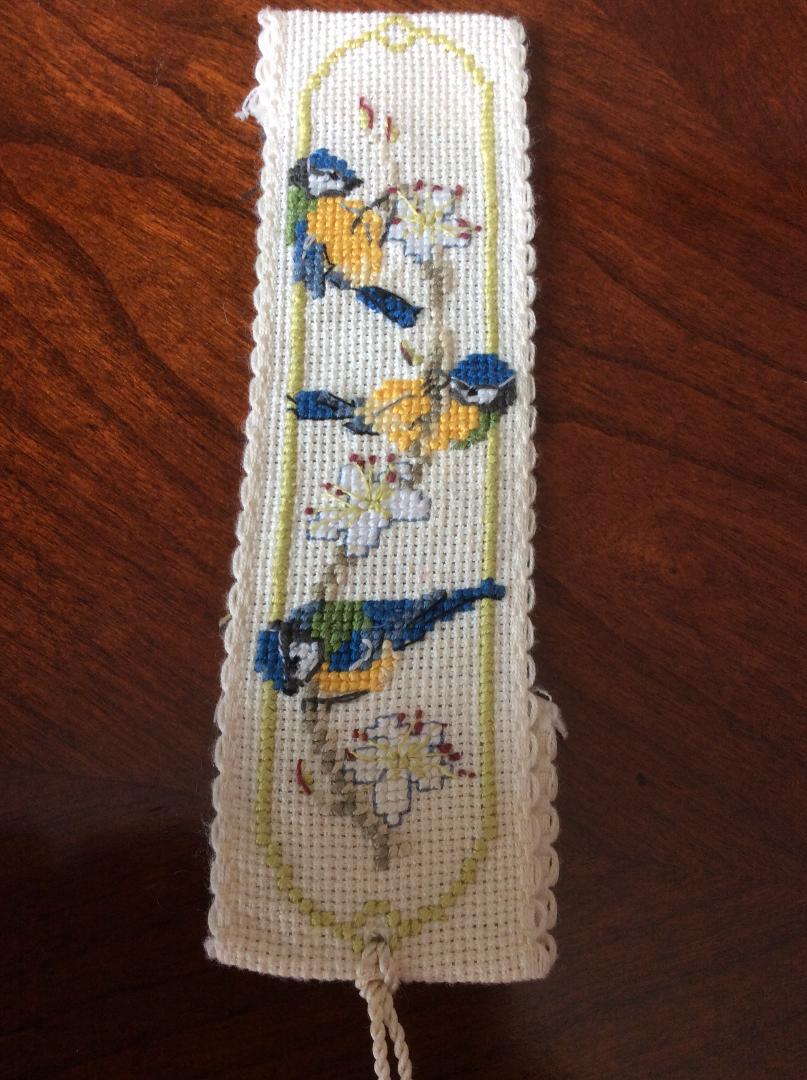
#AuthorInterview By Lou with Viv Fogel – #Author of Imperfect Beginnings @fly_press @VivWynant @kenyon_isabelle #Poetry #WritingCommunity #ReadingCommunity #BlogTour #ImperfectBeginnings

Today I am delighted to present to you my interview/Q&A session with author of Imperfect Beginnings – Viv Fogel. First, many thanks to Viv for agreeing to the interview/Q&A session on my blog and to Fly on the Wall Press for inviting me onto the blog tour.
Viv’s poems are evocative showing war, peace, family and are set in present times and past times. In my blog post today, discover the blurb and then what she has to say as she talks fascinatingly of her inspiration, a particular photo of artwork that features within the book, the importance of poetry, it’s shape and more, as well as where you can purchase the book.
Without further ado, let’s welcome Viv Fogel…

Imperfect Beginnings lays its poems out to rest on uncertain terrain. Visa paperwork deadlines hang in the air. New-borns, torn too early from their mother’s breast, learn to adapt to harsh guardianship.

Belonging and exile are mirrored in the stories of having to leave one’s birthmother―or motherland.

From narrative poems such as ‘My Father Sold Cigarettes To The Nazis’, Fogel takes us on a journey throughout history, spanning ancestry, wartime, adoption and peacetime, as life settles. Family, work, love and the natural world provide purpose, meaning and a sense of coming ‘home’.

  1. What or who inspired you to be a poet and how did this influence your own poetic style? 

    I started off writing and illustrating short stories – to create worlds and characters I could escape into, but then a cousin, (an English student) gave me my first book of illustrated poetry when I was about 16. I didn’t understand them all – but the musicality of the words, the rhythm and the form of the poems, their vibrancy excited me. Here was another kind of language and sound to the rather dreary way we studied poetry at school. (Soon after, aged 16, my first poem was published in Peace News). A year or so later a conversation with a ‘bohemian’ stranger on a plane to Paris, got me interested in ‘kinetic’ poetry, Corso, Ginsberg and the Beat Poets. Aged 18 it was the Liverpool Poets and the lyrics of Leonard Cohen, Patti Smith, Joni Mitchell and later Ralph McTell. Music and poetry are inextricably linked for me.

2. The poems that seem to be set in modern times and then goes into the second world war, before returning to modern times, what inspired you to write it in this pattern for the arc of your storytelling, within your chosen themes? 

An interesting question: themes are not linear or chronological – patterns reoccur and weave in and out, back and forth. And I did have another way of ordering the sequences and sections in the collection, but because of time constraints, this is how it shaped itself.

 3. You have a photo of the Memorial installation ‘Shalekhet’ : fallen leaves at the Jewish Museum, Berlin and a poem beside it. How did you approach writing a poem that reflects the poignancy of the art installation? 

It took me completely by surprise – that’s how powerful the installation was for me. People were encouraged to walk over the floor of metallic mask- like faces – the ‘fallen leaves’ , – and I just could not bring myself to do that. Instead I sat and listened to them clanking, and the clattering sounds and echoes evoked deeply embodied ‘memories’ and images … 

 4. You mention certain people under the titles of some of the poetry, such as Itzaak Weinreich, 1903-1988, Your birth mother – Jennie and also your mother – Henriette and relatives you never met, what emotions did this evoke in you and did it affect how you wrote and what you wrote in those particular poems? 

Strangely no. Obviously there had been processed emotions long before I wrote the poems – but in order to write effectively I need to be able to dis-identify, and step back from those feelings in order to ‘see’ the bigger picture. Thomas Mann spoke about this in his novel Tonio Kröger – how if we are too emmeshed or lost in the emotions we cannot gain the perspective needed for the writing to be truly effective. But yes – there’s a history and a foundation of feeling-responses that inform these poems.

 5. Your poems are sometimes a sombre silence and sometimes noise and movements, even within the placement of the sentences, not always being linear in every poem, was this a conscious decision? 

Yes! The way a poem looks on the page, the spacing, lineation, even the punctuation is deliberate, which dictates the pace and tone of the reading, rather like musical notation. Obviously a poem written on A4 looks different when printed in a book-sized page.  

 6. How important and relevant is reading poetry in today’s society? 

Very! Poetry says things that cannot be said in any other way. It’s immediate and names what cannot always be named with prose or in journalism. The term ‘poetic licence’ exists for a reason. Poetry may not change the world, its politics or politicians – but it can sustain and give hope. Try reading at least one poem a day – to find that space and nourishment!

 
7. What do you hope readers will gain from your poetry and where can people purchase your book? 

I hope readers will be moved in some way by the poetry … if one poem touches one person or resonates – with empathy, or joy, or inspires them to write themselves, or to find their voice, that’s a wonderful benefit. And I really would like my poetry to be accessible to those who are not just poets and would not normally choose to read poetry.

You can purchase the book directly from Fly on the Wall Press online – or better still- order from your local book store, or even your library. And I would welcome any reviews on Goodreads, Waterstones or Amazon.

Many thanks Lou for asking me onto your blog.

To pre-order please go to: https://www.flyonthewallpress.co.uk/product-page/imperfect-beginnings-by-viv-fogel

Q&A #Interview By Lou with #author of #TheNewlywed – Anna Willett @AnnaWillett9 #HenryRoiPR #ColdCaseMysteries #CrimeFiction #Mystery #QandA

Recently I had the opportunity of hosting a Q&A session with author – Anna Willett, which I conducted, thanks to Anna Willett and Roi PR.
Welcome to my blog Anna and thank you very much for taking part in a Q&A session.

Anna has successfully had 16 published books. Her latest is The Newlywed, which sees Detective Inspector Veronika Pope tackle a cold case and finds there’s a vanishing bride and there’s more to the town that meets the eye. You can find out the blurb below, before seeing what Anna Willett has to say about her book and her writing, about her background and how she winds down and what she is working on next.

Blurb

Detectives dig deep to discover what happened to a lost bride

After travelling to the breezy seaside town of Seabreak with her new husband to meet his twin brother, Jane Wilson vanishes without a trace.

There is never any sign of her again, and despite blame initially being cast on the husband, with no evidence of a crime, nothing is done.

Years later, Detective Inspector Veronika Pope and her team at the Special Crime Squad reinvestigate the disappearance.

What really drove Jane to return to the town? And what made sure she would never leave?

Detective Pope is convinced the town and its windy dunes hold the secrets, but she is faced with the grim determination of others to keep them buried forever…

THE NEWLYWED is Anna Willett’s latest suspenseful mystery. It can be read on its own, or alongside two other books featuring Detective Veronika Pope, THE WOMAN BEHIND HER and THE FAMILY MAN.

Without further ado, onto the Q&A.


1.    
Who or what inspired you to write suspense/thriller novels and did you do anything different prior to becoming a writer?  

I’ve always written but didn’t take what I was doing seriously until ten years ago. At the time I was teaching. I still teach part-time.  


2.     The Newlywed is your 16th book. How does it feel, knowing you’ve managed to write 16 books and where do you get your ideas from to keep each book fresh?  

The ideas come easily; it’s deciding which ones to turn into a novel that can be tricky. For The Newlywed and The Family Man, book two in the Cold Case Mysteries, I drew inspiration from a couple of infamous Western Australian true crime cases. I take a small part of the crime itself and then everything else is pure fiction.  

I try to keep crimes themselves fresh by drawing on true crime, delving into what’s going on in the world. And also immersing the reader in the setting. Characters, old and new, must be interesting. Recurring characters need to grow and reveal new snippets of their backstory and personality traits. They have to be as real as possible. Dialogue must be authentic. A story grows stale when the same old characters have the same old reaction.  


3.      The Newlywed is a cold case, what interested you most in choosing going down this avenue of police work?  

I’ve always been fascinated by true crime, solved and unsolved, as well as crime fiction. I enjoy watching true crime documentaries and reading about infamous crimes. I’m interested in the methods used to solve or at least attempt to solve cases. I find myself theorising about certain aspects of the case. It’s a genre that intrigues me in a way that became the impetus to write about cold cases.  


4.     Your detective is Veronika Pope in the Special Crime Squad tasked with re-investigating the disappearance of Jane, how did you research this particular type of team and the re-opening of cases?  

I have a close friend who was a detective in the West Australian Police force. He is a marvellous source of information. When I’m writing a colds case story, I turn to him form procedural information and also how investigators would react in certain situations.  

I also do a good deal of online research. I try to make the stories as authentic as possible.  


5.     How did you feel getting into the mindset of a seaside town and your characters who harbour age old secrets they want to keep buried? Do you, for example, fully immerse yourself with them?  

The town, Seabreak is a fictional place based on several small communities south of Perth. Before writing The Newlywed, I visited these towns, spent days taking photos and immersing myself in the lifestyle. I’ve visited almost all the setting I’ve used in the sixteen books. It helps me to get a feel for a place. It makes it easier to write about the views, the weather the flora and fauna.  

I also live within hearing distance of the ocean, so that helped.  


6.         How do you unwind?  

For me, reading makes me a better writer as well as being a fantastic way to relax. I’m also a huge film buff so I love watching movies. I enjoy walking our GSD girl, Karma. Living with a dog is a fantastic way to destress and unwind. There’s nothing like having a wet tennis ball dumped in your lap to remind you to stop and take a break. And I love going out for lunch, trying new cafes and restaurants.  


7.         Are you reading and/or writing anything just now?  

I’m reading Watching You by Michael Robotham. He’s one of my favourite authors.  

I’m working on a new cold case, again inspired by a infamous unsolved West Australian case. This story takes place in the Goldfields, a huge, rugged landscape dotted with small remote communities. An area where so many people have vanished or perished.  

It’s a place that can be beautiful but also eerie and I’m excited to be writing about the region. My daughter has spent quite a bit of time in the area, so she’s been a great help with the research.  
 

#Interview With the #Author of A Notable Omission By Isabella Muir @SussexMysteries @rararesources #QandA #BlogTour #Mystery #AJanieJukeMystery

Today, as part of a Rachel Random Resources blog tour, I have an interview/Q&A which I conducted with the author of A Notable Omission – Isabella Muir. In the interview, we cover her novels and novellas and different time periods and research, the location of her mystery – A Notable Omission, Women’s Equality and where it is now, compared to the 1970’s and what she is reading and writing now.

Thanks to Isabella Muir for giving your time to answer all my 5 questions in an interview/Q&A for my blog. Without further ado, discover a bit about what the book is about in the blurb and then head on down to what Isabella Muir had to say. There are also links to her other books at relevant points for you to explore. 

Blurb

A Notable Omission

A 1970s debate on equality is overshadowed by a deadly secret…

Spring 1970. Sussex University is hosting a debate about equality for women. But when one of the debating group goes missing, attention turns away from social injustice to something more sinister.

It seems every one of the group has something to hide, and when a second tragedy occurs, two of the delegates – amateur sleuth Janie Juke, and reporter Libby Frobisher – are prepared to make themselves unpopular to flush out the truth. Who is lying and why?

Alongside the police investigation, Janie and Libby are determined to prise answers from the tight-lipped group, as they find themselves in a race against time to stop another victim being targeted.

In A Notable Omission we meet Janie at the start of a new decade. When we left Janie at the end of The Invisible Case she was enjoying her new found skills and success as an amateur sleuth. Here we meet her a few months later, stealing a few days away from being a wife and mother, attending a local conference on women’s liberation to do some soul-searching…

Interview/Q&A

1. Your book is set in 1970, as opposed to World War 2 in your other series. What inspired you to delve into a very different era in time?

My novellas are set during World War 2, but all my novels are set during the 1960s, with this latest in the Janie Juke series set in early 1970, following from The Invisible Case. When I first started working on the Janie Juke series I chose the sixties as my favourite era.  It was a truly iconic decade, with so much social change – some good and some not so good! One of my standalone novels, The Forgotten Children, also set in the sixties, explores the terrible experiences of the child migrants who were sent to the other side of the world, often without their family even knowing they had been sent.


2. What research did you need to do for your book and did you approach it the same as or different from your World War 2 series?

Research is always such a fun pastime! Especially when you get to read all about sixties rock and pop legends, like the Beatles and the Rolling Stones, as well as fashion icons, such as Mary Quant.  There is so much that can be found online, of course, but I am also lucky in having brothers and a sister who grew up during the sixties.  So, I have had first-hand accounts of my sister going to a Stones concert, as well as my brother being part of the sixties Mods, with their Lambrettas, riding along Hastings seafront, kicking up a storm!


3. Your series is set in Sussex, what do you think makes this a prime location for mystery?

I was born in East Sussex and have lived most of my life in various towns in and around East and West Sussex.  Having an in-depth knowledge of the setting really helped to flesh out the stories.  A Notable Omission is based in Brighton, but the other three novels in the Janie Juke series are set in the fictional town of Tamarisk Bay, which is based on my home town of St Leonards-on-Sea.


3. You’ve chosen women’s equality as one of the central themes, in brief, what does women’s equality mean to you?

In A Notable Omission I’ve tried to reflect how it was for women in 1970, highlighting some of the pressures they faced, as well as many of the prejudices. My personal thoughts relate more to equality of opportunity for the individual, rather than any particular gender bias.


4. Do you think women’s equality and part of its definition has changed since 1970?

There have certainly been significant changes to every element of UK society since 1970. It’s fascinating to see what women were pushing for some fifty years ago, such as support for child care to enable mothers to pursue careers. Some would argue that with the burdensome cost of child care this is still a real problem today. Equal pay for the same work done has been achieved in some sectors, but still not in others. I’d say we have moved forward in some areas, but there’s still a long way to go.


5. What are you reading and/or working on just now?

I’m still working my way through most of Ann Cleeves’ novels.  I love her Vera and Shetland series and have learned a lot from the way she crafts her stories.

In terms of my own writing – I have plotted the next novel in the Janie Juke series, which I’m excited about. The story explores the murky past of one of the characters from A Notable Omission, leading her to enlist Janie’s help to solve yet another mystery!

Purchase Link

UK – https://www.amazon.co.uk/Notable-Omission-Janie-Juke-mystery-ebook/dp/B0BQCLRYS6

US – https://www.amazon.com/Notable-Omission-Janie-Juke-mystery-ebook/dp/B0BQCLRYS6

#Article #Interview #Reviews By Lou -Celebrating the Work of Matson Taylor @matson_taylor_ @ScribnerUK @simonschusterUK #TheMiseducationOfEvieEpworth #AllAboutEvie

As part of my blog in 2023 until it reaches 5 years old in September, I will be celebrating an author or publisher every so often. I am beginning with Matson Taylor, a design historian and author with lots of wit and poignancy in his writing. He is also someone I’ve had the joy of doing Zoom with and interviewing. I have included links to previous reviews and an interview at the end of each section.

Matson Taylor burst onto the writing scene with his humorous, contemporary fiction book – The Miseducation of Evie Epworth to much praise, so much so that this debut novel had made it to the BBC Radio Book Club. His books caused quite a stir as they landed on bookshelves. He then followed up with All About Evie, again with more high praise, no mean feat I should think when authors often say that writing a second book is one of the hardest and you can only hope the first lot of readers stay with you and also builds too.
The books, set between parts of Yorkshire, London and parts of Scotland are brilliantly humorous and then catch you with poignancy as you lean about her teenage and adult life. All is well-researched and observed and fit into the eras well. So many people would be able to relate to the universal themes and to the fashions and music at the time, whether they lived through the eras or not and if not, there’s certainly plenty that people can learn from that may pique interest within the entertaining story-telling.

The Books and Interview


The Miseducation of Evie Epworth is set in 1962 and you first join her at 16 1/2. She has her music, literary and actor idols and she’s growing fast with philosophical musings about future jobs. She is also  learning lots from Mrs Pym; which is where the poignancy comes in. 
You can find out more about the book in my review, which also includes a blurb in the link: The Miseducation of Evie Epworth Review


All About Evie is about how her life is as an adult in 1972. The setting is between London, various parts of Yorkshire and Scotland. She had a job in London working for the BBC, which turns out disastrous, meaning she needs a different direction in life and even her love-life is poor. The situations she finds herself in brings much humour. Again, there’s poignancy with family matters.
You can find out more about the book in my review, which also includes a blurb in the link: All About Evie


The style and layout of writing is interesting in both books as the poignancy is written within what he calls Interludes. The humour is quick-witted and all of it is highly engaging with universal themes. Matson Taylor is a design historian and his passion comes across well as does his knowledge in the eras of which he writes. He also likes his writing to bring many emotions from happy to sad these two books do it with a plomb. He once said the Evie Epworth books will become a trilogy. You may need to wait because he’s another wonderful sounding book he is writing ahead of that. I once did an interview with Matson Taylor, Find out what he has to say about his books, his future plans in his writing career and how his career as a design historian aids his writing and much more in the link: Interview With Matson Taylor

#Interview #QandA By Lou with #author of Conveniently Married To A Laird By Jeanine Englert @JeanineWrites @HarlequinBooks @MillsandBoon @rararesources #RomanticFiction #HistoricalRomance #HistoricalFiction

Conveniently Married To A Laird
By Jeanine Englert
Interview/Q&A conducted by Louise (Lou) Bookmarks and Stages blog

Today I have the great pleasure to share with you, an interview with the author of Conveniently Married To A Laird – Jeanine Englert, published by Harlequin, Mills & Boon as part of the blog tour by Rachel Random Tours. Discover more about Jeanine Englert’s inspiration and more as I probe into the darker themes, history and characters within Conveniently Wed to the Laird. Find out why book she is reading, one is which I reviewed and enjoyed… First, take a look the romance oozing from the cover. Discover if all will be as it seems in the eye-catching blurb (no spoilers though). Then, you’ll be all ready for the fascinating interview I have conducted and have ready to present to you, just after the short blurb.

Conveniently Wed to the Laird

The laird’s bridal bid…

Is love too high a price to pay?

When new laird, Ewan Stewart, comes across a wife for sale at a market, he outbids everyone to rescue her. He never intended for Catriona to become his bride, but a convenient marriage could secure his clan’s future and her freedom. They agree that their arrangement must stay free of love, yet Catriona’s bravery and fire intrigue him. Can Ewan resist falling for his wife—the one rule he must not break?

Without further ado, onto the interview.

    1.  Who or what inspired you to write?

I have been writing since I was 8 years old. It was mostly poetry until I went to get my master’s degree in writing that I expanded into short stories and later novels. My first novel took me 11 years to complete and will never see the light of day, as it is horrendous. To quote Karina Gioertz: “I write because in the end it’s the only thing I don’t know how not to do.”

  1. What inspired you to write Historical Romance and set it in Scotland, showing not only a bit of the class system, but also the selling of people, in this case, a wife in the Grassmarket, whom you have Ewan Stewart coming across and how and where did you research this?

I have always loved reading historical romance. Some of my early favourite historical romance authors were Jude Deveraux, Julie Garwood, and Judith McNaught.

I fell in love with Scotland when I studied abroad in England for a semester when I was in college. One weekend in late November, we took a train to Inverness and stayed the weekend. It was a magical experience that I often draw upon when I write my books set in the Highlands.

Much of my research is done from reading books, finding historical articles or letters online, exploring maps, as well as watching modern day videos on YouTube of the places my books are set in since I can’t visit. Having digital access to so many historical documents online has really helped my process.

  1. Conveniently Wed to A Laird is darker than the title suggests, with flashbacks of losing a loved one and references to abuse from a previous husband and foster parent, how did that feel writing about such deep, dark topics and did you do anything after writing them to be in the next moment of your life outside writing?

I think I am naturally drawn to write about these topics based on my original desire and hope to be a social worker and the experiences I had during internships working with survivors of abuse. I suppose I don’t even think of them as dark or deep, but merely part of our society.

I also tend to write in the early hours of the morning before I go to work, so it is quite easy to jump back into my day. As a teacher, I am always busy, on the move, and in the moment when I am at school.

  1. The characters Ewan Stewart and Catriona marry out of convenience to save the Stewart clan, before their romance evolves. Do you think this was commonplace and what inspired you to take this particular angle?

Marriage of convenience is such a uniquely historical trope that I am often drawn to it. The idea of marrying someone out of necessity or convenience rather than love has always interested me. And while I don’t think such marriages were entirely commonplace at the time, I do believe they were at times necessary for both parties involved. I also believe it served Ewan and Catriona’s characters well as they were both disappointed by their past experiences with love and reluctant to the idea of marriage.

  1. What’s next for you, in terms of writing?

I’m currently editing book 1 in The Secrets of Clan Cameron series for Harlequin/Mills & Boon which is titled A Laird without a Past. It will be out in late July of 2023. I am also starting to draft book 2 in that same series.

  1. Are you reading anything at the moment and if so, what?

I just finished Lenora Worth’s Deadly Holiday Reunion as I always love a good suspense, and I’ll be starting The Dead Romantics by Ashley Poston next.


#Interview with Val Penny Conducted By Louise @valeriepenny @zooloosBT #Interview #CrimeFiction #ScottishNoir #BlogTour #HuntersChase

Interview with Val Penny

Recently I caught up with Val Penny and interviewed her on her book – Hunter’s Chase. It’s a series of books set in Edinburgh. So I asked her about this, getting into the mindset of her characters and the dark humour. First a little bit about the book and the link to my review, which I wrote previously, can also be found after the interview.

“Thank you for inviting me to your blog today, Louise. It is always nice to speak to you.

Hunter by name – Hunter by nature: DI Hunter Wilson will not rest until Edinburgh is safe is the byline.

D.I. Hunter Wilson needs to find the source of cocaine flooding the city, but then a corpse is discovered, he also becomes focused on this. Then there is a second murder and a young women’s life hanging in the balance as the son of his nemesis joins the team.

Now onto the questions.

1. What inspired you to write crime fiction and set your series in Edinburgh?

I have to admit that the type of book that I enjoy most to read is crime fiction, so I decided to write what I like to read. Before I set the DI Wilson series in Edinburgh, I did debate making up my own town like Peter Robinson did for his crime series. However I know Edinburgh well and it is a city many people have visited or want to visit. It is also quite a small city, but cosmopolitan and it has everything I needed, so Edinburgh is Hunter’s home.

2. The book has some dark humour within it as well as some pretty brutal murders, how did you manage to combine the two without it sounding forced and was it intentional to combine both and yet keep a gritty feel?

Aah, yes, well that was intentional. I enjoy humour and especially dark humour. I think you need to lift a crime novel from darkness.

3. How do you get into the mindset of the characters to write both the murderer and the police solving the case?

I drafted biographies for each of my main characters and that allowed me to get to know them before I started to write the novel.

4. Did you have to research for the procedures? If so, how easy or difficult was this and then to translate it into a work of fiction?

Yes, I am lucky to have a friend who is a retired detective chief inspector and another who is a CSI. They were most helpful in guiding me in the right direction. Of course, I may have strayed for dramatic effect and any errors are mine.

5. There are several books in the series now, do you have more planned or what’s next in your writing career?

I certainly plan to write more in the Hunter series. I have a second series now where Jane Renwick is the main character. I am writing the second book in that series now.

6. You write a blog and keep a social media presence as well as books. From an author’s perspective how does this benefit both you and your readers?

I like to keep in touch with my readers and to hear from them through my website, blog and social media. It is always lovely to keep in touch.

7. What genres do you like to read and what are you reading just now?

I read many crime fiction novels, but also women’s fiction. I have just finished reading My Extra Life By Maggie Corbett, a non-fiction book about her 20 year career as a tv and film extra. Now I am reading a historical fiction novel, There is Mo Going Home By Madalyn Morgan.

Link to the review I wrote previously: Hunters Chase Review